In a nutshell
- Almost anyone who can float, breathe through a snorkel and follow a guide can do this. Cold water and unfamiliar kit are the real challenge, not distance.
- You must be able to swim and be comfortable in water, be at least 12 years old and at least 150 cm tall. Life jackets and swimming aids are not permitted.[1]
- The tour runs 3 - 5.5 hours depending on the starting time you choose, and only part of that is spent in the water.[2]
- Water stays 2°C to 4°C year round, and visibility in the fissure is over 100 meters. Pack warm layers for under the drysuit.[3]
- Groups are limited to 6 participants, with pickup available and free cancellation up to 24 hours in advance.[2]
- Top choice Two Continents Snorkel from US$137 Duration3 - 5.5 hours[2]Rating4.71 from 2,142 reviews[2]PickupCheck availability for pickup options[2]GuideLive tour guide: English[2] Check availability
- Snorkel with Free Photos from US$215 Duration4.5 hours[4]Rating4.83 from 628 reviews[4]PickupPickup included[4]GuideLive tour guide: English[4] See this tour
- Golden Circle and Silfra from US$298 Duration10 hours[5]Rating4.82 from 304 reviews[5]PickupPickup included[5]GuideLive tour guide: English[5] See this tour
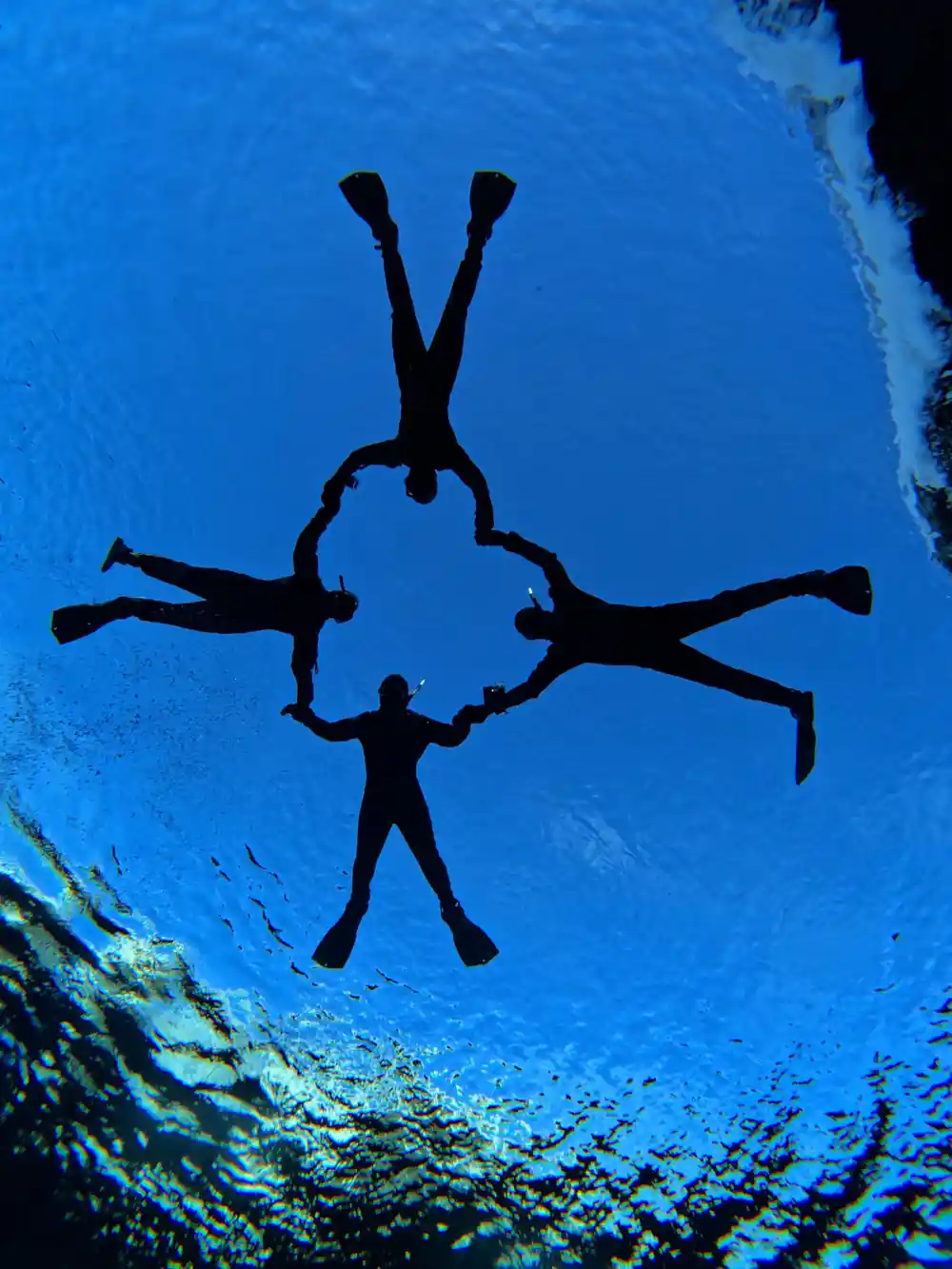
The water is filtered through porous underground lava for 30-100 years before reaching the spring that feeds into Silfra.
Is Silfra snorkeling difficult? Our verdict
Before reserving
Is Silfra snorkeling difficult for a beginner?
The short answer is no, and the honest longer answer is that it is different from the snorkeling most people have in mind. There is no coral reef, no swell and no boat. You float in a crack in the ground filled with glacial water so clear that it looks shallow even where it drops away, and the day is built around people who have never worn a drysuit before. If you can float face down, breathe slowly through a tube and follow the person in front, you already have the skills the tour asks for. The water in Silfra stays between 2°C and 4°C all year round[3], so the parts that take getting used to are the cold and the unfamiliar kit rather than the swimming.
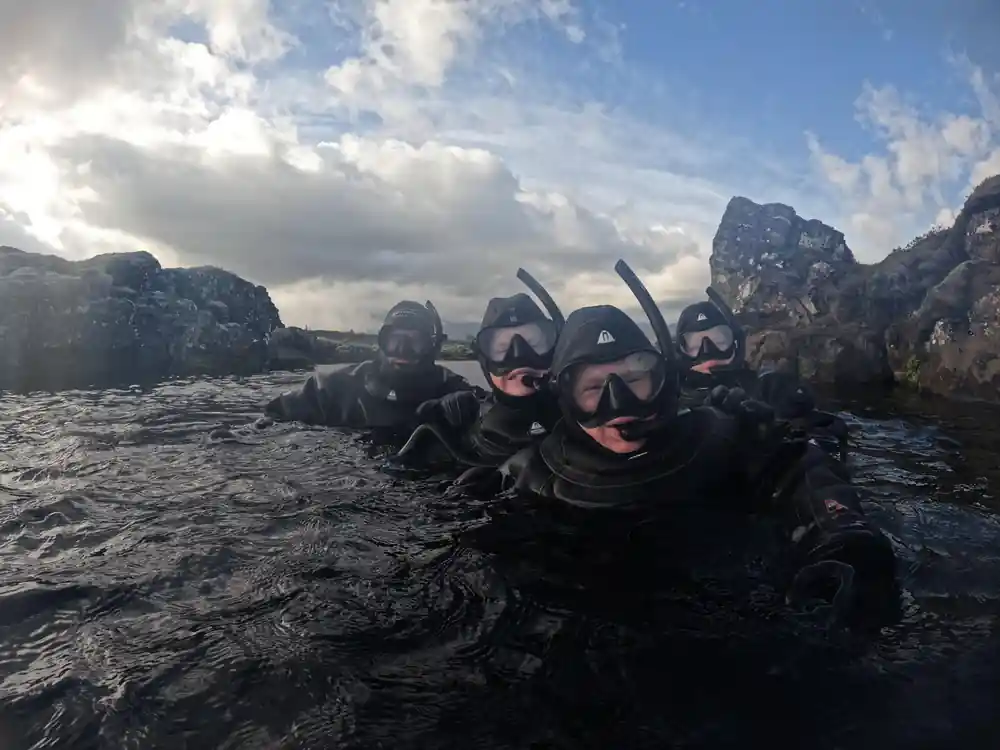
The tour booked from this site runs for 3 - 5.5 hours depending on the starting time you choose, and it costs from US$137[2]. Only part of that is spent in the water. The rest goes on meeting your guide, squeezing into a drysuit, walking to the entry steps and warming up afterwards. Groups are small, limited to 6 participants[2], which means the guide can watch every mask and every hand signal. Nervous first timers are the normal case here rather than the exception, and the whole format is arranged around that.
You do not need to be a strong swimmer
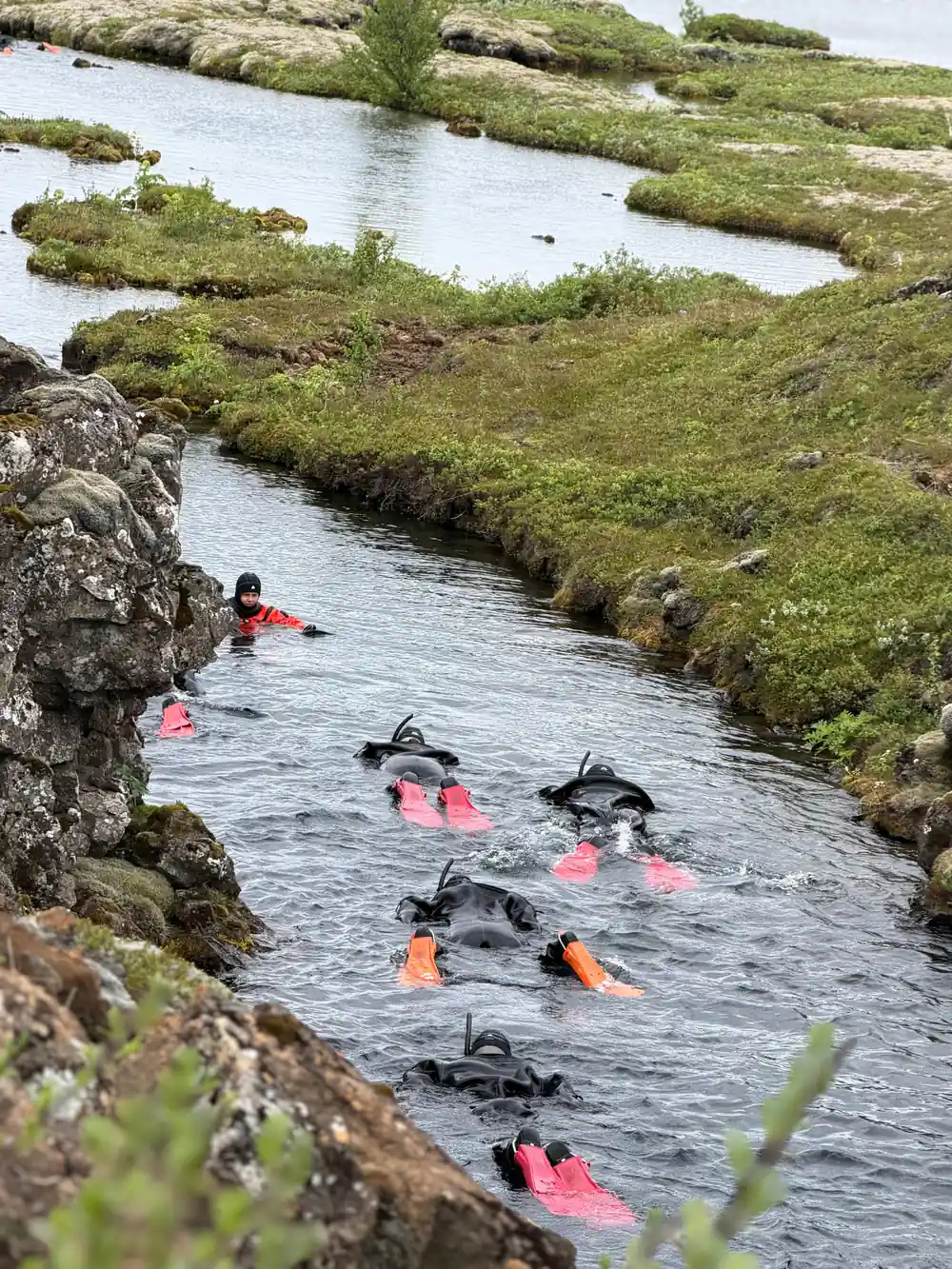
Silfra is a drift rather than a lap. The water moves gently from the entrance towards the lagoon and you go with it, face down and fins almost still, watching the walls slide past. Nobody swims against anything. The requirements are simple and firm: to snorkel at Silfra you have to be at least 12 years old, at least 150 cm tall and able to swim and be comfortable in water, and life jackets and swimming aids are not permitted[1]. That last rule surprises people, so it is worth understanding before you book a date.
Not being allowed a life jacket does not mean you need to be a strong swimmer. A drysuit traps a layer of air inside it and you ride high in the water with very little effort, which is why guides can take people who last swam in a pool years ago. What the rule really asks is that you can keep your face in the water, breathe through a snorkel and stay calm if a splash hits your mask. If you can manage that in a swimming pool, you can manage it here. If having your face in cold water makes you panic, practise first in a pool, or pick a different Iceland day trip.
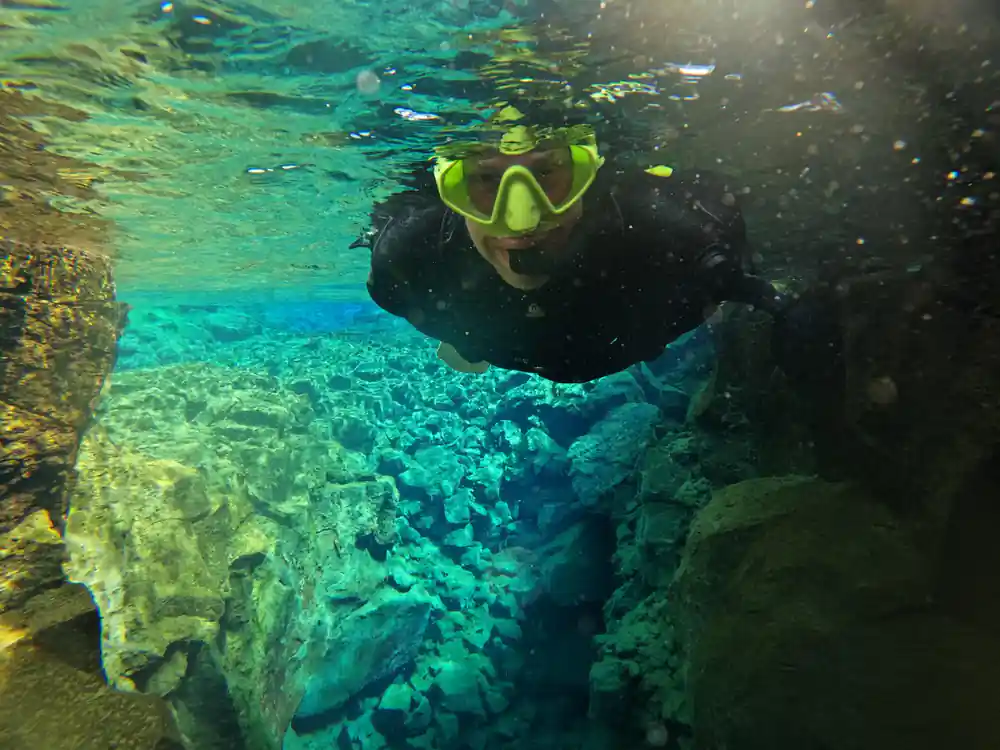
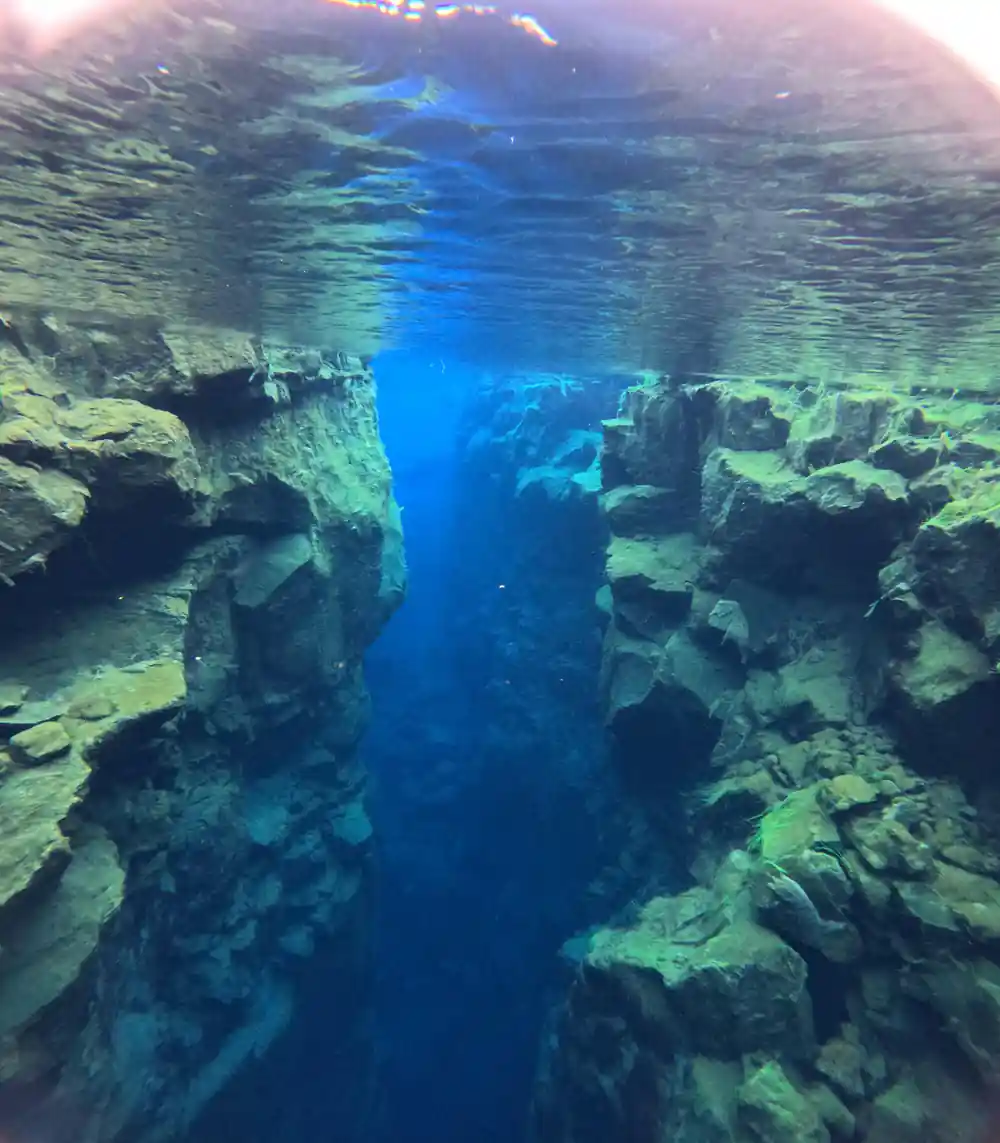
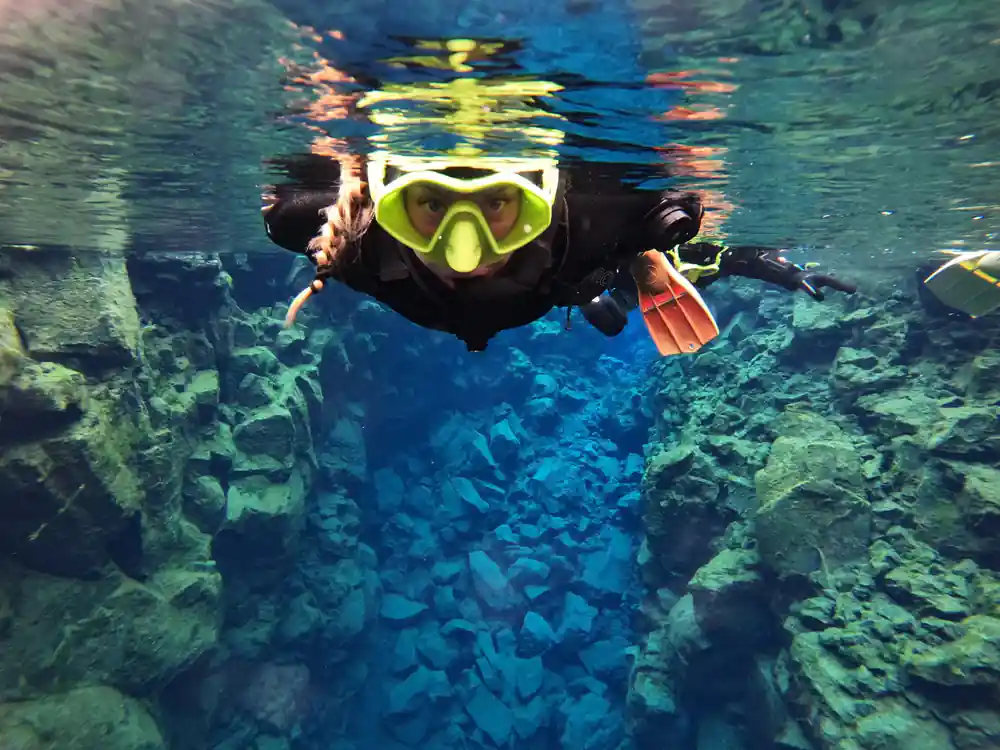
The bright blue water of Silfra looks tropical and feels close to freezing.
Fitness level needed for a Silfra snorkel day
The walking is the part nobody warns you about. You cross rough lava between the car park and the entry point, then go down steps into the water wearing a suit that feels heavy on land. It is not a hike and it is not far, but the ground is uneven and in winter there can be snow and ice underfoot. Ordinary general fitness and a steady pair of legs are enough. If you use trekking poles or need a hand on stairs, mention it when you book so the guide knows before the day starts.
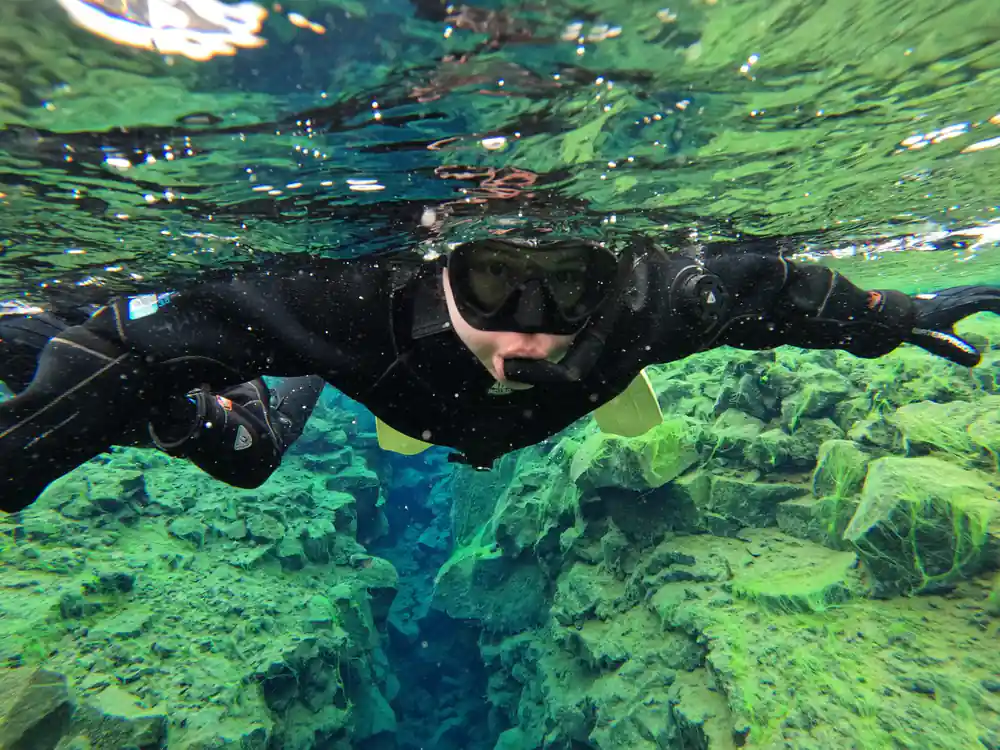
Under the drysuit you wear warm base layers, not jeans and not cotton. A thermal top and leggings, warm socks and a hat make the difference between a comfortable hour in the water and a shivery one. The suit keeps the water out and the air trapped inside is what keeps you warm, so do not let anyone burp the neck seal unless the guide tells you to. Keep your hands and feet warm while you wait on the bank and the first cold rush through the gloves feels far more manageable.
How the current carries you through the fissure
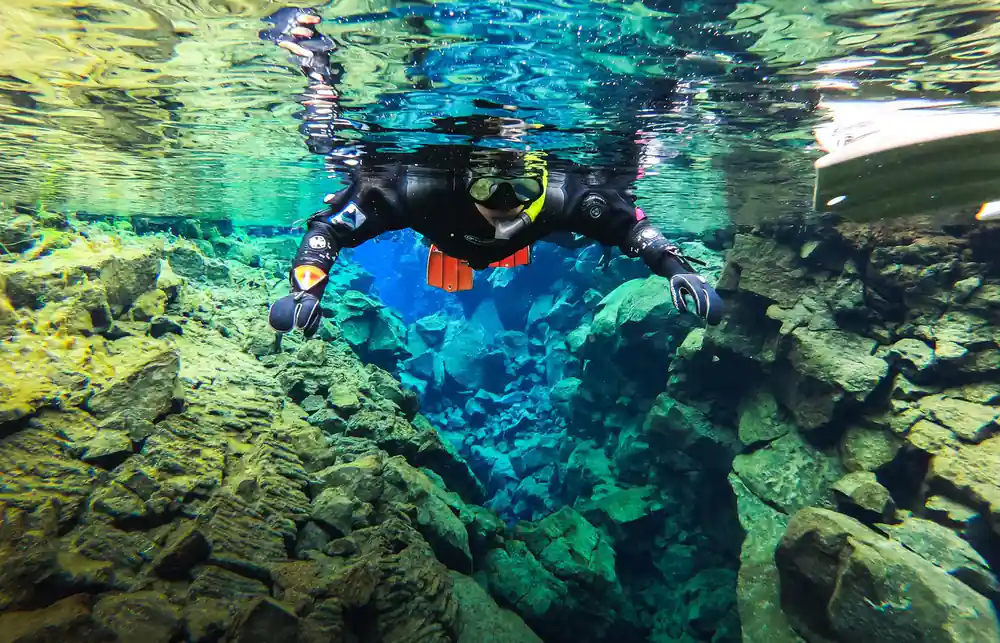
The gentle current is your transport. It moves you from the entry at the north end of the fissure towards the lagoon, and you steer with small movements of your fins rather than swimming hard. That is why guides often put slower and more nervous snorkelers near the front of the line, so the group drifts together at roughly the same pace and nobody is left behind. In the wide sections the rock is only a few metres below you, and the light moves in bands across the canyon as you go.
The crack you are floating in is the seam between two continents. At Þingvellir the North American and Eurasian plates break apart and the land between them subsides, while away from the plate boundaries the movement is fairly constant at about two centimetres a year and is released in bursts inside the rift zones[6]. The national park has been on UNESCO's World Heritage List since 2004[7], and around 1.5 million visitors come here each year[8].
It also helps to know what you are floating in. The water began as glacial melt far away and filtered through porous underground lava for 30-100 years before reaching the spring that feeds into Silfra[3]. From the fissure it flows on into Þingvallavatn, a lake covering 84 square kilometres with a greatest depth of 114 metres[9]. The park sits 47 km northeast of Reykjavík on Route 36[10], which makes it an easy drive in your own car or a straightforward pickup ride from the city.
from US$137
Groups are capped at 6 participants and a live English-speaking guide leads the snorkel, with pickup available at checkout.[2]
Mask, snorkel and breathing: beginner basics
Most beginner trouble is mask trouble. A mask fogs when warm breath and skin oils meet cold glass, so keep your fingers off the inside of the lens and let the guide do the final check on the bank. If the mask floods, lift the top edge slightly away from your forehead, look down and let the water drain while you keep breathing steadily through the snorkel, then press it back on. Water in a mask is an annoyance rather than an emergency, and the whole fix takes a couple of seconds once you have done it once.
Breathing through a snorkel is slower than breathing through your nose, and that is fine. Breathe in through your mouth and out through your mouth, and let the rhythm settle you. Some people find the first few metres feel strange because the sound of their own breathing is suddenly very loud and very close. If water gets into the tube, exhale firmly and it will clear. Resist the urge to look straight down at your own feet, because that is what breaks the mask seal at the nose, and look ahead at the guide instead.
Can you stop, float, or exit early mid-snorkel?
Yes to all three. You can stop and float upright at any point, which is a good way to reset a fogged mask or an over-fast breath. Where the water is shallow you can stand, and the guide will come to you. If you decide you have had enough, you can signal and be walked out, because the exit is close for much of the route and leaving early is not a problem. The one thing to avoid is swimming off on your own, since guides count heads constantly and a missing snorkeler stops the whole group.
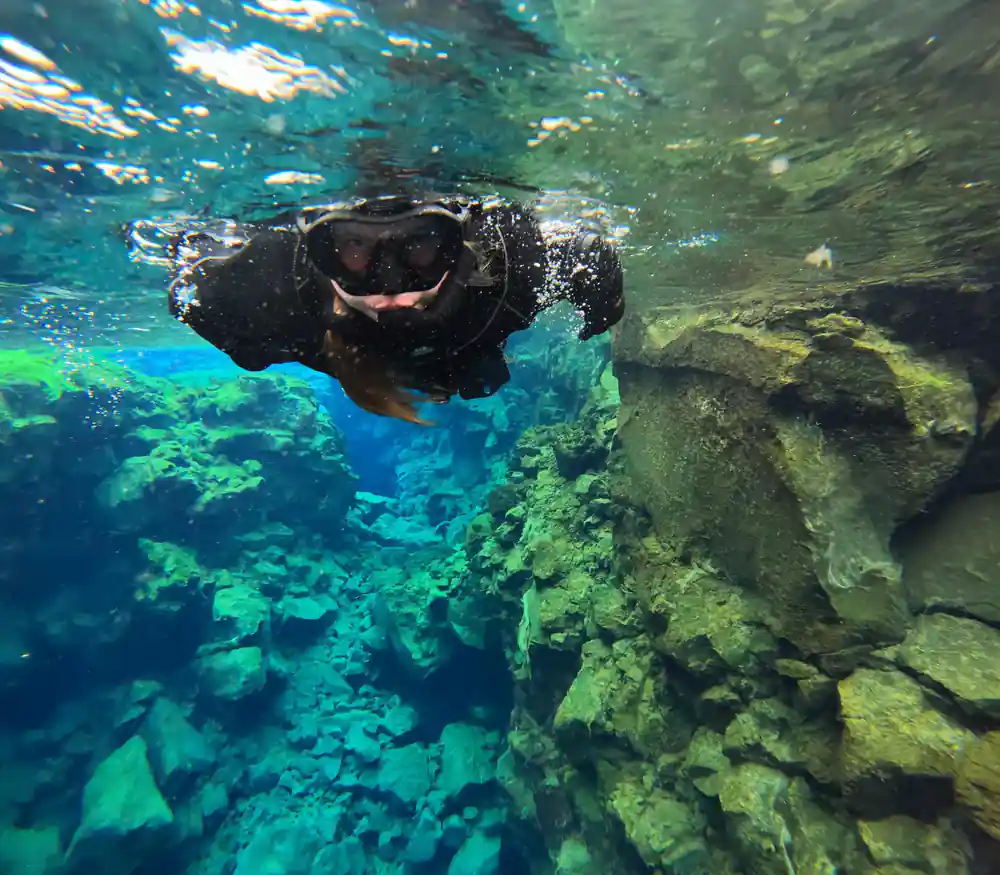
Knowing the scale of what is under you tends to settle the nerves. The fissure reaches 200 feet (60 meters) at its deepest, though most snorkeling takes place near the surface[11], and the water allows for underwater visibility of over 100 meters[3]. In practice that means you can see a long way into the blue, along green and gold rock walls, past the bright green troll hair and the different types of algae that make up most of the marine life in the fissure[3]. There is nothing down there that can hurt you.
Guides, nerves and claustrophobia in the fissure
The tour booked from this site runs as a small group limited to 6 participants, with a live English-speaking guide[2], and the guide score on that listing is 4.8[2]. In practice that means one person watching six masks, checking straps before entry and showing you a simple hand signal system before you get in. Say it out loud if you are nervous. Guides here take first timers every day, and knowing who is shaky changes how they space the group and how often they stop to check on everyone.
Claustrophobia is a fair worry about a place called a fissure, but the canyon is open to the sky for most of the route and widens out in sections. You are floating rather than crawling, and you can always lift your head and look up at the rock above the water. If tight spaces are a real problem, ask to stay near the front of the line where the water opens out first, and tell your guide at the briefing rather than halfway through. The drysuit neck seal can also feel snug and strange at first, and it loosens as the air inside settles.
Silfra tour durations
Durations as listed for each tour on GetYourGuide.[2][5][12][13]
Silfra snorkeling prices from Reykjavík
From prices per person in US dollars as listed on GetYourGuide.[2][4][14]
When to go and when to book
How a Silfra snorkel works
Book your slot
Choose a date and a starting time, then check whether pickup suits you. Free cancellation up to 24 hours in advance.[2]
Meet the guide and get kitted
You sign in, then climb into a drysuit with hood, gloves and boots. Tell the guide your size and say if you feel nervous.
Walk to the entry steps
A short walk over lava brings you to the steps into the water. Guides show you how to set the mask and breathe through the snorkel.
Float and follow the guide
Face down, fins still, you drift through the canyon with the current doing the work while you watch the walls slide past.
Exit and warm up
You climb out at the lagoon, walk back and peel off the suit. Warm layers and something hot to drink come next.
Snorkel between two continents with a small group
from US$138Reserve now & pay later