In a nutshell
- You wear a thin base layer under a supplied thermal undersuit, and the drysuit keeps the water out, so no heavy gear of your own is needed. Cotton is the one fabric to leave behind.
- Thin warm socks inside the neoprene booties, plus a spare pair for afterwards. Standard neoprene gloves get cold, so ask about dry gloves if your hands suffer.
- Glasses do not fit under a mask, so contacts or a prescription mask are the answer. Tie long hair low so it does not lift the hood or break the mask seal.
- Snorkeling at Silfra requires a minimum age of 12, a minimum height of 150 cm and the ability to swim. Life jackets and swimming aids are not permitted.[1]
- A towel, dry warm clothes, a hat and a bag for wet things. The tour booked from this site runs 3 - 5.5 hours, with pickup options to check.[2]
- Top choice Silfra Fissure Snorkeling from US$137 Duration3 - 5.5 hours[2]Rating4.71 from 2,142 reviews[2]Guide languageLive tour guide: English[2]PickupPickup available[2] Check availability
- From Reykjavík with Photos from US$215 Duration4.5 hours[3]Rating4.83 from 628 reviews[3]Guide languageLive tour guide: English[3]PickupPickup included[3] See this tour
- Golden Circle and Silfra from US$298 Duration10 hours[4]Rating4.82 from 304 reviews[4]Guide languageLive tour guide: English[4]PickupPickup included[4] See this tour
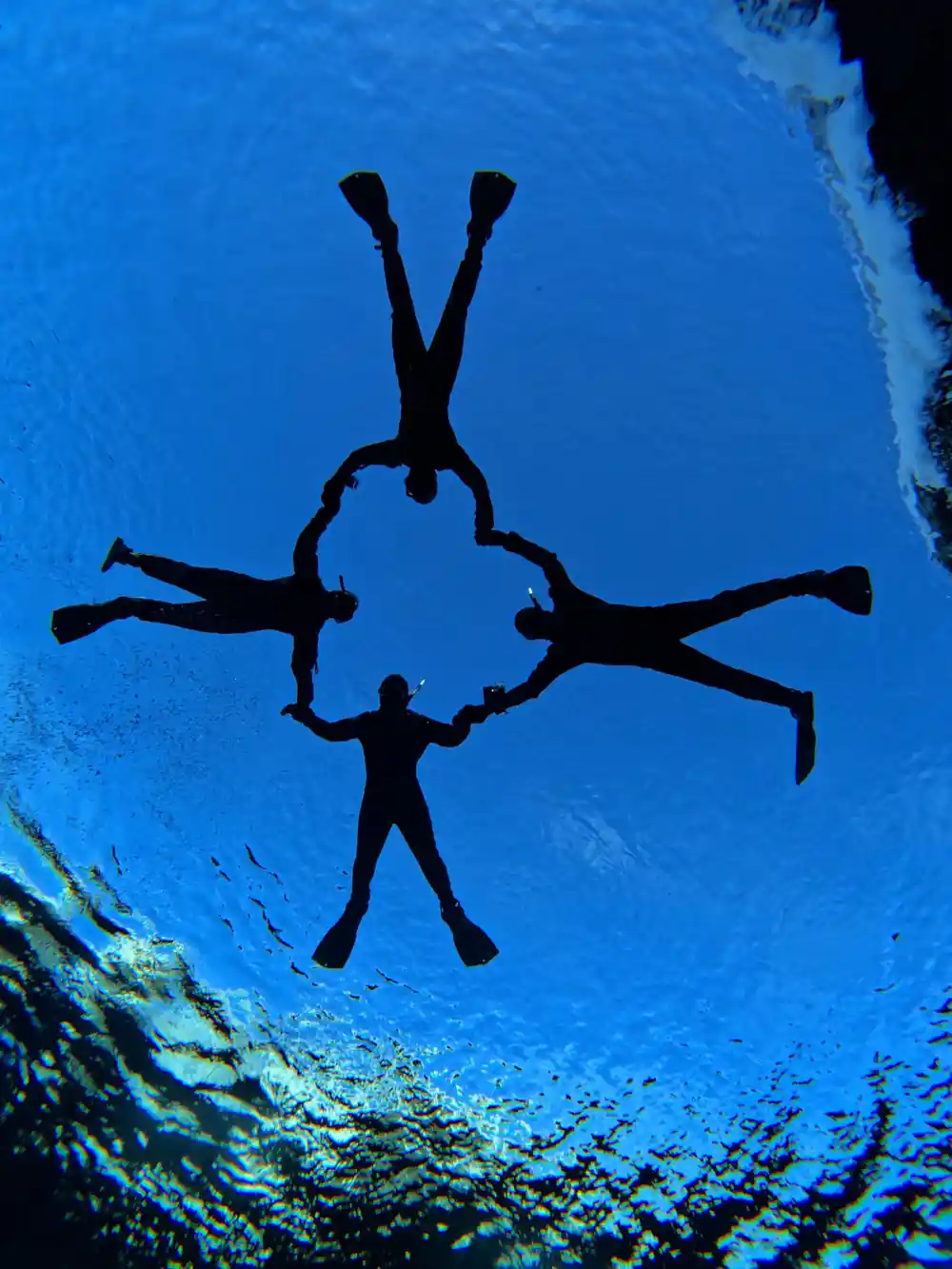
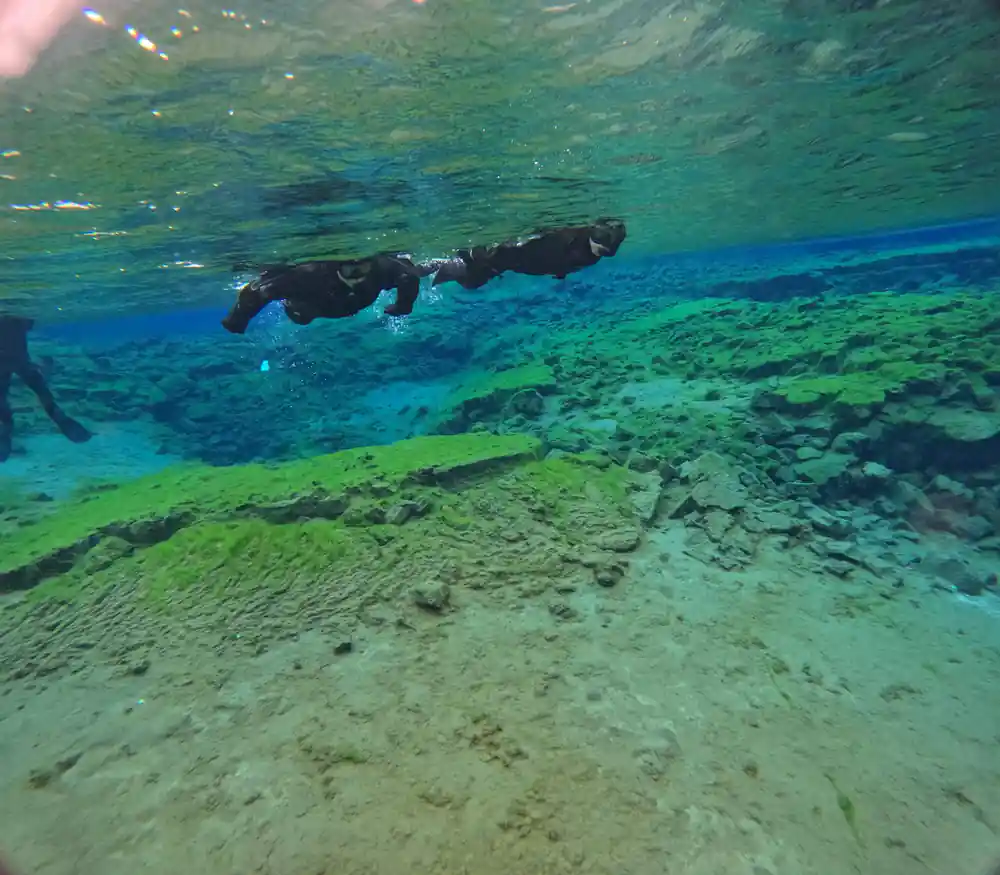
The water is filtered through porous underground lava for 30-100 years before reaching the spring that feeds into Silfra.
Our verdict: pack light and let the suit work
Before setting off
- Confirm you meet the age, height and swimming requirements
- Book a slot and check availability for pickup options
- Allow 3 - 5.5 hours for the tour, plus travel to Þingvellir[2]
- Compare tour prices and what each departure includes
On the day
- The water stays at 2°C to 4°C year round, so dress for cold[5]
- Bring sunglasses for the surface, where glare off water and snow is strong
- Fill in the medical form honestly and declare any conditions
- Leave valuables behind and keep a dry bag for your phone
Layering Under Your Thermal Undersuit
The good news is that you do not need to own a drysuit, boots, hood or gloves to snorkel Silfra. Operators supply the suit and the thermal undersuit worn beneath it, and your own kit comes down to the layer closest to your skin plus anything you want for warmth. Think of a winter walk in Reykjavík rather than a beach day: you are dressing for the air on the way to the water and for a cold swim once you are in. The changing rooms are basic but functional, and the walk to the fissure is short, so the extra few minutes spent adjusting your layers pays off in comfort for the whole swim.
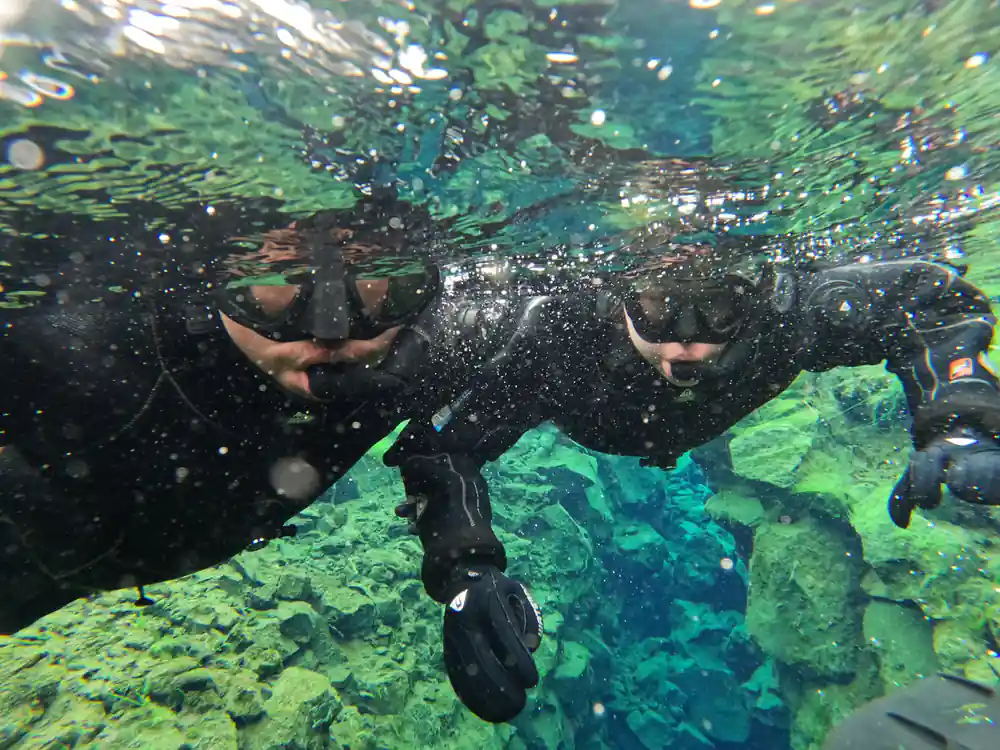
Cotton is the fabric to leave in the hotel. It holds moisture against the skin and there is no way to wring it out once the suit is zipped. Choose a synthetic or merino base layer, add a light fleece if you feel the cold, and avoid jeans, thick seams or anything with hard zips and buckles that could press into you under the suit. The water itself stays at 2°C to 4°C all year and never freezes.[5] The suit keeps it out, but the layer underneath decides wheather you enjoy the swim. A quick check before you zip up: run your hands over the front of the undersuit to smooth out any folds, because a wrinkle in the wrong place can become a cold spot once you are in the water.
Socks and Gloves for Cold Water
Feet and hands are where the cold arrives first. Thin, warm socks work better than thick hiking socks under the neoprene booties that come with the suit, because a bunched sock can pinch and reduce circulation. Pack a spare pair in your bag for afterwards, when your feet are damp and you still have a drive or a walk ahead of you. It is also worth tucking a pair of thin liner gloves into your pocket, even if you plan to use the supplied mitts, because they give you an extra layer without adding bulk.
Gloves are worth asking about when you book. Standard neoprene gloves keep the water out but let your fingers cool down, while dry gloves hold a layer of air around the hand and make a real difference on a long swim. At least one nearby snorkel listing advertises dry gloves by name from US$160.[6] If your hands go numb easily in cold water, that detail is worth more than a small saving, and a thin liner pair is easy to carry as backup. Some travellers also bring a small hand warmer packet to slip inside a dry glove after the swim, but that is more for the walk back than for the water itself.
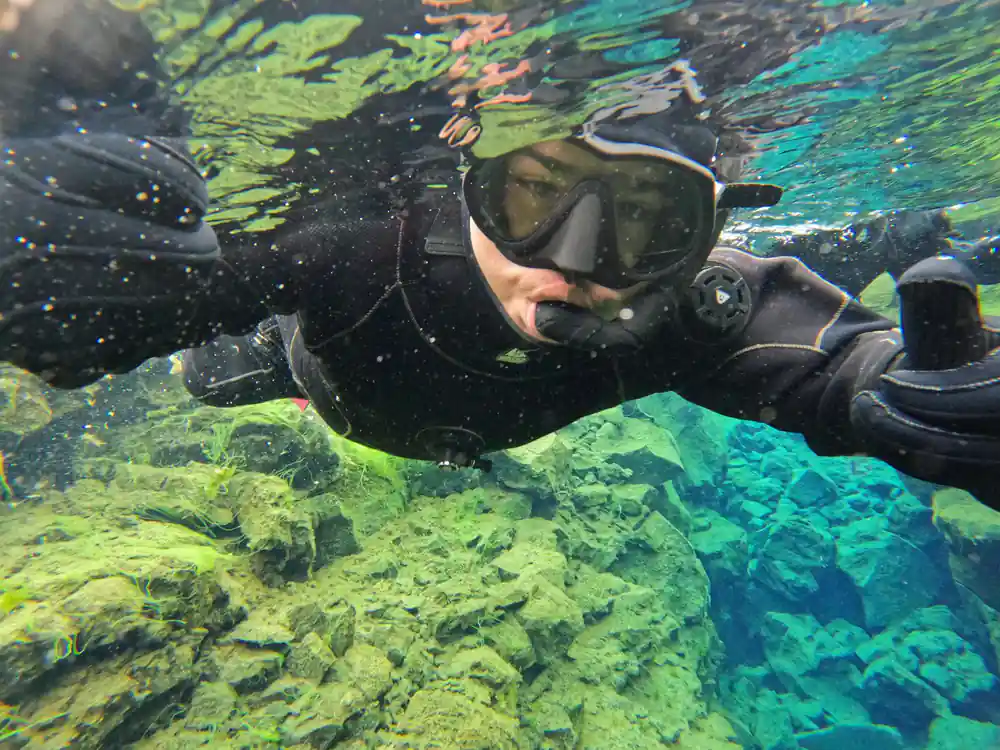
A drysuit, a hood and thin layers underneath are all you need to pack for Silfra.
Glasses, Contact Lenses and Vision Underwater
Dive masks and ordinary glasses do not mix, so decide in advance how you will see. Soft contact lenses are the simplest answer for most short-sighted snorkelers and stay comfortable as long as you keep your eyes closed if the mask floods. Ask your operator about prescription masks if you would rather not wear lenses, and if you snorkel without correction, stay close to your guide and follow the line of the group. If you do wear lenses, a small mirror and a travel bottle of lens solution in your dry bag will help you sort yourself out afterwards.
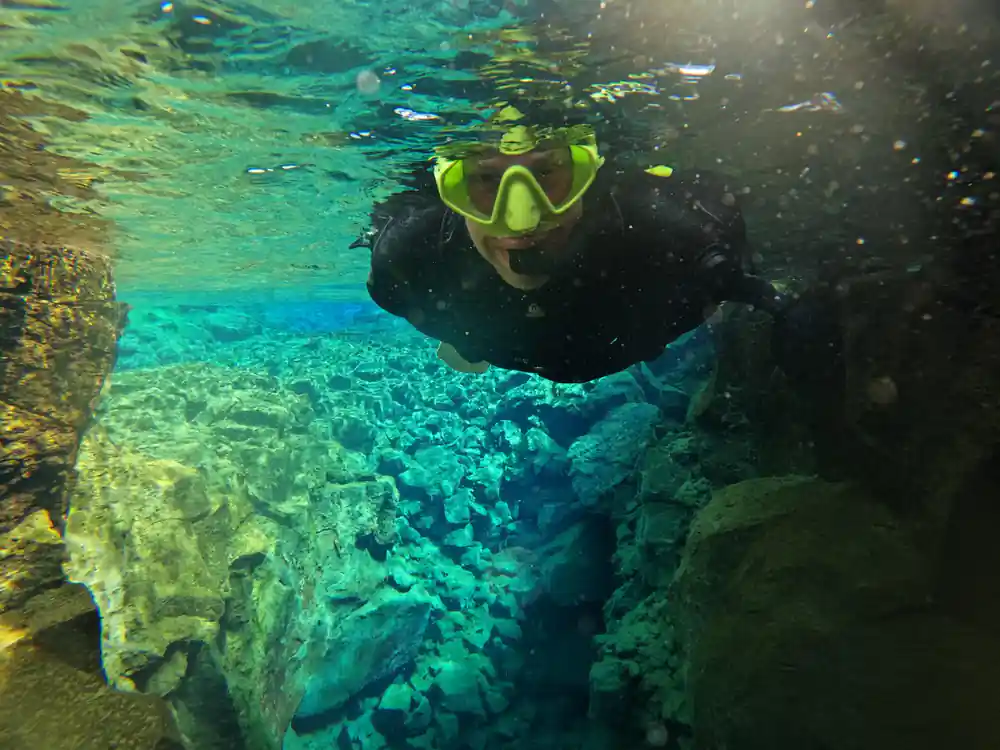
Vision matters less than you might expect. The fissure opens to 200 feet (60 meters) at its deepest, though most snorkeling happens near the surface.[7] You float over bright green algae and troll hair, watching rock walls slide past, while the guide leads the way through the narrow sections. If you wear daily disposible lenses, bring a spare pair and a small mirror for the changing area afterwards. The clear water makes depth perception tricky at first, so take your time and let your eyes adjust before you start swimming hard.
Long Hair, Hoods and Mask Fit
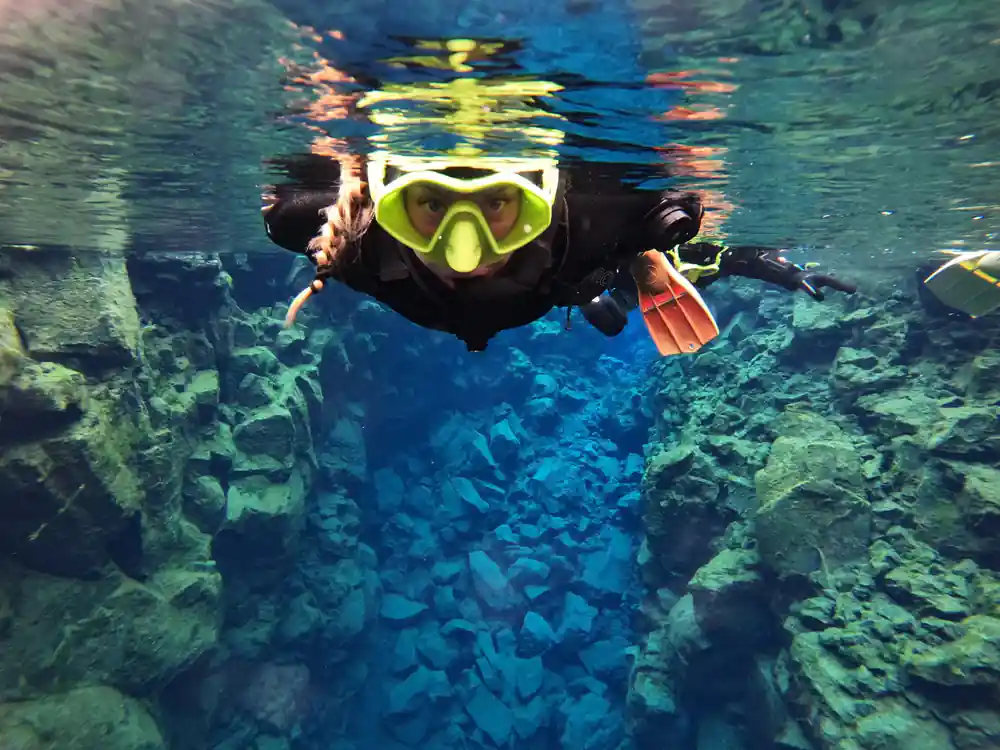
A hood is part of the suite, and it is the piece people misjudge. Long hair should be tied low at the nape or braided, not gathered in a high bun, because a knot on top of your head lifts the hood and breaks the seal around your neck. A thin buff or swim cap underneath can help keep loose strands out of the way. If you have very long hair, consider braiding it rather than using a ponytail, because a braid lies flat and stays in place better.
Mask fit works the same way. A single strand of hair trapped under the mask skirt is the most common cause of a leaking mask, and a hood that sits too high pushes the mask up as you move. Before you get in, pull the hood down, clear your face, seat the mask without pulling the strap too tight, and check the seal with a gentle breath out through the nose. A few seconds of adjustment now can save you from a foggy mask or a cold trickle of water halfway through the dive.
from US$137
Small group of up to six, live English-speaking guide, and free cancellation up to 24 hours in advance on the tour booked here.[2]
Documents, Waivers and Medical Checks
Silfra is not a swimming pool, and there are firm rules. To snorkel here you must be at least 12 years old and at least 150 cm tall, you must be able to swim and be comfortable in water, and life jackets and swimming aids are not permitted.[1] Read those before you book, especially if you are travelling with children or with someone who is not a confident swimmer. Take the requirements seriously, and if you have any doubts about your swimming ability, talk to the operator before committing.
Expect paperwork on the day: a medical declaration and a waiver to sign, and photo ID to confirm your age. Declare conditions honestly, including heart conditions, asthma, epilepsy, recent surgery, back or shoulder problems, and pregnancy, because the final call sits with the guide. If you plan to dive rather than snorkel, you need drysuit diver certification or drysuit dive experience.[8] Bring a printed or offline copy of your booking, check whether pickup is included, and confirm the meeting point the day before.
Pickup options for the tour booked from this site can be checked at the time of booking.[2] A phone with the confirmation open is usually enough, but a screenshot survives a cold battery. It is also worth noting the exact meeting point if you are driving yourself; the car park at Þingvellir can be busy, so give yourself extra time to find a spot and walk to the meeting area.
Cameras, GoPros and Valuables at the Site
Underwater photography is one of the reasons people come. Visibility in Silfra runs over 100 meters on a good day,[5] and blue light, dark rock and bright green algae make pictures that look edited even when they are not. The water you float in fell as snow and ice long ago: it filters through porous underground lava for 30-100 years before reaching the spring that feeds the fissure.[5] A small housing on a wrist strap or lanyard works well, while anything bulky gets in the way of the suit and the mask.
Cold water drains camera batteries quickly, so carry a spare and keep it inside a pocket next to your body until the last moment. Leave jewlery, watches, loose cash and anything you cannot replace in the van or at your hotel, and bring a small dry bag for your phone. Several Reyjkyavík departures include photos as part of the tour, including one from US$215.[3] If you want a souvenir but do not trust your own photography, choosing a tour that includes a photographer is a smart way to come away with images without the worry.
Towels and What to Bring for After the Snorkel
You will be wet around the face, hood and cuffs when you climb out, and the walk back to the changing area is the coldest part of the day. Pack a towel, a warm hat, dry socks, a fleece or jacket and, if you have one, a flask of something hot. A plastic bag for wet swimwear keeps the rest of your luggage dry on the drive back. A pair of flip-flops or sandals is also handy for the wet floor in the changing room.
Allow time to look around afterwards. Þingvellir National Park sits 47 km northeast of Reykjavík on Route 36,[9] and it receives approximately 1.5 million visitors each year.[10] It was added to UNESCO's World Heritage List in 2004,[11] and the lake at the northern end of the fissure, Þingvallavatn, covers 84 square kilometres with a greatest depth of 114 metres.[12] The land here is still moving, with the plates breaking apart and the ground between them subsiding.[13] A short walk along the fissure after your snorkel gives you a different perspective, and the nearby visitor centre has exhibits that explain the geology and history.
Silfra and Þingvallavatn, measured in metres
Sources: Silfra to 200 ft (60 m)[7]; visibility over 100 m[5]; Þingvallavatn depth 114 m[12].
Silfra snorkeling options at a glance
All amounts are US dollar from-prices from these GetYourGuide listings:[6],[3],[14],[15].
When to book and when to go
Dressing for Silfra
Start with a thin base layer
Synthetic or merino against the skin moves moisture away and sits flat under the supplied thermal undersuit.
Add a light mid layer
A thin fleece is plenty. Anything thick bunches under the drysuit and makes the neck seal sit badly.
Leave cotton at the hotel
Cotton stays wet and cold against you once you are sealed in, and there is no way to change mid-swim.
Bring your own socks
Thin warm socks beat thick hiking socks inside the neoprene booties, plus a spare dry pair for afterwards.
Tie hair low and check the seal
A low ponytail or braid keeps the hood down and stops hair breaking the mask seal as you move.
Check the Silfra fissure snorkeling tour and its pickup options
from US$138Reserve now & pay later