In a nutshell
- The glacial meltwater in Silfra stays 2°C to 4°C all year round and never freezes, as fresh water keeps filling the fissure.[1]
- In Silfra the water allows for underwater visibility of over 100 meters, with deepest sections down at 200 feet (60 meters).[1][2]
- Glacial meltwater is filtered through porous underground lava for 30-100 years before reaching the spring that feeds into Silfra.[1]
- The marine life in Silfra is mostly bright green 'troll hair' and different types of algae that coat the rock.[1]
- Snorkellers must be at least 12 years old, at least 150 cm tall and able to swim, and life jackets and swimming aids are not permitted.[3]
- Top choice Snorkel Between Continents from US$137 Rating4.71 from 2,142 reviews[4]Duration3 - 5.5 hours[4]PickupCheck availability for pickup options[4]CancellationFree cancellation up to 24 hours before[4] Check availability
- Silfra with Free Photos from US$215 Rating4.83 from 628 reviews[5]Duration4.5 hours[5]PickupPickup included[5]CancellationUp to 24 hours before, full refund[5] See this tour
- Golden Circle and Silfra from US$298 Rating4.82 from 304 reviews[6]Duration10 hours[6]PickupPickup included[6]CancellationUp to 24 hours before, full refund[6] See this tour
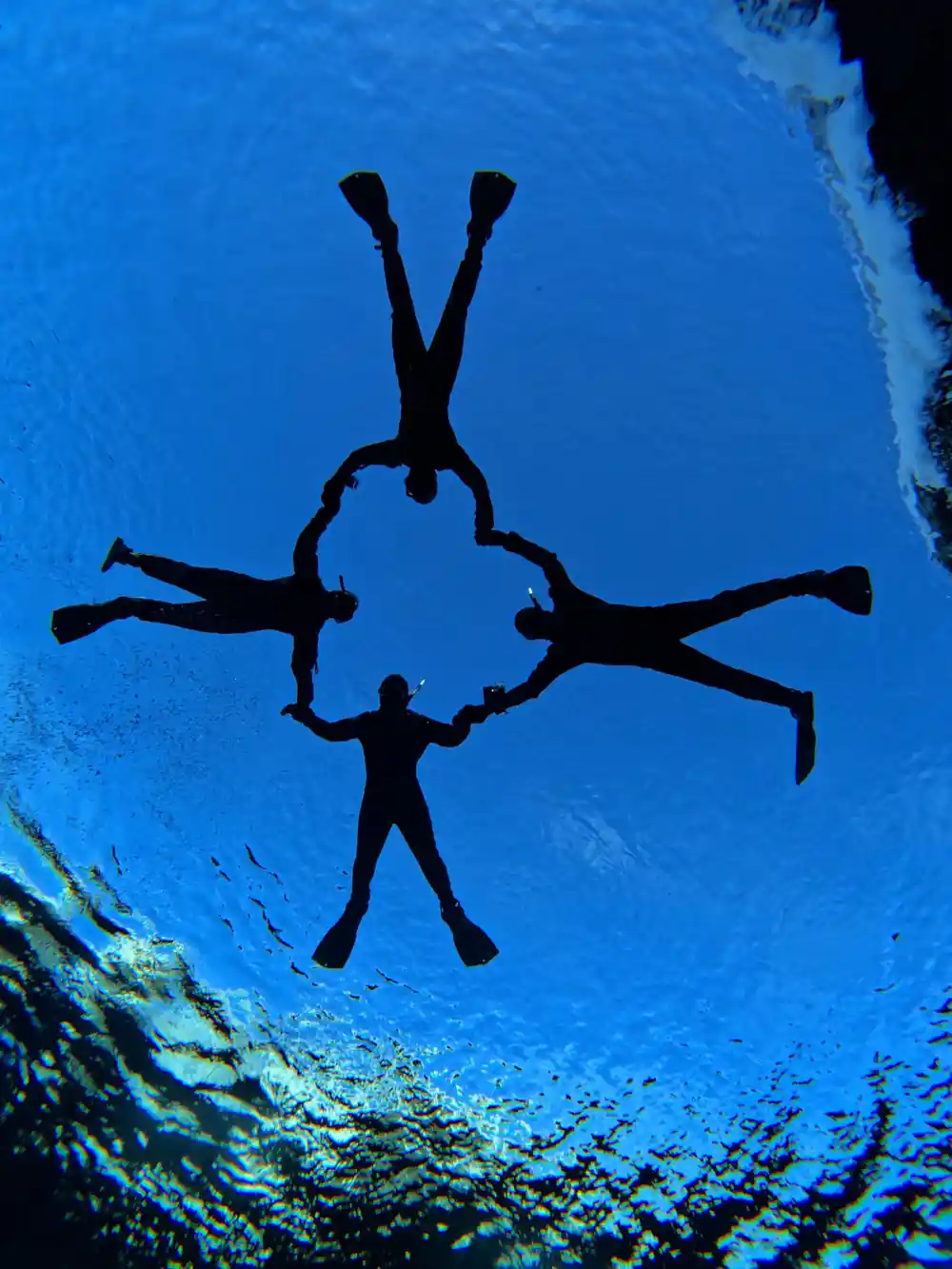
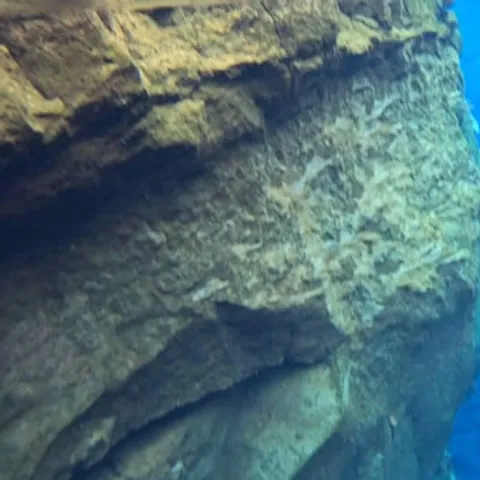
The water is filtered through porous underground lava for 30-100 years before reaching the spring that feeds into Silfra.
Should you book a Silfra snorkel?
Before reserving
Why Silfra Fissure Water Stays So Clear
Silfra is a fissure in the ground at Þingvellir, and the water inside it arrives by a slow route. Glacial meltwater is filtered through porous underground lava for 30-100 years before reaching the spring that feeds into Silfra.[1] That is decades of travel through rock rather than a quick tumble down a riverbed, and what finally surfaces is startlingly plain: no peat stain, no silt, no green bloom.
Temperature barely moves through the year. The glacial meltwater in Silfra stays very cold at 2°C to 4°C all year round, and it never freezes because fresh water is constantly filling the fissure.[1] Whenever you visit, the water itself is the same. What changes is the air above it, the light, whether snow is banked along the path, and how quickly your hands feel the cold once you stop moving.
Cold and clear together change how a snorkel feels. There is no sandy bottom swirling up around your fins and no swell pushing you off line, so you spend your time looking rather than swimming hard. If you have only ever snorkelled in warm water, the first surprise is the quiet. The second is how much detail you can pick out on a wall of rock that stretches away in every direction.
From Glacier to Fissure: The Water's Long Journey
Silfra sits in a landscape that is being pulled apart, very slowly. At Þingvellir the North American and Eurasian plates break apart and the land between subsides, while away from the plate boundaries activity is fairly constant at about two centimetres a year, released in bursts when tension builds in the rift zones.[8] The cracks you snorkel through are part of that long argument between two plates, a corridor of rock with a continent on either side.
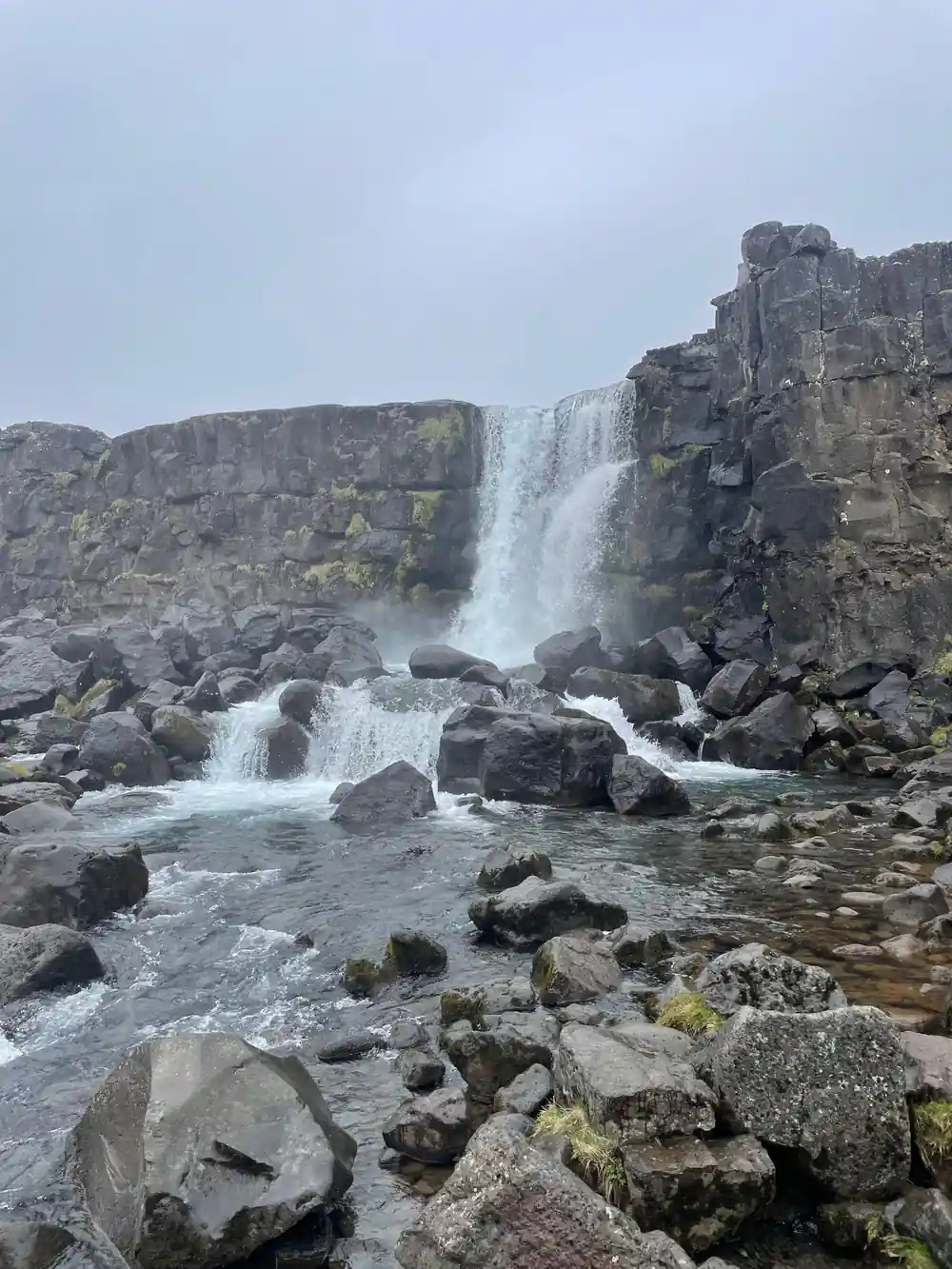
The water ends up in Þingvallavatn, the lake at the northern end of the fissure. The lake covers an area of 84 square kilometres (32 square miles) and its greatest depth is 114 metres (374 feet).[9] Þingvellir National Park was added to UNESCO's World Heritage List in 2004, and the park receives approximately 1.5 million visitors each year.[10][11] You are snorkelling in a place people cross the world to walk around.
Getting there from the capital is simple. Thingvellir National Park is 47 km northeast of Reykjavík on Route 36.[7] The tour booked from this site has pickup available, so you can check availability for pickup options and let someone else handle the drive while you watch the lava fields slide past the window.[4]
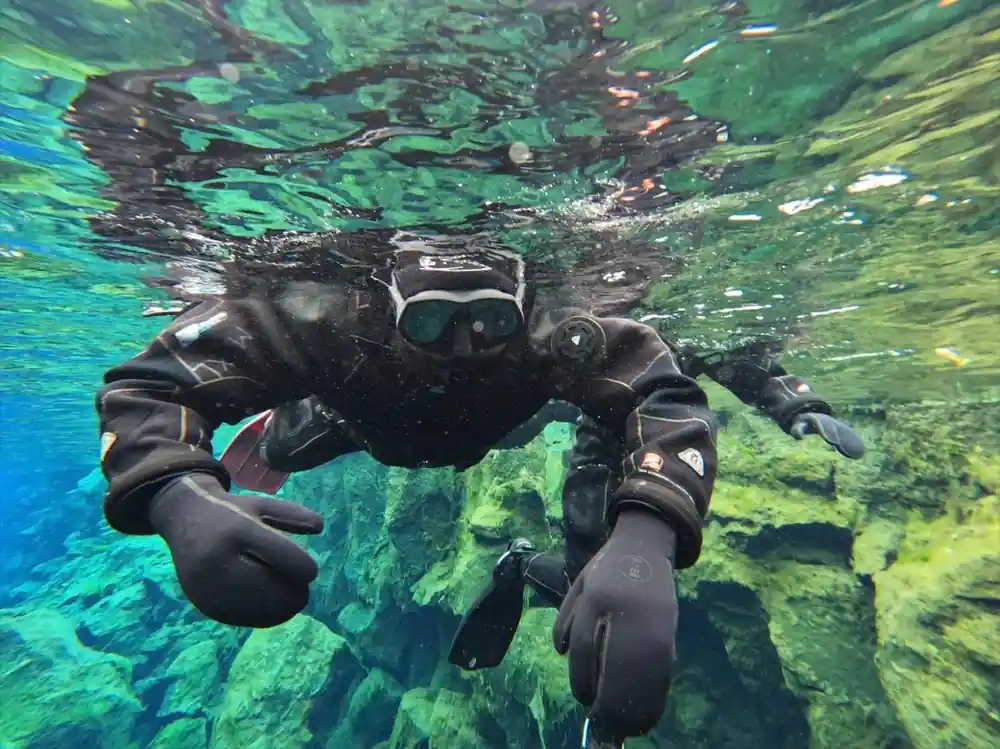
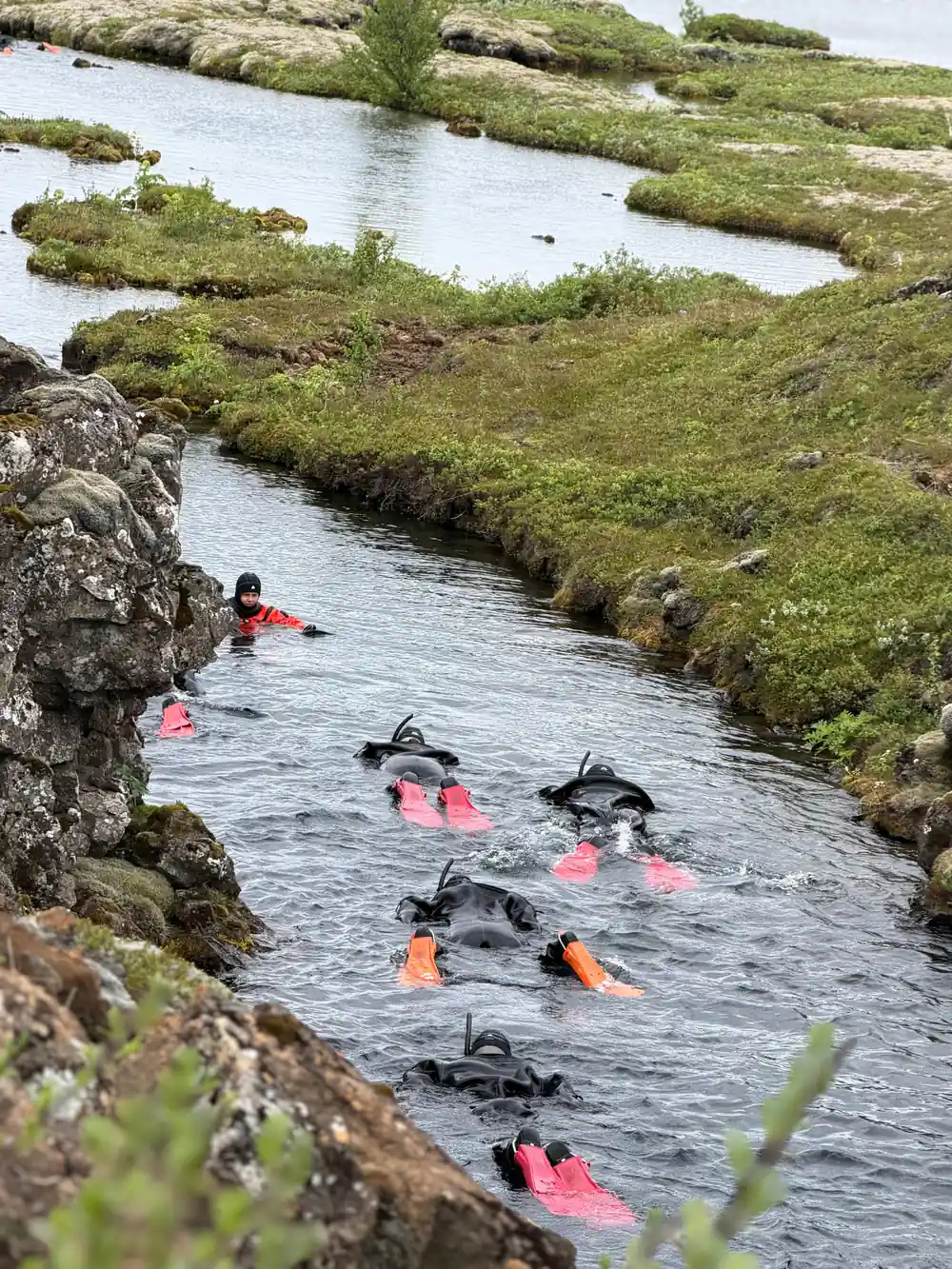
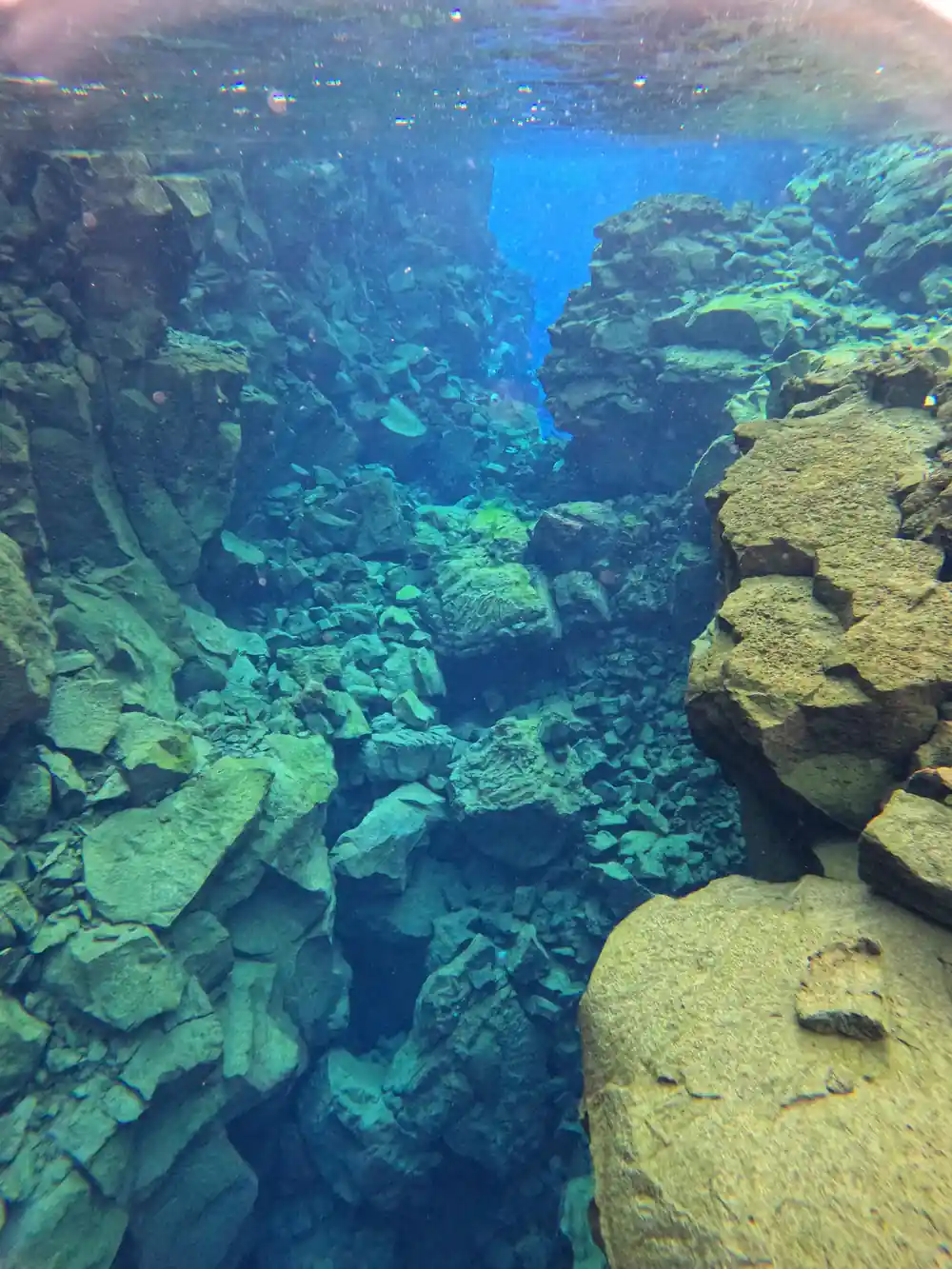
Green-tinted rock walls and a long view down the fissure
How Far You Can See Underwater
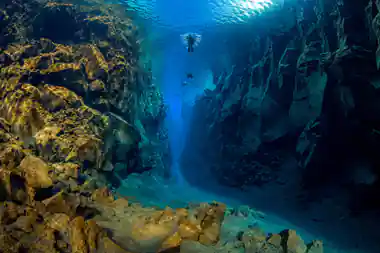
The number most people remember afterwards is the visibility. In Silfra, the water allows for underwater visibility of over 100 meters.[1] On the bank that sounds like a line from a brochure. In the water it means you can see the far lip of the fissure, the next group of snorkellers hanging in the blue, and the pale rock shelving away below you, all in the same glance.
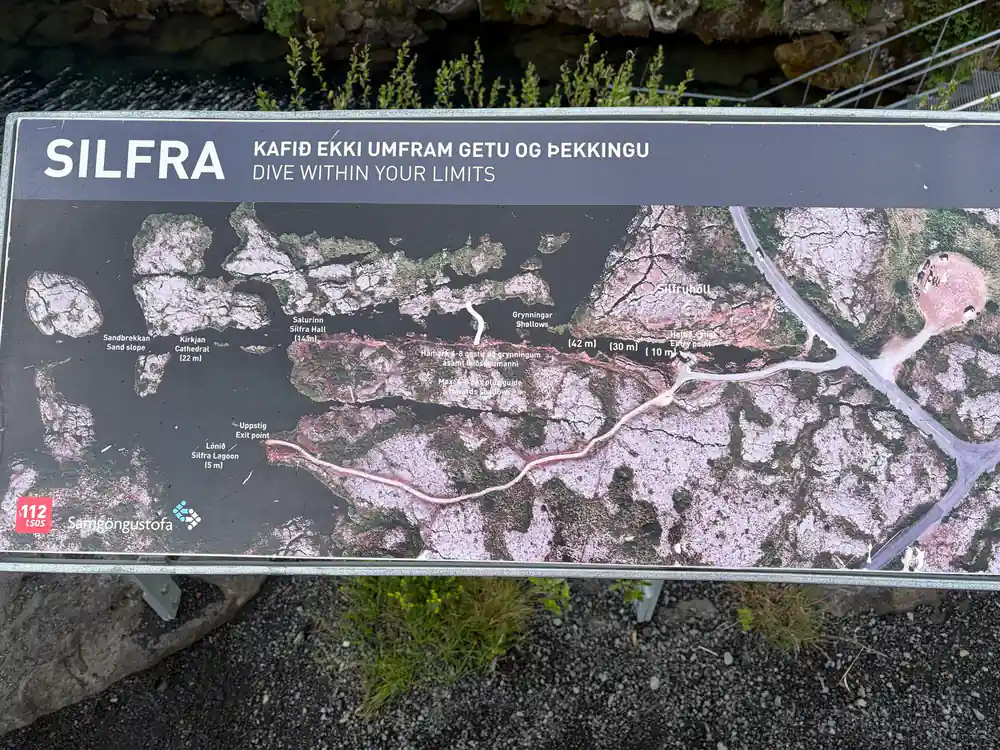
Depth is the other half of the picture. Silfra reaches depths of up to 200 feet (60 meters) in its deepest sections, though most snorkeling takes place near the surface.[2] You are not floating over an abyss for the whole route. You drift along a flooded corridor with a long drop off to one side, and light from the surface keeps everything around you readable.
Light does most of the work. On a bright day the sun pushes through the surface and the rock shifts from deep blue to white to a soft sea green. On a grey day the same walls read darker and flatter, and the green algae loses some of its glow. Either way, the distance you can see is the part that makes people laugh out loud into their snorkel.
The Green Algae That Defies the Cold
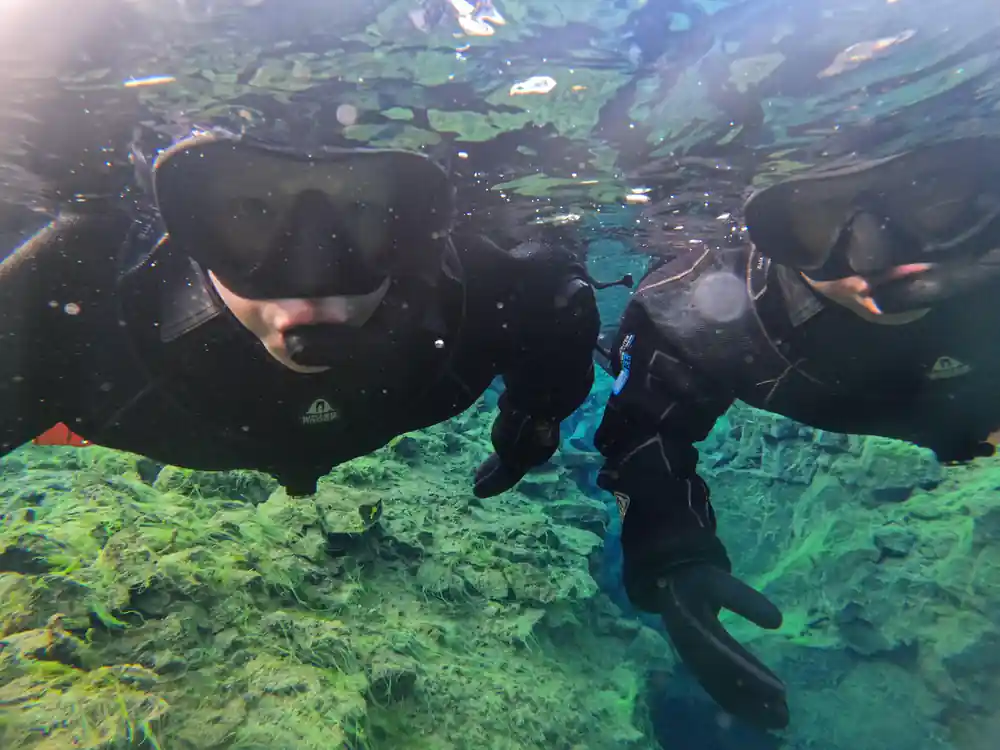
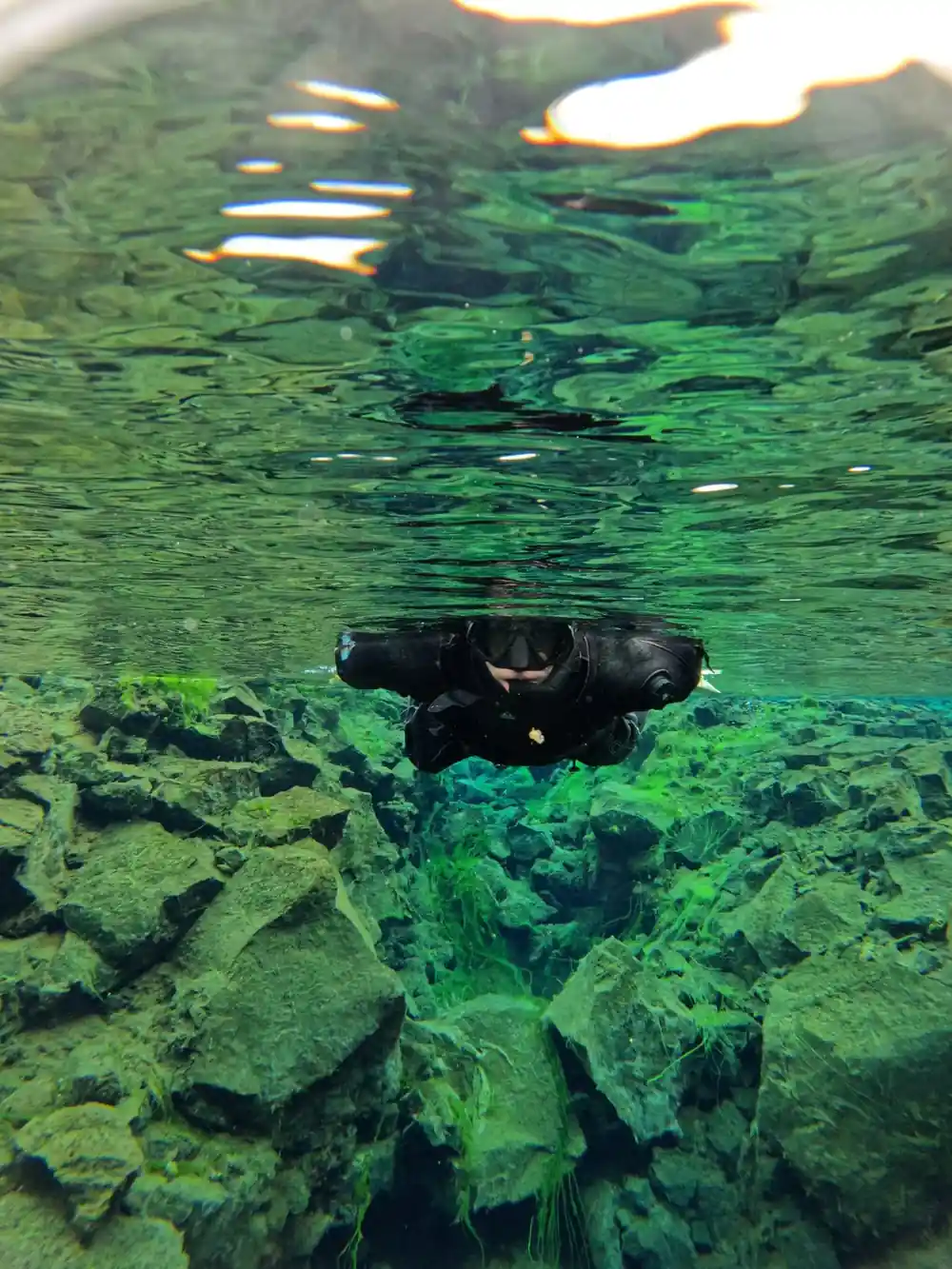
Nothing about water at 2°C to 4°C sounds hospitable, yet the fissure is far from bare.[1] The marine life in Silfra consists mostly of bright green 'troll hair' and different types of algae.[1] It grows in soft tufts on the rock, and through a mask it reads as green velvet rather than anything you would call seaweed.
That green supplies most of the colour in Silfra photographs. The stone underneath is grey and pale, so the algae carries nearly all of the contrast you will see, along with your own hands and the bubbles from the group ahead of you. Look along the walls as you float rather than only straight ahead, and take your time in the shallow sections near the entry.
Growth in cold, clear water like this is slow and thin compared with a tropical reef. It is also unusually vivid. Where sunlight reaches the algae directly, the green looks almost artificial, a colour that seems unlikely under a lava field. Snorkellers who slow down and hover often find the best of it right beside the entry platform.
from US$137
A small group tour limited to 6 participants, running 3 to 5.5 hours, with free cancellation up to 24 hours in advance.[4]
What Lives in Silfra's Cold Water
Many people arrive expecting fish and leave talking about the light. The marine life in Silfra consists mostly of bright green 'troll hair' and different types of algae.[1] This is a freshwater fissure fed by glacial meltwater, and what lives in it clings to the rock rather than swimming past you in shoals.
That is not a disappointment once you are in. The reason to snorkel Silfra is the geology, the clarity and the odd, quiet feeling of floating through a crack in the earth with a continent on either side. Watch the walls, watch the far end of the corridor, and let your guide point out the details worth a second look.
The water remains 2°C to 4°C year round.[1] There is no bloom season and no murky month to plan around, and what you see on your first visit is close to what you would see on any other date. That takes most of the guesswork out of choosing when to come.
How Silfra Compares with Warm Water Reefs
The obvious comparison is with tropical snorkeling, and it helps to be clear about what each one offers. In Silfra, the water allows for underwater visibility of over 100 meters.[1] On a reef you are usually peering a short way into a crowd of coral and fish. Here you are looking down a flooded crack in the rock, and the view runs a very long way before anything stops it.
What you will not find is coral or a busy population of reef fish. The scenery is lava, pale stone and green algae, and the colour comes from sunlight moving through very clear water rather than from the animals themselves. The reward is scale and light: walls, ledges, and a blue-white glow where the fissure opens toward the lake.
Then there is the cold, which is part of the deal. The water sits at 2°C to 4°C all year round.[1] You will be in a dry suit with a hood and gloves, and your face will feel the temperature straight away. Most people stop thinking about it soon after, because everything in front of them is worth the attention.
Snorkeling Silfra: What You Need to Know
There are rules here, and they are checked. To snorkel at Silfra, participants must be at least 12 years old, at least 150 cm tall, and able to swim and be comfortable in water, and life jackets and swimming aids are not permitted.[3] If you are booking for a family, read those before you pay, because turning up short of them means watching from the bank.
The tour booked from this site is a small group trip limited to 6 participants, with a live guide in English, running 3 to 5.5 hours depending on the slot you choose, and it starts from US$137.[4] It holds a rating of 4.71 from 2,142 reviews, and pickup is available, so you can check availability for pickup options and starting times.[4] You can reserve now and pay later, with free cancellation up to 24 hours in advance.[4]
Divers are catered for on separate listings. To dive Silfra you are required to have either a drysuit diver certification or drysuit dive experience.[12] Snorkelling needs no certification at all, just the age, height and swimming basics. Whichever you choose, the site is the same 47 km northeast of Reykjavík on Route 36, inside a national park that sees around 1.5 million visitors a year.[7][11]
Maximum group size on Silfra tours
Silfra tours compared by from price
From prices in US dollars from GetYourGuide listings:[4][5][6][13][14]
When to book and when to go
Planning a Silfra snorkel
Check the rules
Age, height and swimming requirements are checked before you get in, and life jackets are not permitted at Silfra.[3]
Book a slot
Groups are limited to 6 participants on the tour booked from this site, and free cancellation runs up to 24 hours in advance.[4]
Reach Þingvellir
The park is 47 km northeast of Reykjavík on Route 36, and pickup is available on the standard tour.[4][7]
Dress for cold water
The water stays 2°C to 4°C year round. The dry suit, hood and gloves matter far more than the air temperature.[1]
Float and look
Most of the snorkel happens near the surface, with the fissure dropping far below you in its deepest sections.[2]
Warm up after
A hot drink and dry clothes waiting in the van make the drive back to the city much more comfortable.
Snorkel the clear water of Silfra between two continents
from US$138Reserve now & pay later