In a nutshell
- The meltwater in Silfra sits between 2°C and 4°C all year round and the fissure never freezes.[1]
- Your face and hands feel it first, and the water itself does not change with the season, so the layers you wear matter most.[1]
- Light, wind, roads and crowds all shift through the year while the water underneath stays the same.
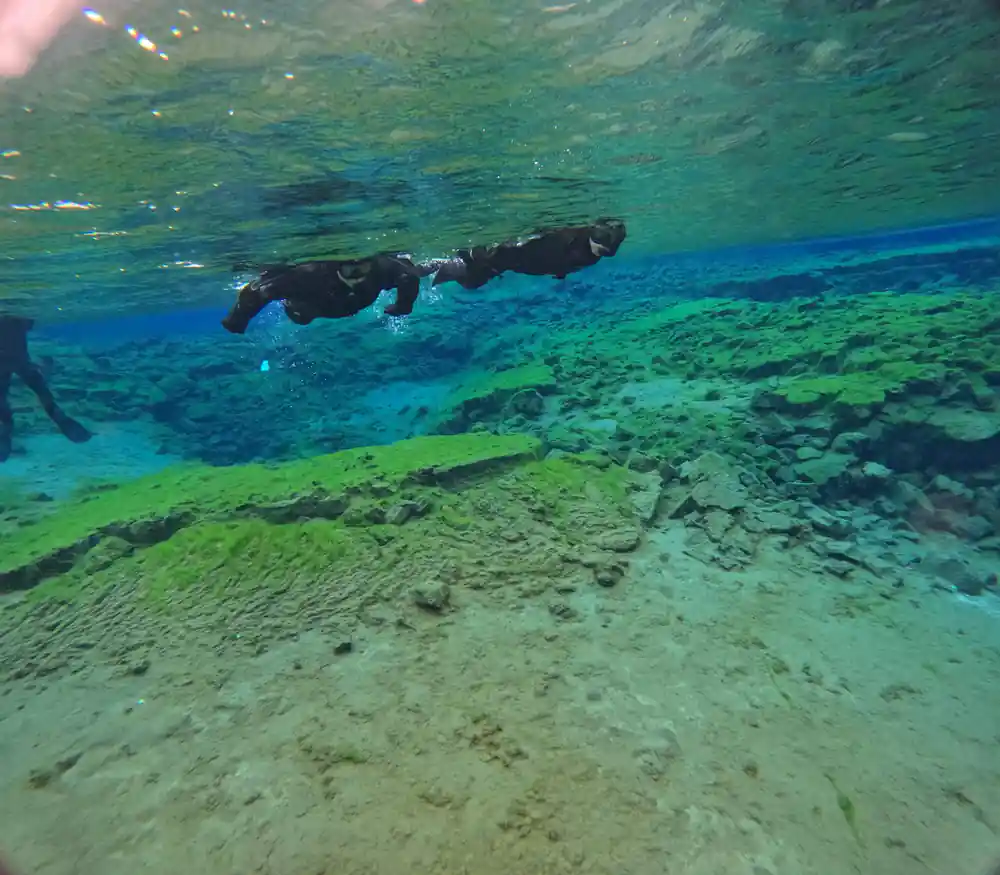
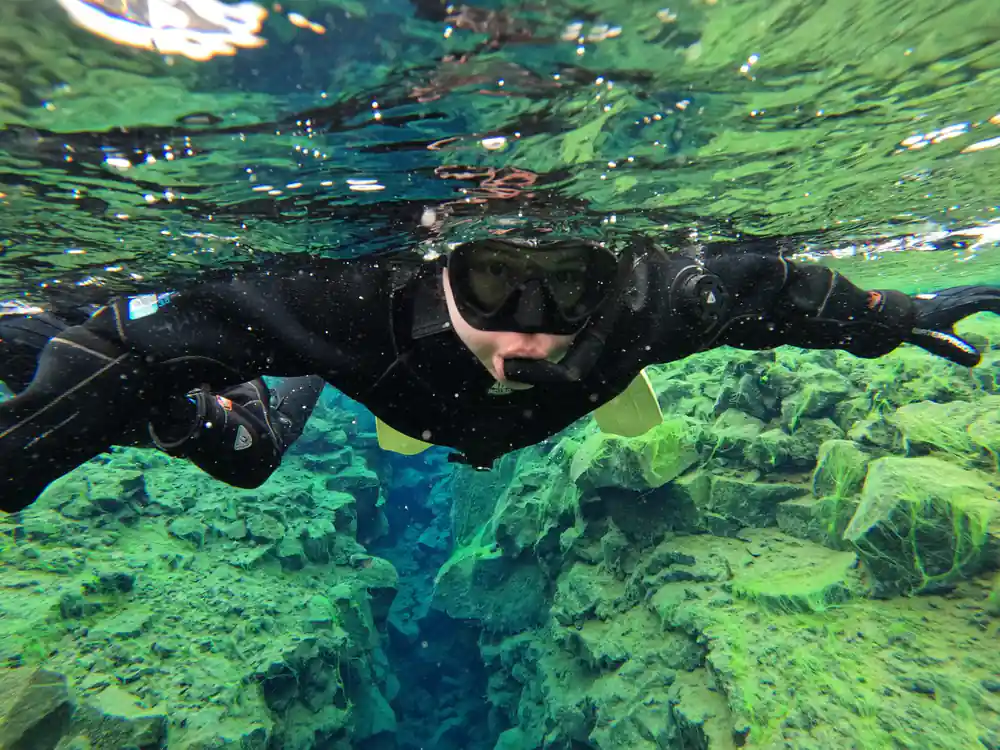
- The water allows for underwater visibility of over 100 meters, with green troll hair and algae on the rock.[1]
- Snorkellers must be at least 12 years old, at least 150 cm tall and comfortable in water.[2]
- Top choice Silfra Fissure Snorkeling from US$137 Duration3 - 5.5 hours[3]Ratingrated 4.71 from 2,142 reviews[3]PickupPickup available: check availability[3]GuideLive tour guide: English[3]CancellationFree cancellation up to 24 hours ahead[3] Check availability
- Snorkeling with Free Photos from US$215 Duration4.5 hours[4]Ratingrated 4.83 from 628 reviews[4]PickupPickup included: check availability[4]GuideLive tour guide: English[4]CancellationFree cancellation up to 24 hours ahead[4] See this tour
- Golden Circle and Silfra from US$298 Duration10 hours[5]Ratingrated 4.82 from 304 reviews[5]PickupPickup included: check availability[5]GuideLive tour guide: English[5]CancellationFree cancellation up to 24 hours ahead[5] See this tour

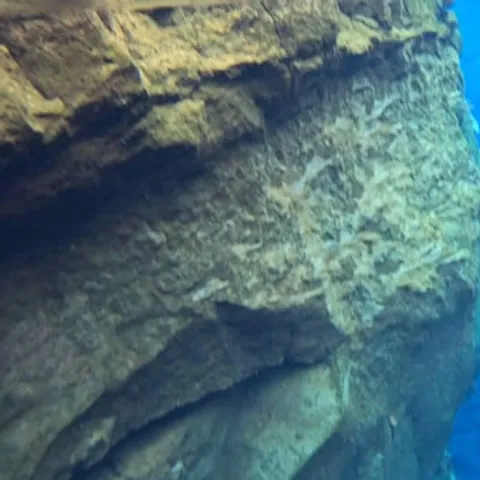
The water is filtered through porous underground lava for 30-100 years before reaching the spring that feeds into Silfra.
Is a cold-water Silfra snorkel worth it?
Before reserving
Why the Silfra fissure water temperature holds steady
The Silfra fissure water temperature sits between 2°C and 4°C all year round, and the fissure never freezes.[1] This is the most useful thing to know before you book: the season changes the light, the wind and the road, but it does not change the water. People often assume that a summer slot means a warmer swim. It does not. The glacial meltwater arrives cold and keeps arriving, so the water feels the same in every season once your face goes under. The layers you wear under your suit matter just as much in high summer as they do in midwinter.
That water has a long journey behind it. Glacial meltwater is filtered through porous underground lava for 30-100 years before reaching the spring that feeds into Silfra.[1] By the time it reaches you it has been underground for decades, and there is very little left in it. The result is the clarity that made this place famous: the water allows for underwater visibility of over 100 meters.[1]
The fissure is also deeper than most people picture. Silfra reaches depths of up to 200 feet (60 meters) in its deepest sections, though most snorkeling takes place near the surface.[6] You are not swimming along a shallow floor. You float above a rift with a long drop below you, and the blue goes down further than your eye can follow.
How near-freezing water feels on your face and hands
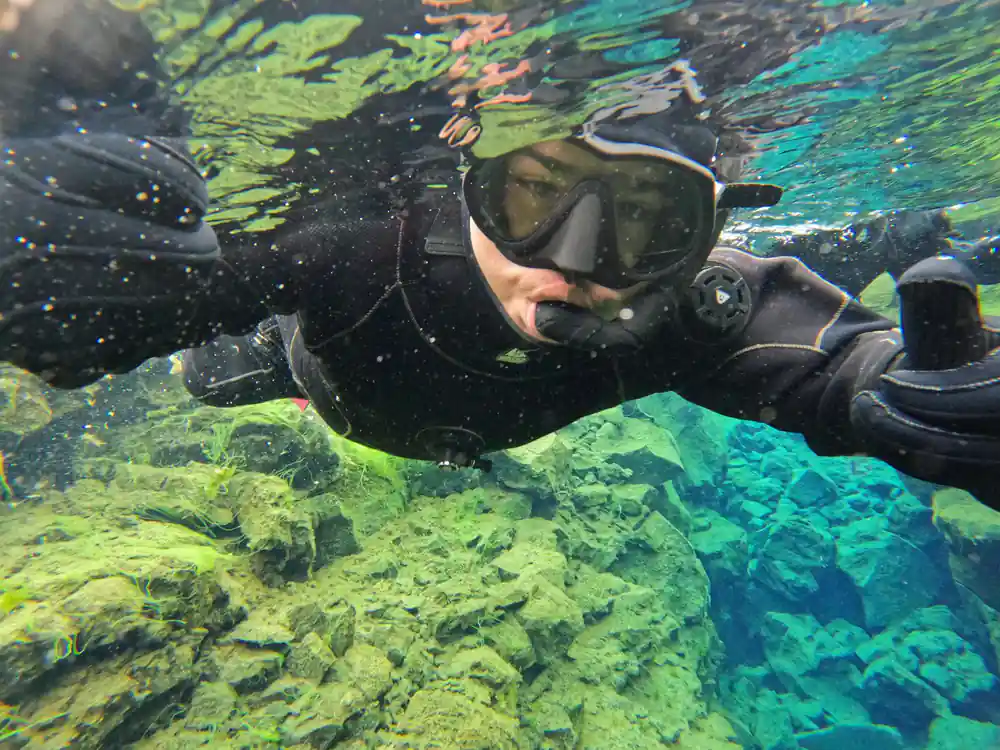
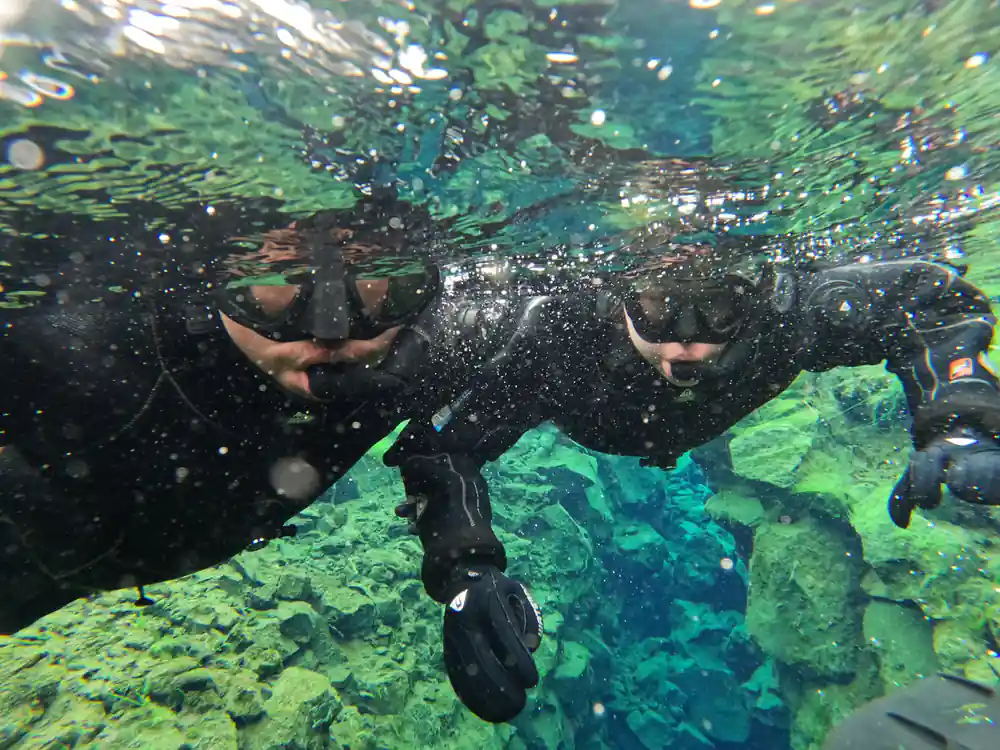
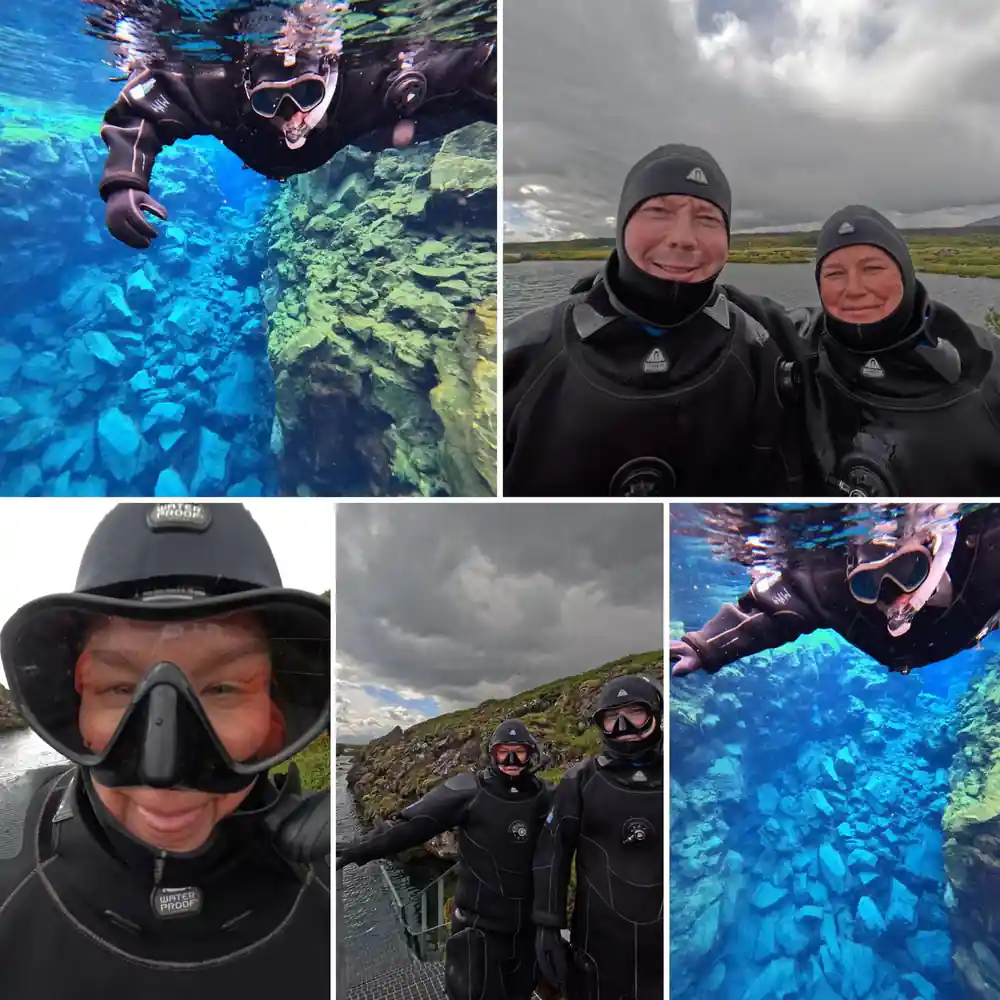
The first moments are the ones people remember. Cold water reaches your cheeks, lips and forehead, your breath catches, and your body sends a very clear message about getting out. Then it settles. Within a short while most snorkellers are breathing through the snorkel, floating flat, and looking down at the rock. If you have snorkelled in the tropics, this is a different sport.
Hands and feet are where the cold lingers. Keep your hands close to your body rather than trailing them in the current. Under the suit, wear warm thin layers: a thermal base layer, a light fleece, and wool socks if they fit comfortably inside the boots you are given. Bulky clothing will not keep you warmer and will make moving harder.
Afterwards, expect your fingers and face to stay cold for a while, even if you stayed dry. Change out of anything damp, put your hat and gloves back on, and hold something warm. The shivering passes quickly once you are out of the wind.
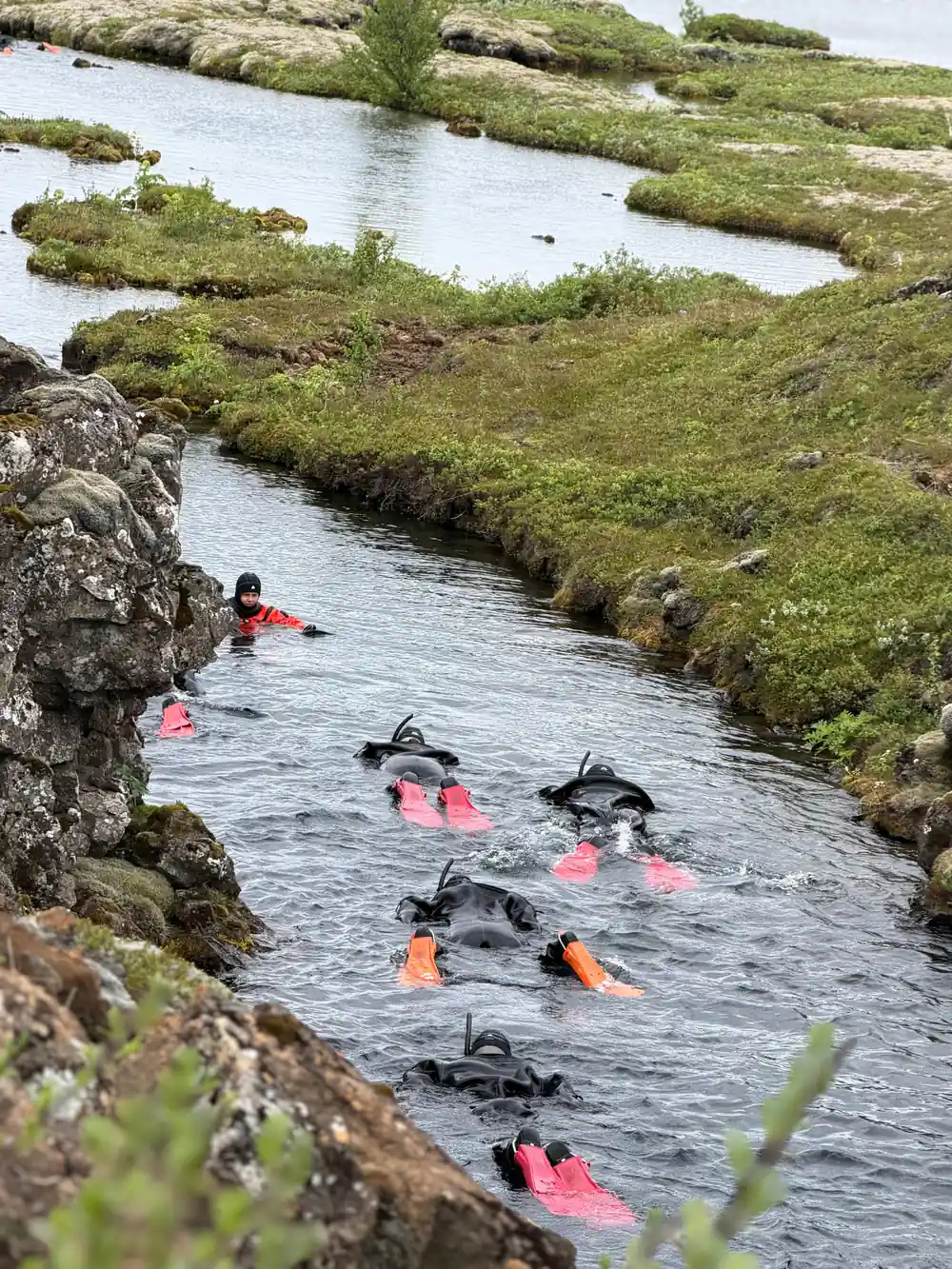
Cold water, blue light, and a fissure that keeps the same temperature all year.
Summer snorkeling versus deep winter at Thingvellir
What actually changes through the year is everything above the water. Summer brings long daylight and simple logistics: an easy drive from Reykjavík, open roads, a short walk to the entry point. Winter brings snow on the lava, low sun, ice on the path and a much shorter window of usable light. Under the surface the water holds between 2°C and 4°C all year round.[1]
The park is straightforward to reach: Thingvellir National Park is 47 km northeast of Reykjavík on Route 36.[7] In summer, plenty of people drive themselves. In winter, treat the same road as a different journey and check conditions the morning you go. The park was added to UNESCO's World Heritage List in 2004[8], and it is busy: Thingvellir National Park receives approximately 1.5 million visitors each year.[9]
Think about what you want from the day rather than the water. Summer gives you soft light and more company at the site. Winter gives you a stark, quiet landscape, a snow covered path, and steam lifting off water that is far warmer than the air above it. Both versions end with the same view of two continents easing apart.
Wind, storms and what gets a snorkel cancelled
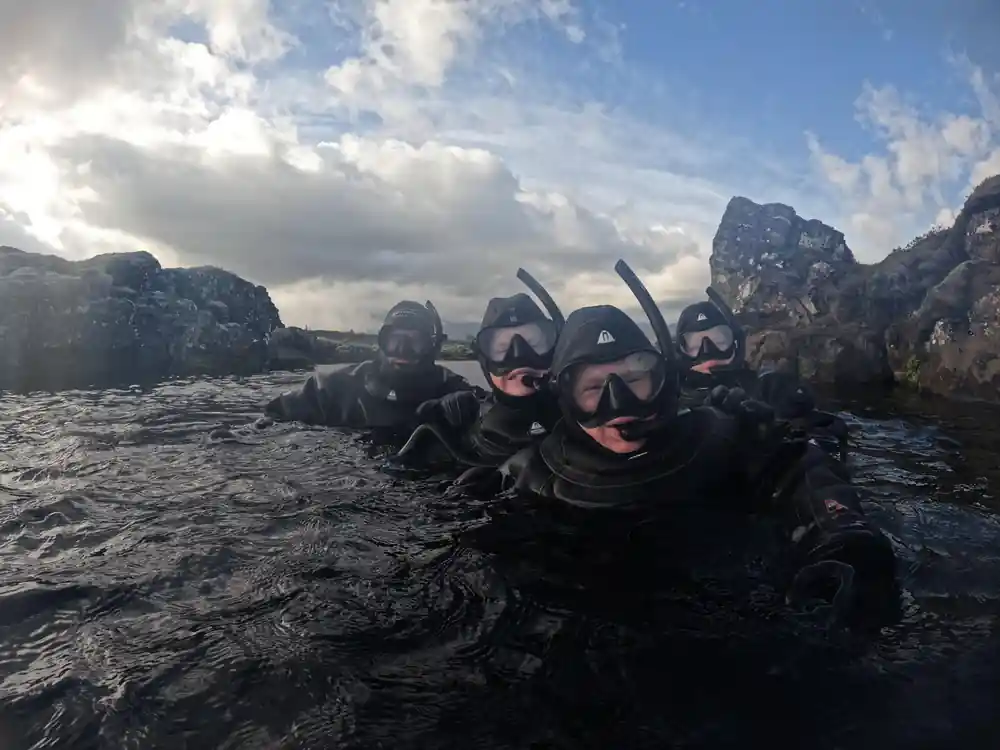
On most days the cold water is not the problem. Wind is. A gusty day makes the walk to the entry point miserable and can make the site unsafe, and a storm can shut the road across the moor altogether. When a slot is called off, it is usually about the surface rather than anything happening in the fissure.
That is why flexible booking matters here. The tour booked from this site comes with free cancellation, cancel up to 24 hours in advance for a full refund, and you can reserve now and pay later.[3] Hold a slot, watch the forecast, and decide when you know what the weather is doing.
Keep some slack in your plan. A cancelled snorkel is far easier to rebook if it is not sitting on your last morning before the flight home. Pack a windproof shell and a warm hat for the walk, and check the forecast the evening before rather than a week out.
from US$137
Reykjavík: Silfra Fissure Snorkeling between Two Continents, rated 4.71 from 2,142 reviews.[3]
What you see underwater, and how deep it goes
Visibility is what people remember most about Silfra. The water allows for underwater visibility of over 100 meters in Silfra.[1] Light, angle and depth change what you notice from minute to minute, but the water itself stays clean.
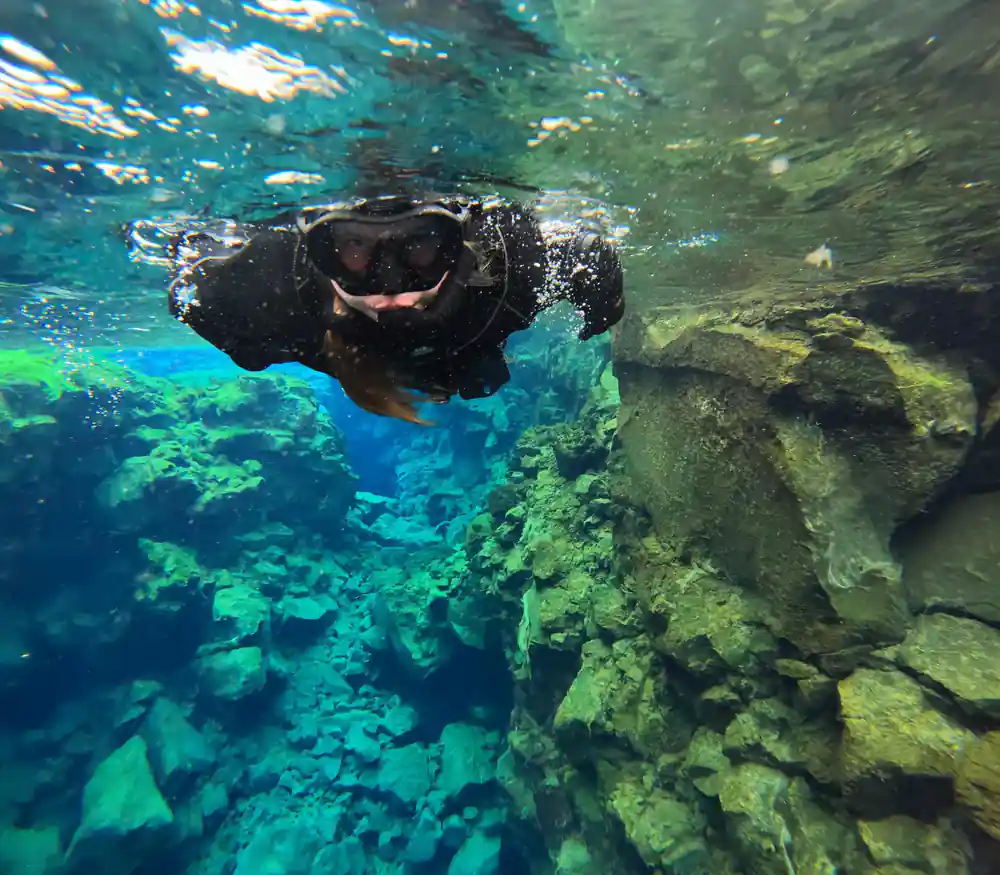
There is not much life down there, and what exists is strange and beautiful. The marine life in Silfra consists mostly of bright green troll hair and different types of algae.[1] It coats the rock in green and gold and gives the fissure most of its colour. Look for the green where the light catches the rock at an angle.
The geology underneath is moving, slowly, and it shapes the whole site. At Þingvellir the North American and Eurasian plates break apart and the land between subsides, while away from the plate boundaries movement is fairly constant at about two centimetres a year and rift zones release stress in bursts.[10] Deeper down, Silfra reaches depths of up to 200 feet (60 meters) in its deepest sections, though most snorkeling takes place near the surface.[6]
What surface weather to dress for at Thingvellir
The site sits beside Þingvallavatn, a lake that covers 84 square kilometres and has a greatest depth of 114 metres.[11] Weather crosses that water without much in the way, so the wind at the entry point can be stronger than it feels in the car park or back in Reykjavík. On a still day it is simply cold. On a windy one, the walk is the hard part.
Dress in layers you can peel off, and make the outer one windproof and waterproof. Gloves you can pull off with your teeth are useful on the walk, and grip matters more than warmth on an icy path. Avoid cotton next to your skin: it holds water and cold. Wool or synthetic base layers are the sensible choice.
Bring a dry fleece, hat and socks for afterwards, or a full change of clothes if you have room. Whatever you wear into the water will be damp when you come out, and standing around in wet layers while the group changes is the least pleasant part of the day.
Best months to visit and what to expect
Your choice of month is about light, roads and crowds rather than degrees. Summer gives you long daylight and straightforward driving. Autumn brings softer light and quieter roads. Midwinter gives you snow, short days and a landscape that feels like another planet.
The rules stay the same in every season. To snorkel at Silfra, participants must be at least 12 years old, at least 150 cm tall, and able to swim and be comfortable in water; life jackets and swimming aids are not permitted.[2] Divers need either a drysuit diver certification or drysuit dive experience.[12]
A practical plan looks like this: book a slot early in your trip, keep a spare morning free, layer up, and go in expecting the start to be bracing and the rest of the float to be calm and blue. Nothing about the water will surprise you if you accept the cold before you fly. Book early in your stay rather than at the end of it, and you leave Iceland with the memory of floating over a rift instead of a story about the day the wind won.
Reviews for Silfra snorkel tours
Review counts taken from GetYourGuide listings:[3][4][5][13][14]
Silfra snorkel prices from Reykjavík
US dollar from-prices for the cited listings:[3][4][5][14]
When to go, month by month
Plan your Silfra snorkel
Check you qualify
Snorkellers must be at least 12 years old, at least 150 cm tall and comfortable in water; life jackets are not permitted.[2]
Book with slack
Free cancellation up to 24 hours in advance on the main listing lets you hold a slot and watch the forecast.[3]
Pack thin and warm
Thermal base layers, a light fleece and a windproof outer layer; keep the bulky items for the airport.
Expect the first shock
Cold water reaches your face first, your breathing settles, and then the blue opens up in front of you.
Keep a spare morning
If wind closes the site, an extra free morning is what turns a cancelled snorkel into a rescheduled one.
Snorkel between two continents, whatever the season throws at you
from US$138Reserve now & pay later