In a nutshell
- Silfra allows underwater visibility of over 100 meters, so the canyon walls and the sandy floor read clearly from the surface.[1]
- Glacial meltwater keeps Silfra at 2°C to 4°C all year round, and the fissure never freezes.[1]
- Thingvellir: Silfra Fissure Diving with Optional Pickup is limited to 3 participants, with a live English-speaking guide.[2]
- Þingvellir National Park joined UNESCO's World Heritage List in 2004 and sees approximately 1.5 million visitors a year.[3][4]
- Free cancellation up to 24 hours in advance for a full refund, and you can reserve now and pay later.[2]
| Snorkeling | Scuba diving | Freediving | |
|---|---|---|---|
| From | from US$137[5] | from US$275[2] | from US$223[6] |
| Duration | 3 - 5.5 hours[5] | 4 - 6 hours[2] | 3 hours[6] |
| Group size | Limited to 6 participants[5] | Limited to 3 participants[2] | Limited to 6 participants[6] |
| Guide language | English[5] | English[2] | English, Icelandic[6] |
| Rating | 4.71 from 2,142 reviews[5] | 4.49 from 75 reviews[2] | 4.83 from 40 reviews[6] |
To dive Silfra you are required to have either a drysuit diver certification or drysuit dive experience.
Dive it if you are certified, snorkel it if you are not
Before reserving
On the day
- Diving runs 4 - 6 hours, with starting times to check when you book[2]
- Thingvellir National Park is 47 km northeast of Reykjavík on Route 36[9]
- The guided dive is limited to 3 participants[2]
- The water stays 2°C to 4°C all year round[1]
Going solo at Silfra: there is no unguided entry
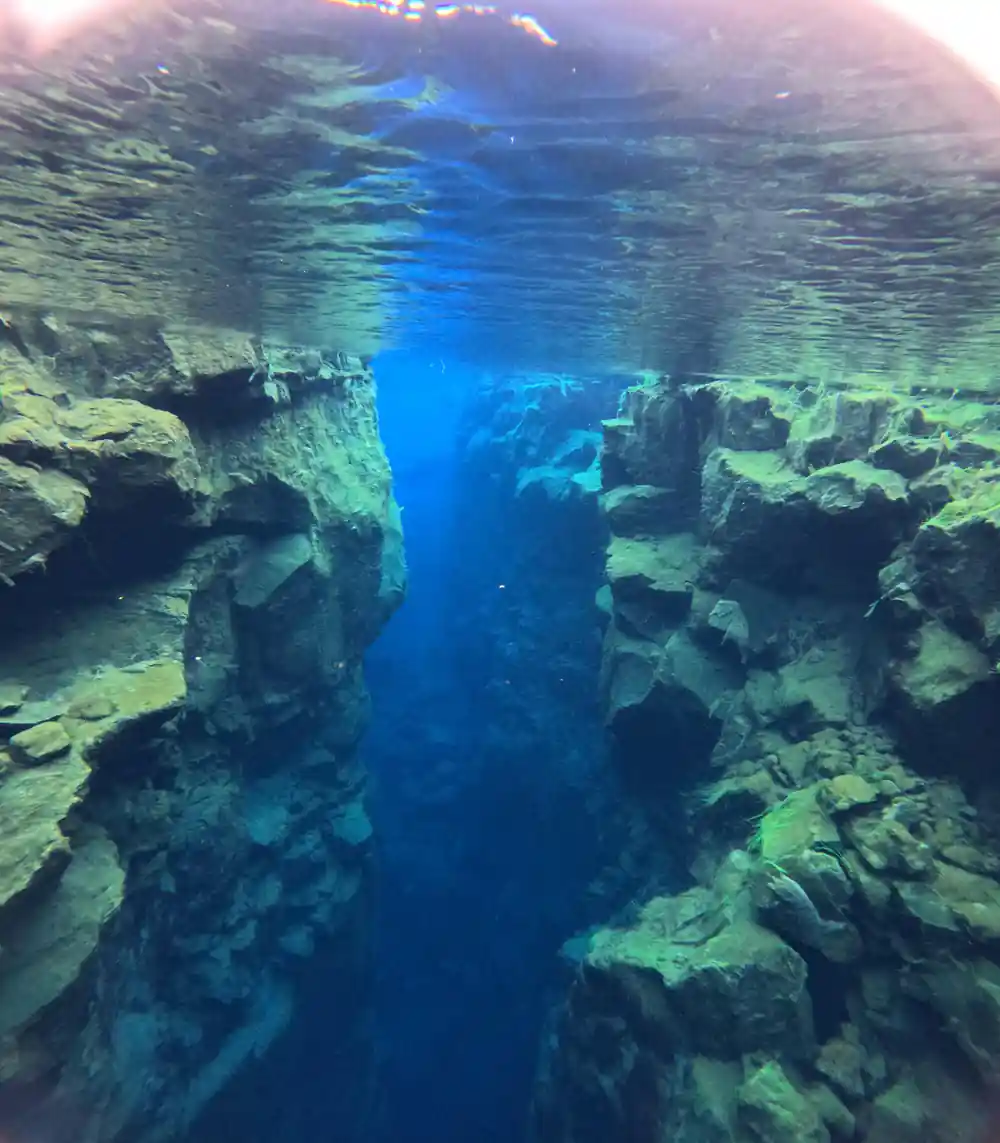
Silfra is a rift where the North American and Eurasian plates pull apart, flooded with glacial meltwater that makes the bottom of the canyon look close enough to touch. It sits inside Þingvellir National Park, which joined UNESCO's World Heritage List in 2004 and receives approximately 1.5 million visitors each year.[3][4] Almost all of them stay on the paths above the water.
Getting into Silfra happens on a guided trip. Every Silfra listing, whether snorkeling, diving or freediving, includes a live guide and a set group size, and the water sits at 2°C to 4°C all year round, so the kit matters as much as the route.[1] There is no version of this where you park the car, hire a mask and float away on your own.
Practically, that means booking before you fly, reading the participant requirements before you pay, and deciding whether you want pickup from Reykjavík or a meeting point in the park. The guided dive is limited to 3 participants, and it runs 4 - 6 hours.[2] Treat the outing as a half day at least, with warm clothes and a spare set waiting in the car.
Snorkeling in Silfra: what the float actually feels like
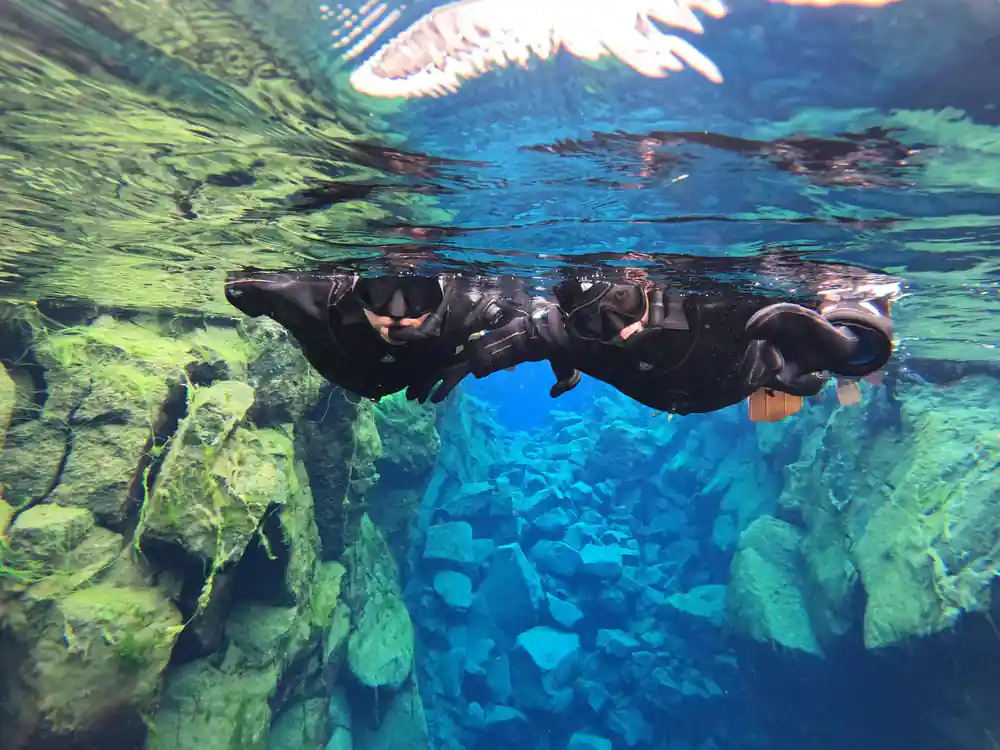
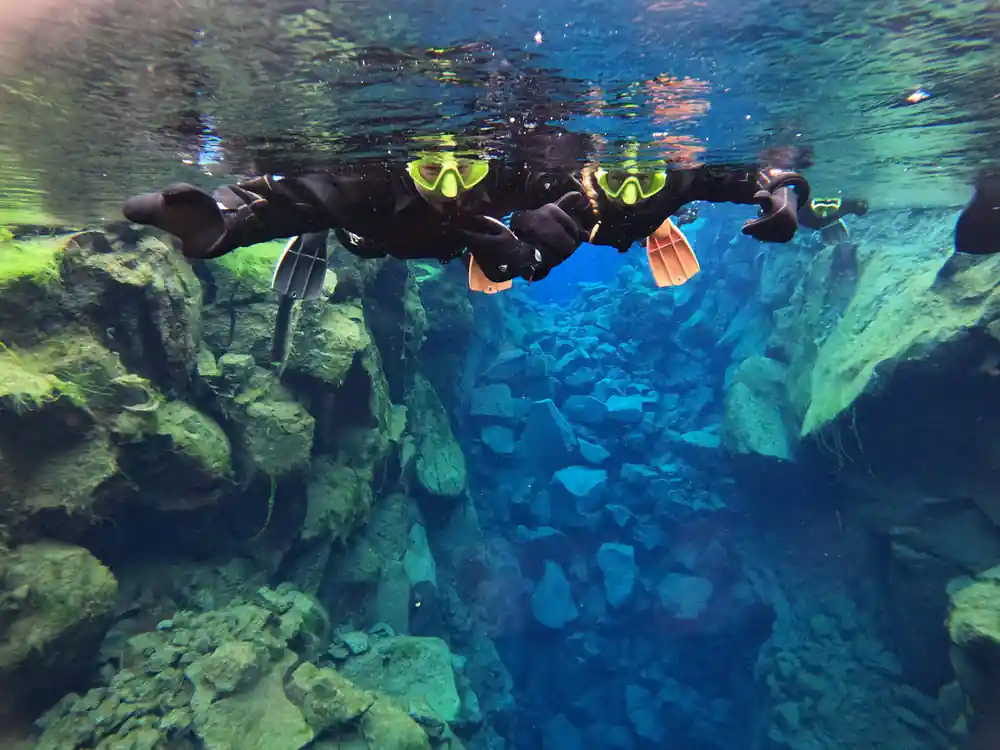
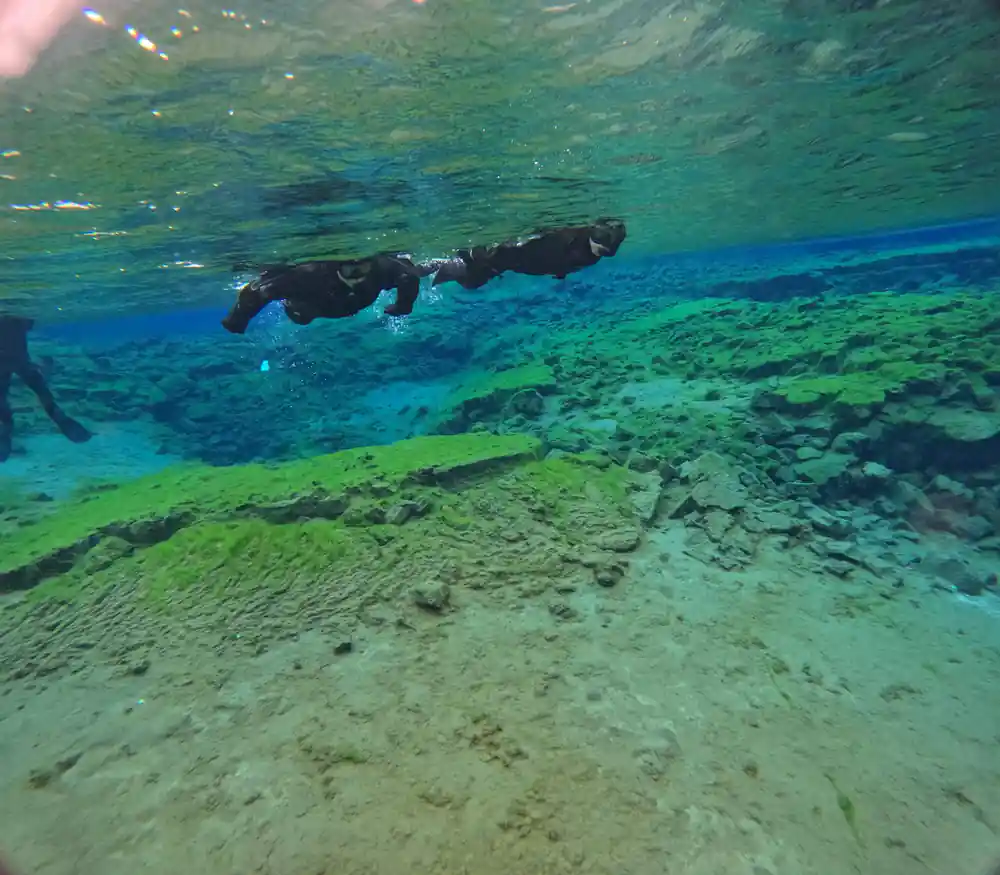
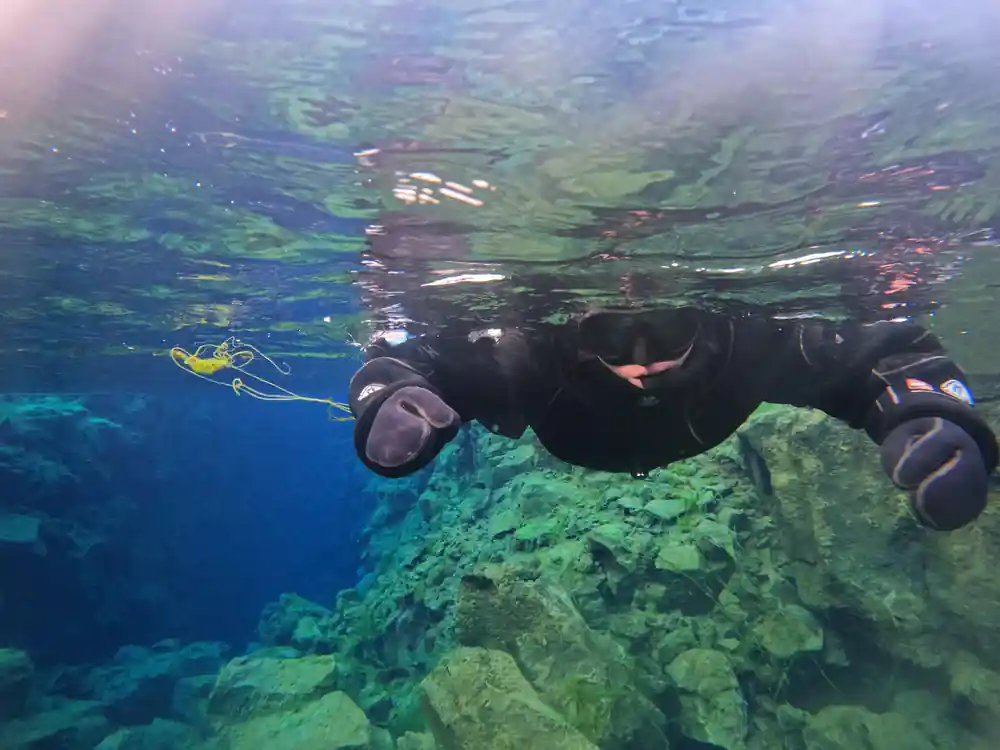
Snorkeling Silfra is a drift, not a swim. You lie face down in a dry suit, breathing through a snorkel, and the gentle current moves you through the fissure while you look down into blue. Silfra allows underwater visibility of over 100 meters, and the fissure reaches depths of up to 200 feet (60 meters) in its deepest sections, though most snorkeling takes place near the surface.[1][10] The effect is a canyon wall sliding past on one side and open water on the other.
The colours are the surprise. Marine life in Silfra consists mostly of bright green “troll hair” and different types of algae, which light up the rock in greens and golds rather than tropical blues.[1] The water stays at 2°C to 4°C all year round and never freezes, because fresh glacial meltwater keeps filling the fissure.[1] Your face feels the cold for the first minute, then the dry suit takes over and the float turns oddly peaceful.
There are rules to meet before you get that far. To snorkel at Silfra, participants must be at least 12 years old, at least 150 cm tall, and able to swim and be comfortable in water, and life jackets and swimming aids are not permitted.[8] The Reykjavík: Silfra Fissure Snorkeling between Two Continents listing runs 3 - 5.5 hours in a group limited to 6 participants, from US$137.[5]
Þingvellir's rift valley, where two plates pull apart under clear water
Scuba diving Silfra: depth, certification and what changes
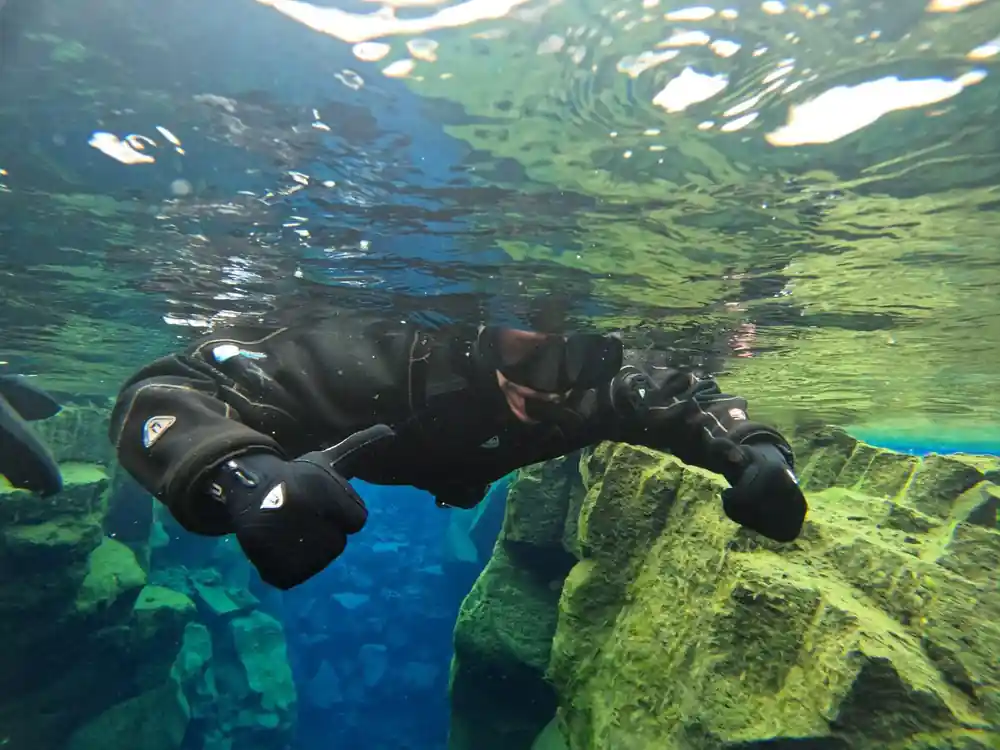
Diving changes the angle of the whole experience. Instead of drifting over the canyon, you descend into it, following the wall below the level where snorkelers float. Silfra reaches depths of up to 200 feet (60 meters) in its deepest sections, though most snorkeling takes place near the surface.[10] Divers get closer to the rock, to the boulders on the floor and to the shafts of light that bend through cold, filtered water, and they stay in longer.
The gate is certification. To dive Silfra you are required to have either a drysuit diver certification or drysuit dive experience.[7] If all your dives so far have been in warm water, the dry suit is the new skill, and a serious one: seals, weighting, buoyancy and suit squeeze all behave differently when the water is 2°C to 4°C.[1] A dry suit course or a supervised dry suit dive before you fly makes the Iceland dive itself far more enjoyable.
The guided option here is Thingvellir: Silfra Fissure Diving with Optional Pickup. It starts from US$275, runs 4 - 6 hours, is limited to 3 participants and is guided in English, with pickup available.[2] Reviews put the guide at 4.7, transportation at 5 and value for money at 4.3, from 75 reviews at an overall 4.49.[2]
Freediving Silfra: rules and realistic expectations
Freediving is the quiet third option: no tank, one breath at a time and a lot of looking up at the surface from below. The freedive listing at Þingvellir runs 3 hours, in a group limited to 6 participants, guided in English and Icelandic, from US$223.[6] It suits calm, competent water people who already know how their body behaves when they hold their breath, and who are happy working in a thick suit.
The cold shapes the session well before the depth does. The water is 2°C to 4°C year round, and it never freezes because fresh water constantly fills the fissure.[1] A well sealed suit, a proper hood and dry gloves are the difference between a short, shivery attempt and a session you enjoy. If you have not freedived in cold water before, treat the first outing as a skills day rather than a personal best.
Visibility works in your favour: with over 100 meters of clear water, you can watch the wall and the light long before you reach any personal limit.[1]
from US$275
Thingvellir: Silfra Fissure Diving with Optional Pickup runs 4 - 6 hours in a group limited to 3 participants, guided in English.[2]
Dry suits versus wetsuits: why one is not enough
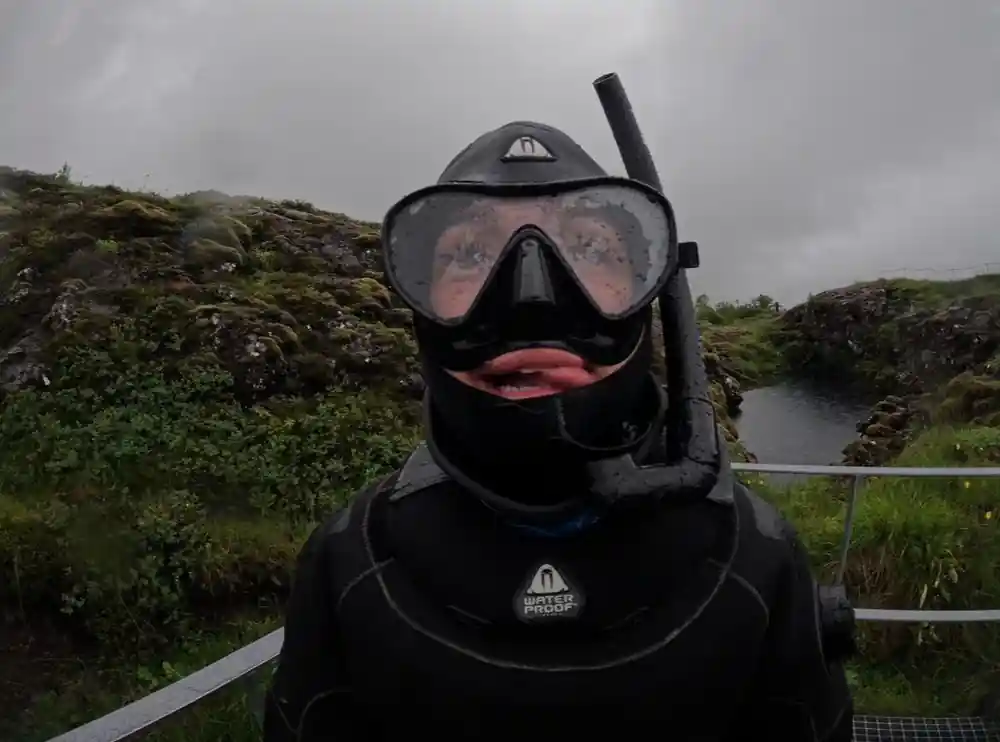
Silfra is a dry suit site, whatever you wear at home. The water stays at 2°C to 4°C all year round, cold enough that a wetsuit stops working as insulation and starts working as a countdown.[1] A dry suit keeps a layer of warm air and clothing around your body, sealed at the wrists and neck, with a hood over your head and gloves on your hands. That is what makes a long float in near-freezing water comfortable.
Under the suit, wear thermal base layers, wool or fleece, and socks that stay warm when damp. Bring a spare set of clothes for afterwards, plus a hat, and you will be glad of both once you climb out into the open air at Þingvellir. The reward for the fuss is immediate: visibility of over 100 meters, rock glowing with troll hair and algae, and a canyon you can see straight through.[1]
Guides check the fit of your suit before you walk down to the entry. Speak up early if a seal feels tight or a hood sits wrong, and remember that two minutes of adjustment on shore beats a cold, leaking float.
Photos and memories: what gets documented
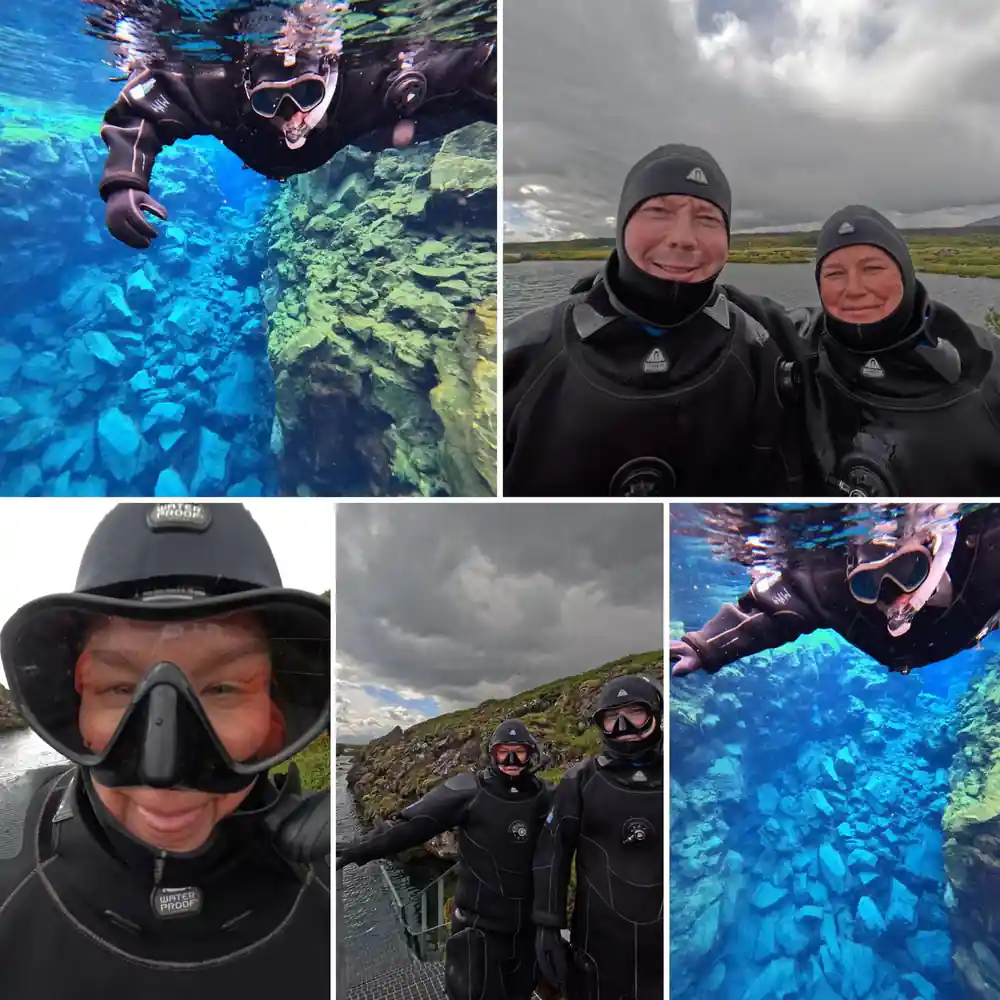
Clarity is why people want pictures here. With over 100 meters of underwater visibility, a camera picks up canyon walls, light and algae from a long way off.[1] What actually gets photographed depends on the trip: some snorkeling listings carry photos in their names, such as From Reykjavik: Silfra Snorkeling with Free Photos and Silfra: Fissure Snorkeling Tour with Underwater Photos.[11][12]
If a gallery matters to you, check the listing details before booking rather than after, and ask the operator what cameras are allowed in the water. Thick gloves and cold hands make personal photography awkward, so a guide with a housing usually gets the better shots. On the diving side, the memory that stays is the descent: the squeeze of the suit, the cold against your cheeks and the wall dropping away beneath your fins.
Keep the kit simple, decide what you are carrying before you leave Reykjavík, and accept that the best record of the day is often the time you spend lying in glass-clear water watching two continents drift past under your fins.
Which option suits most first-time visitors
If you have never been in cold water, snorkel. It is the simplest way to see the fissure: less kit, less skill and prices from US$137 on the Reykjavík: Silfra Fissure Snorkeling between Two Continents listing, which runs 3 - 5.5 hours.[5] You still get the clarity, the colours and the strange feeling of floating over a crack between two continents, and you come out with energy left for the rest of your day.
If you hold a drysuit certification, dive. The guided Thingvellir dive is limited to 3 participants and gives you the fissure from inside rather than from above, with pickup available if you would rather not drive.[2] Whichever you choose, book the slot that fits your itinerary, arrive with time to spare, and leave the rest of the day loose in case the weather slows the road out to the park.
Divers who want more water time can look at the other listings: Silfra: Diving Between Tectonic Plates runs 3 - 5 hours in a group limited to 3 participants from US$283.[13] Snorkelers who would rather not organise transport can compare the pickup trips, including a photo focused option from US$215.[11]
Silfra and Þingvallavatn in metres
Measurements in metres: Silfra's deepest sections and near-surface snorkeling depth[10], underwater visibility in Silfra[1], and the greatest depth of Þingvallavatn[14].
What each Silfra option costs
From prices per person as listed: dive[2], snorkel[5], photos[11], freedive[6]. Child rates are set by the operator.
When to book your Silfra dive
How to plan your Silfra day
Meet the entry rules
Snorkellers must be at least 12 years old, at least 150 cm tall and able to swim, with life jackets and swimming aids not permitted.[8]
Decide on diving
To dive Silfra you need either a drysuit diver certification or drysuit dive experience, so book the dive only if that is you.[7]
Sort your transport
Thingvellir National Park is 47 km northeast of Reykjavík on Route 36, and the diving listing has pickup available.[2][9]
Dress for cold water
The water stays 2°C to 4°C all year round, so thermal layers, a good hood and spare clothes for afterwards belong in your bag.[1]
Book with a buffer
The dive runs 4 - 6 hours, so leave the evening free and keep your cancellation window in mind.[2]
Dive between two continents with a small group and one guide
from US$275