Silfra diving at a glance
- Thingvellir: Silfra Fissure Diving with Optional Pickup, from US$275, rated 4.49 from 75 reviews and limited to 3 participants per group.[1]
- Silfra's glacial meltwater remains 2°C to 4°C year round and never freezes, as fresh water constantly fills the fissure.[2]
- The filtered meltwater allows for underwater visibility of over 100 meters in Silfra.[2]
- To dive Silfra you are required to have either a drysuit diver certification or drysuit dive experience.[3]
- Thingvellir National Park is 47 km northeast of Reykjavík on Route 36, and pickup options for the dive are listed when you check availability.[1][4]
| Silfra scuba diving | Silfra freediving | Silfra snorkeling | |
|---|---|---|---|
| From | from US$275[1] | from US$223[5] | from US$137[6] |
| Rating | 4.49 from 75 reviews[1] | 4.83 from 40 reviews[5] | 4.71 from 2,142 reviews[6] |
| Group size | Limited to 3 participants[1] | Limited to 6 participants[5] | Limited to 6 participants[6] |
| Duration | 4 - 6 hours[1] | 3 hours[5] | 3 - 5.5 hours[6] |
| Guide language | English[1] | English, Icelandic[5] | English[6] |
To dive Silfra you are required to have either a drysuit diver certification or drysuit dive experience.
Is the Silfra dive tour worth booking?
Diving requirements and gear
Why the Silfra fissure rewards divers
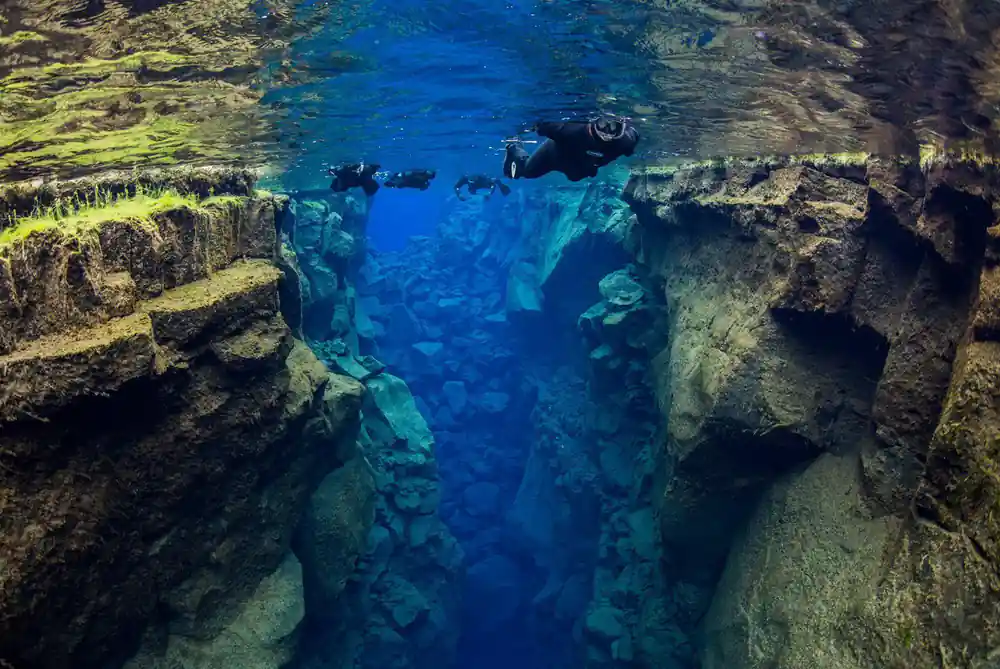
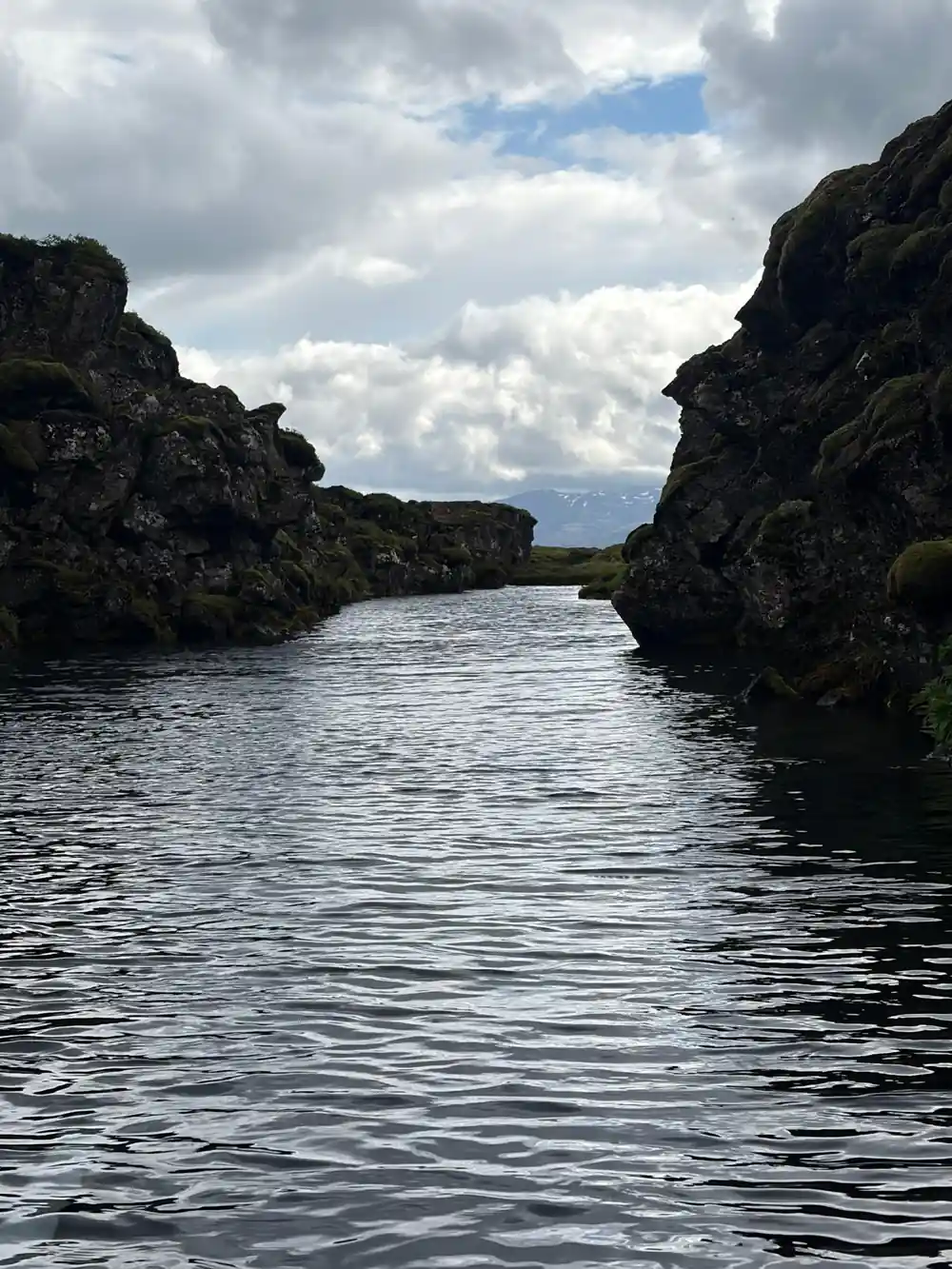
Silfra is a crack in the ground inside Þingvellir National Park, where the North American and Eurasian plates pull away from each other. At Þingvellir the plates break apart and the land between them subsides; away from the plate boundaries the movement is fairly constant at about two centimetres a year, while in the rift zones tensional stress builds up and is released in bursts.[7] The park was added to UNESCO's World Heritage List in 2004,[8] and it sits 47 km northeast of Reykjavík on Route 36.[4] The crack is flooded with meltwater, and the walls on either side belong to different plates.
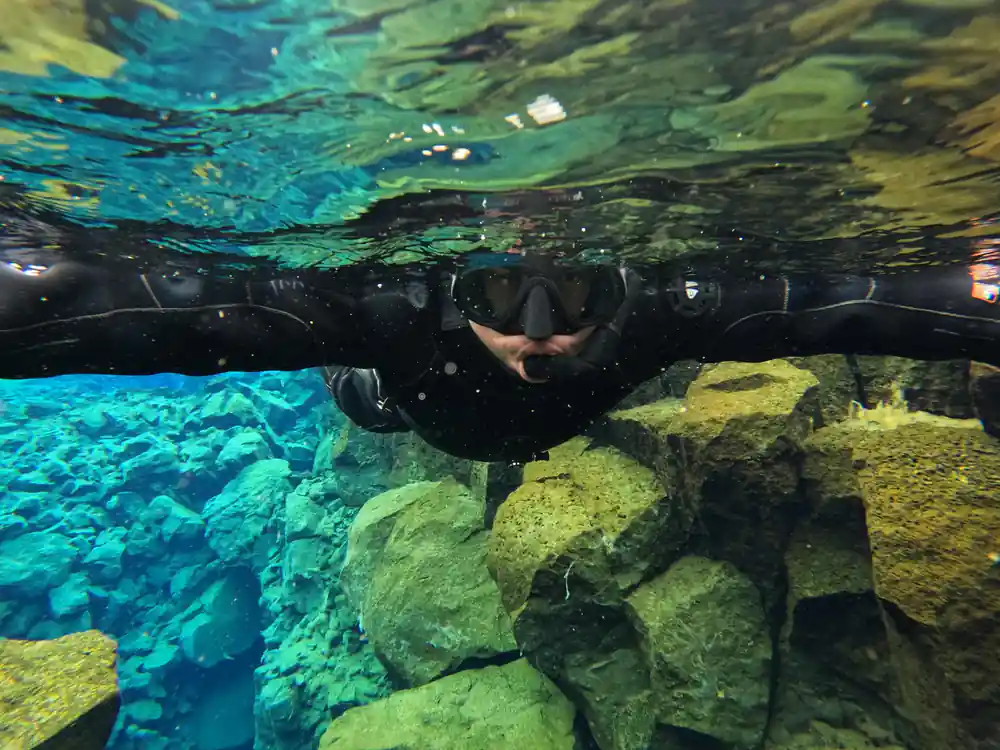
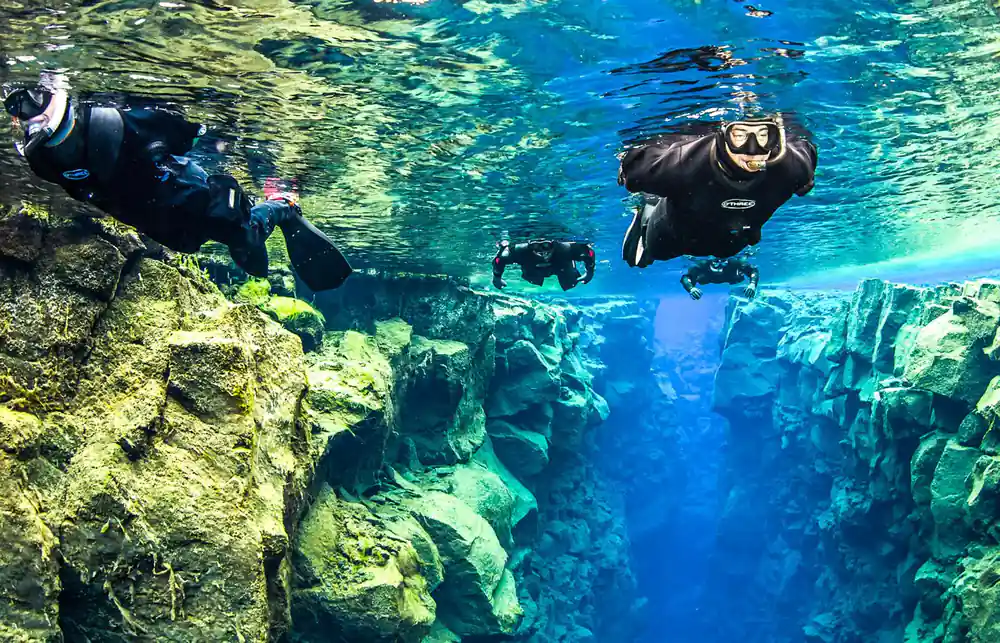
The two things that shape any scuba diving Silfra fissure trip are clarity and cold. Glacial meltwater is filtered through porous underground lava for 30-100 years before it reaches the spring that feeds the fissure,[2] and by the time it arrives it allows for underwater visibility of over 100 meters.[2] The fissure reaches depths of up to 200 feet (60 meters) in its deepest sections, though most snorkeling takes place near the surface.[9] Below you are black lava boulders; above you is the bright blue of daylight through a crack in the ground.
Filtered water, dark lava and pale rock make the light behave strangely down there. Photographers often shoot towards the surface, where the plates and the daylight meet, and the green of the algae glows against the black stone. There is no coral and no current to fight, just a slow float through a geological seam.
What the dive day looks like
Thingvellir: Silfra Fissure Diving with Optional Pickup runs for 4 - 6 hours and starts from US$275.[1] Groups are limited to 3 participants and the live tour guide speaks English.[1] Pickup is available, and you check availability for the pickup options.[1] Reserve now and pay later is offered, and free cancellation runs up to 24 hours in advance for a full refund.[1]
A dive day at Silfra fills more hours than the dive itself. Expect a briefing, a careful fitting of undersuit and drysuit, a short walk to the entry point and a final gear check before you step down into the water. Afterwards there is time to change, warm up and look out over the lava plain before the drive back to Reykjavík. Bring a spare pair of socks for the ride home.
The small group size is worth thinking about. With 3 participants on the dive listing,[1] you get hands-on help with the suit and a guide who can keep an eye on everyone in the line. If you have not dived for a while, say so before you start, and mention ear trouble or medication at the briefing rather than in the water.
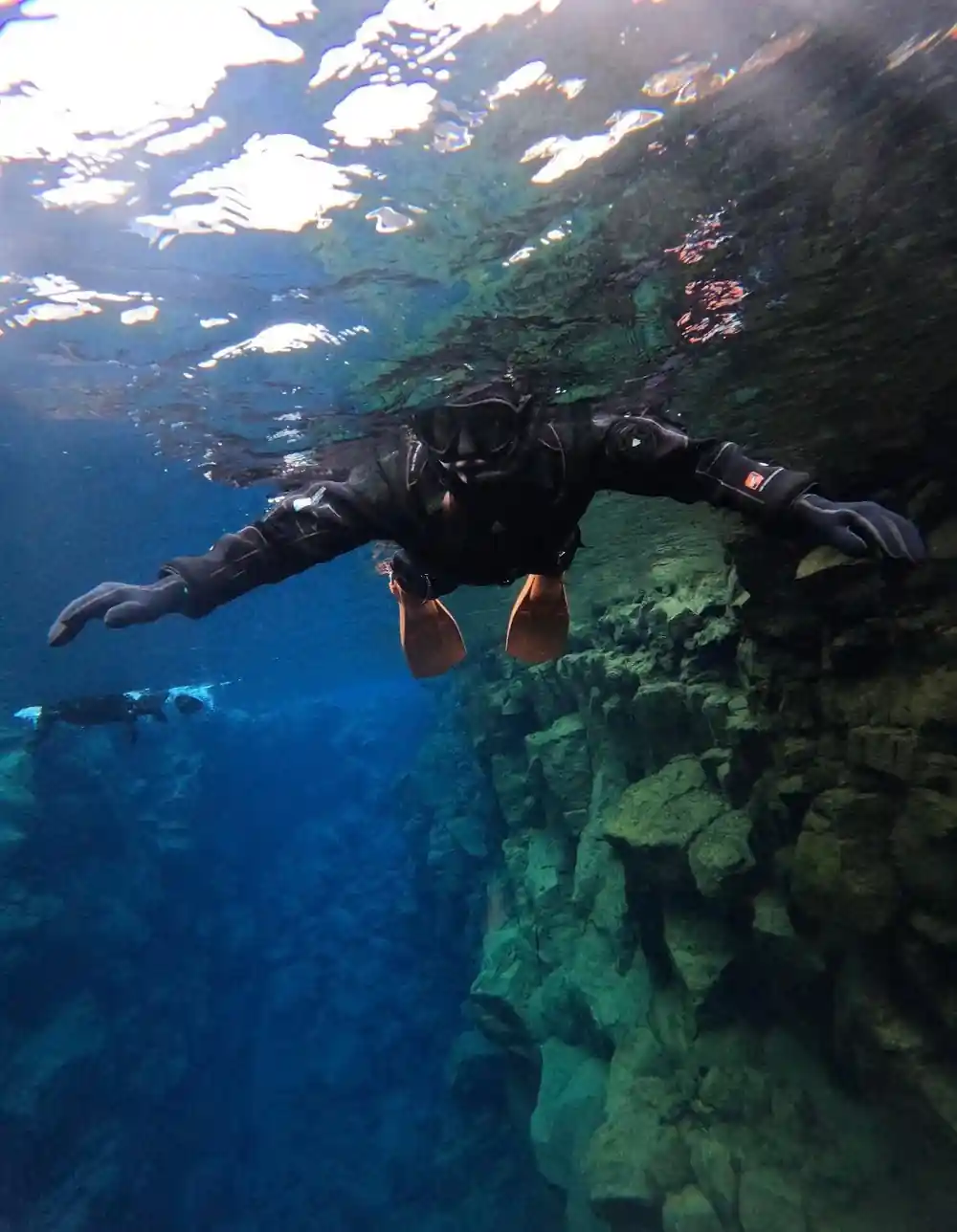
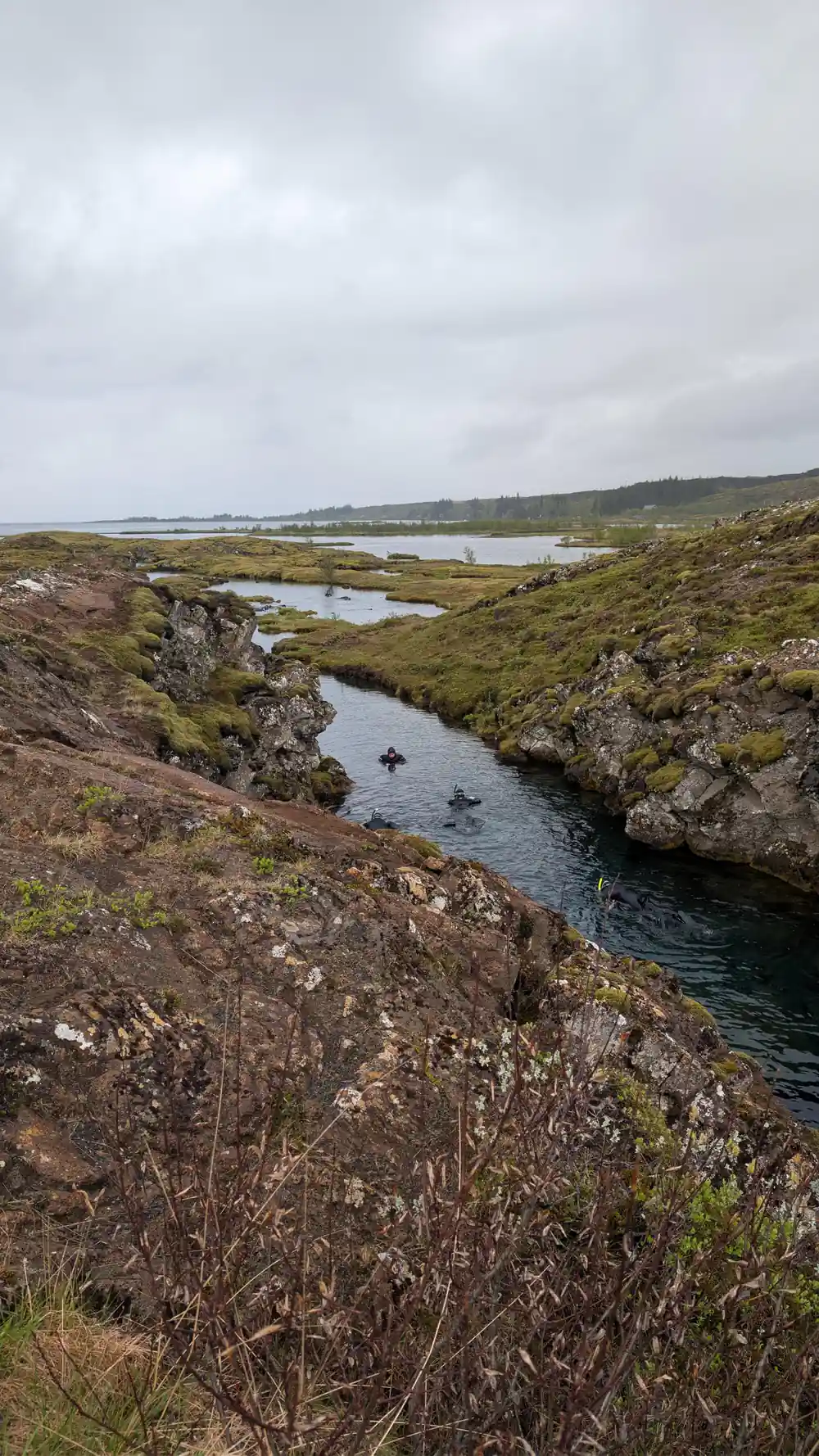
Divers in drysuits at the surface of Silfra, with lava walls and clear water below.
Silfra fissure diving, certification and the cold
Silfra fissure diving is cold-water diving, and the paperwork says so. To dive Silfra you are required to have either a drysuit diver certification or drysuit dive experience.[3] If every dive you have logged has been in warm water and a wetsuit, look into a drysuit course at home before you fly, rather than turning up at Þingvellir and hoping to be let in.
The water in the fissure stays very cold. It remains 2°C to 4°C year round and never freezes, because fresh water constantly fills the crack.[2] A drysuit, hood and dry gloves keep the cold off your skin; your job is to breathe slowly, keep your regulator where it belongs and stay close to the guide's line.
Pickup, meeting points and the drive to Þingvellir
Thingvellir National Park is 47 km northeast of Reykjavík on Route 36.[4] The park receives approximately 1.5 million visitors each year,[10] and the lake that the fissure feeds, Þingvallavatn, covers an area of 84 square kilometres and has a greatest depth of 114 metres.[11] On a clear day the drive is part of the trip: bare lava fields, a broad lake and mountains along the far shore.
If you would rather not drive, pickup is available and you check availability for the options.[1] If you go by car, follow Route 36[4] and use the signed parking at the national park, then walk to the meeting point your guide confirms. Winter changes everything up here: the high ground between Reykjavík and the lake catches wind and snow, so check road conditions and leave extra time.
from US$275
Thingvellir: Silfra Fissure Diving with Optional Pickup runs for 4 - 6 hours, with groups limited to 3 participants.[1]
Cold hands, clear water: what you notice first
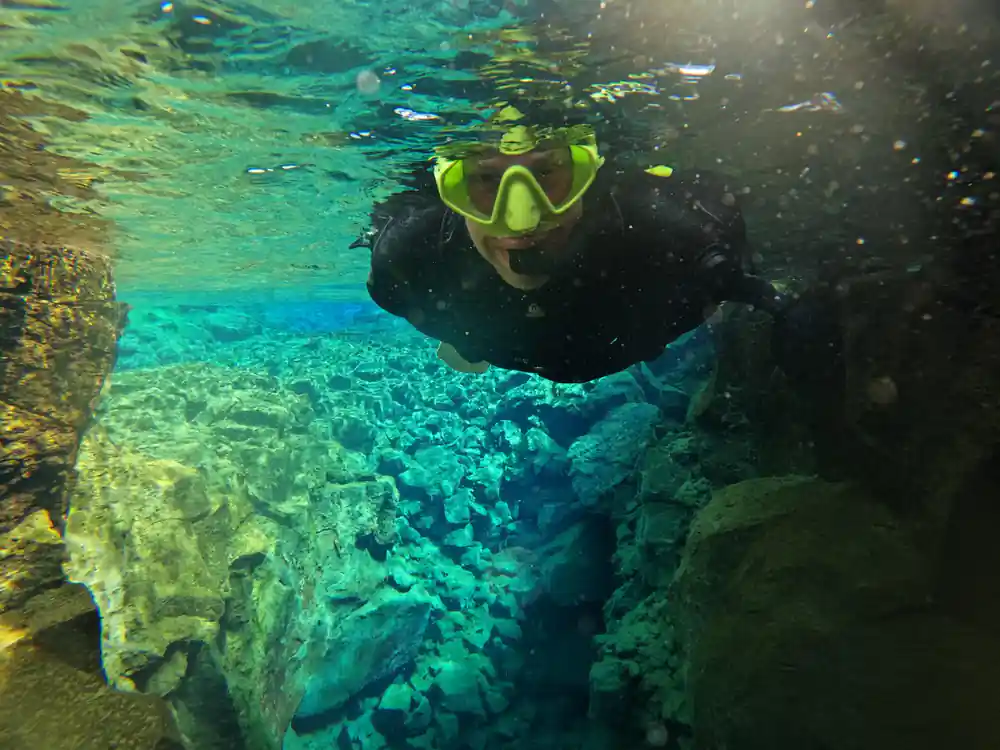
The first thing you notice is the colour. Visibility of over 100 meters[2] means the blue simply carries on, and the lava walls on either side step down into darker water. The marine life in Silfra consists mostly of bright green troll hair and different types of algae,[2] a fuzzy green coating on the rock that looks nothing like a coral reef.
The second is the cold on your face and hands. A drysuit keeps your body dry, dry gloves keep your fingers working, and a hood covers the parts of your head that the cold would otherwise reach. Move slowly, keep your hands tucked in when you are not using them, and let the guide set the pace. Silfra is a slow drift through a crack in the lava, with plenty to look at on the way.
Communication underwater is simple but worth practising on the surface: hand signals for slow down, stop, look and out of air, plus a squeeze on the arm if you want attention. Agree with your guide on what to do if your mask floods or your hood shifts, and sort out your weighting in the shallow water before you head into the crack.
When to dive and what to wear underneath
The water itself does not follow the seasons: the glacial meltwater remains 2°C to 4°C year round and the fissure never freezes.[2] That leaves the air and the roads to shape your choice. Summer brings long daylight and straightforward driving, winter brings snow on the lava and short daylight, and the shoulder months often give you a bit of both. Whichever you pick, the dive feels much the same in the water.
Under the drysuit, wear a thermal base layer and a fleece or wool mid layer, plus thick wool socks. Leave cotton at home, because it holds moisture and makes you cold. If you wear glasses, ask about a prescription mask or bring contact lenses, and tie long hair back so the hood seal sits flat against your face. Eat something before you go, drink water, and take the hot drink afterwards.
Diving, freediving or snorkeling at Silfra
Not everyone in a group wants the same thing. Thingvellir: Silfra Fissure Diving with Optional Pickup is the listing to book if you hold the right diving background, from US$275.[1] Freedivers can compare Thingvellir: Silfra Freedive Adventure with a Guide, from US$223,[5] snorkelers have Reykjavík: Silfra Fissure Snorkeling between Two Continents, from US$137,[6] and Silfra: Diving Between Tectonic Plates is another dive to weigh up, from US$283.[12]
Snorkeling has its own rules, which matter if you are bringing non-divers along. To snorkel at Silfra, participants must be at least 12 years old, at least 150 cm tall, and able to swim and be comfortable in water; life jackets and swimming aids are not permitted.[13] Divers face a different requirement, either a drysuit diver certification or drysuit dive experience.[3] Book the water day early in your trip, so a cancelled slot does not cost you the whole visit.
Whichever option you choose, remember where you are. The park was added to UNESCO's World Heritage List in 2004.[8] Stay on the marked routes, take your rubbish with you, and leave the lava and the algae exactly as you found them.
From prices for Silfra water tours
What a Silfra water day costs
US dollar from-prices for these listings.[1][5][6]
Booking the Silfra dive
How a Silfra dive day runs
Pick your date
Pick a date on the dive listing and check availability for starting times and pickup options.[1]
Meet the guide
The live guide speaks English and groups are limited to 3 participants.[1] Briefings cover the route and the hand signals.
Gear up
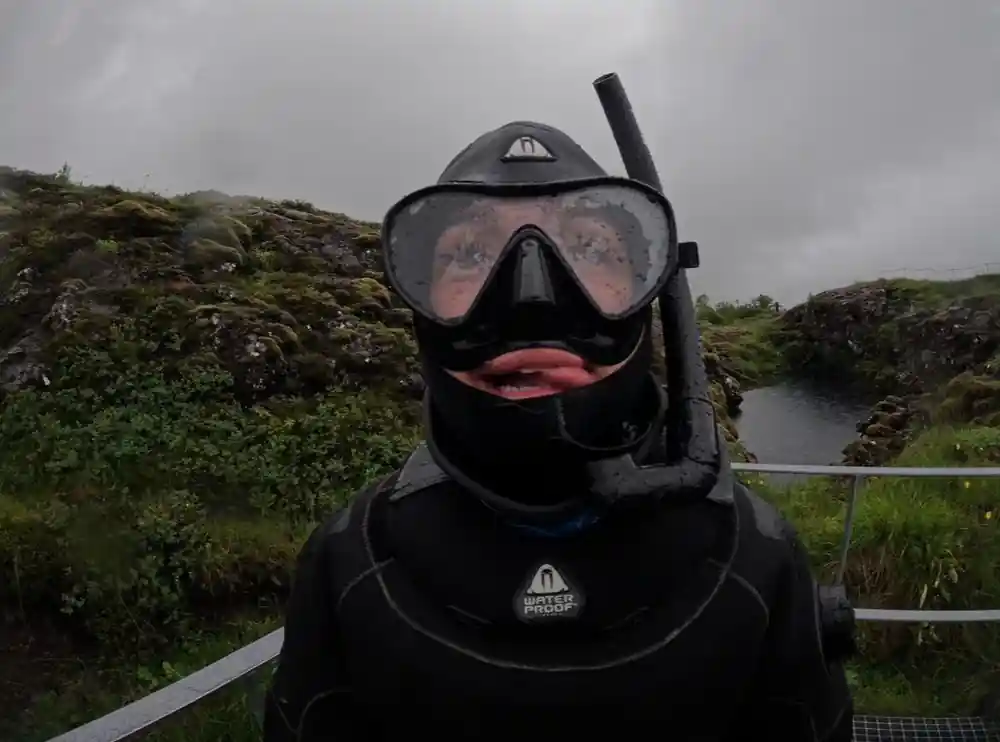
You pull on an undersuit and a drysuit, then a hood, mask and dry gloves. Staff check the seals and weighting before anyone goes near the water.
Walk to the entry
A short walk down steps takes you to the entry point at the fissure. Hold the handrail, because wet lava rock is slick.
Dive the crack
You float through the crack with lava walls on both sides. Visibility reaches over 100 meters on a good day.[2]
Dive between the plates at Silfra fissure
from US$275