In a nutshell
- Þingvellir is where the North American and Eurasian plates break apart and the land between them subsides.[1]
- The open-air assembly ground, the Law Rock, the sagas and the drowning pool sit within a short walk of the visitor paths.
- Silfra's glacial meltwater stays at 2°C to 4°C all year and allows underwater visibility of over 100 meters.[2]
- The Silfra Fissure Snorkeling between Two Continents tour costs from US$137 and runs 3 - 5.5 hours, limited to 6 participants.[3]
- Snorkellers must be at least 12 years old, at least 150 cm tall and comfortable in water; life jackets and swimming aids are not permitted.[4]
- Top choice Silfra Fissure Snorkeling from US$137 Rating4.71 from 2,142 reviews[3]Duration3 - 5.5 hours[3]PickupCheck availability for pickup options[3]CancellationFree cancellation up to 24 hours ahead[3] Check availability
- Snorkeling with Free Photos from US$215 Rating4.83 from 628 reviews[5]Duration4.5 hours[5]PickupPickup included, check availability[5]CancellationFree cancellation up to 24 hours ahead[5] See this tour
- Golden Circle and Silfra from US$298 Rating4.82 from 304 reviews[6]Duration10 hours[6]PickupPickup included, check availability[6]CancellationFree cancellation up to 24 hours ahead[6] See this tour
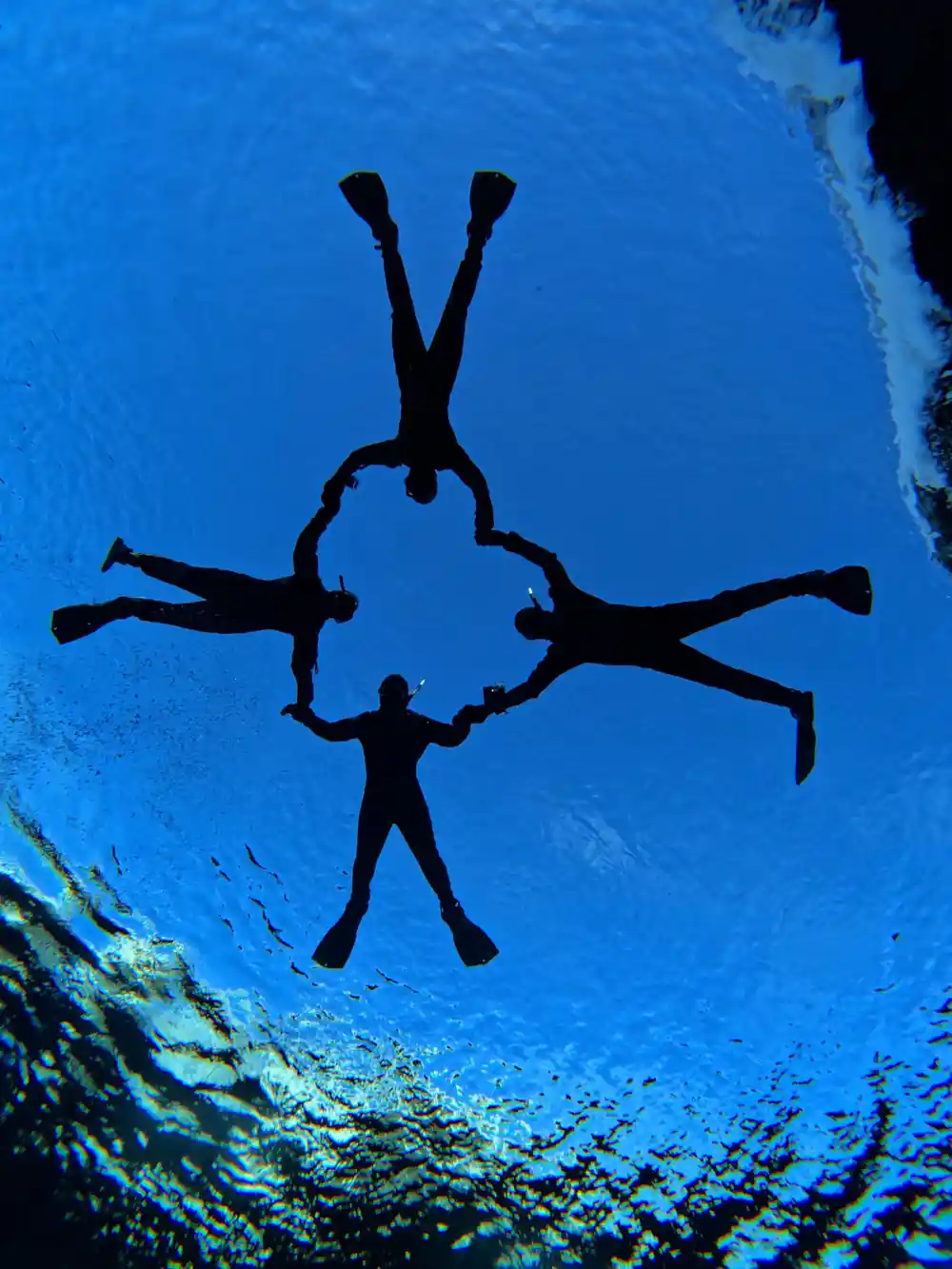
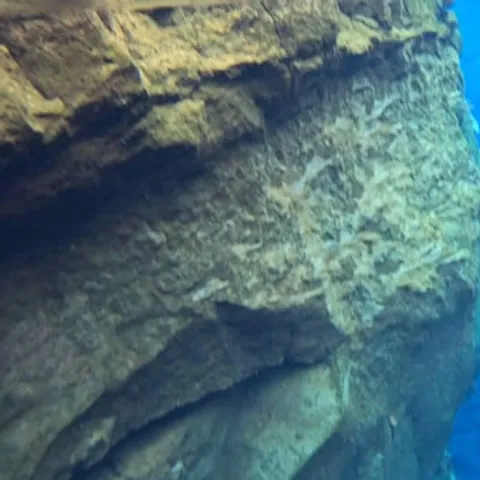
At Þingvellir the plates break apart and the land between subsides. Away from the plate boundaries the activity is fairly constant, about two centimetres a year, but in rift zones tensional stress accumulates and is released in a burst when fracture boundaries are reached.
Is the Silfra snorkel worth your day?
Before reserving
Why the rift became Iceland's meeting place
Stand at the top of the Almannagjá gorge and the reason for everything else in this park is under your boots. The ground is being pulled apart. Þingvellir sits in the seam between the North American and Eurasian plates, where the land between them subsides and the crack opens into a canyon you can walk down. Away from the plate boundaries the movement is fairly constant at about two centimetres a year, while in rift zones tensional stress builds up and is released in bursts.[1]
The meltwater that seeps through the fissures drains north into Þingvallavatn, the wide lake along the park's southern edge. It covers an area of 84 square kilometres and reaches a greatest depth of 114 metres.[8] A flat plain at the head of that water, a long wall of lava on one side, grazing nearby and room for a crowd. It is the kind of place that gathers people, and it has been gathering them for a very long time.
The path down the gorge, the black lava, the green moss and the bright water all belong to the same story, and the park is small enough to cross on foot in a day. Come early if you want the gorge to yourself. Weather on the open plain can turn while you are down in the crack, so waterproofs, warm layers and sturdy shoes are the sensible kit whatever the forecast says.
The Law Rock and justice in the open air
At the heart of the old assembly ground stands the Lögberg, the Law Rock, a raised spot where the law speaker stood to recite the law to the gathered crowd. This was an oral job: the law was spoken aloud rather than read out, and the recitation was the event that held the whole meeting together. People sat on the grass and the lava, within earshot, while cases were argued in the open air.
Justice here was public. Disputes over land, honour, marriage and killing were settled in front of anyone who cared to listen, and the judgements carried weight because they were heard by everyone at once. There were no walls to hide behind and no corridors to lobby in. Standing on the plain today, with the cliff above you and the lake below, it is not hard to picture the noise of an assembly the size of a small town.
The rock itself is a modest outcrop, marked but easy to miss if you are not looking for it. Paths lead from the visitor centre and the main car parks across the plain, past the remains of the old booths where people camped during the meeting. Give the history a couple of hours before or after your snorkel, and read the panels, which explain far more than the view does on its own.
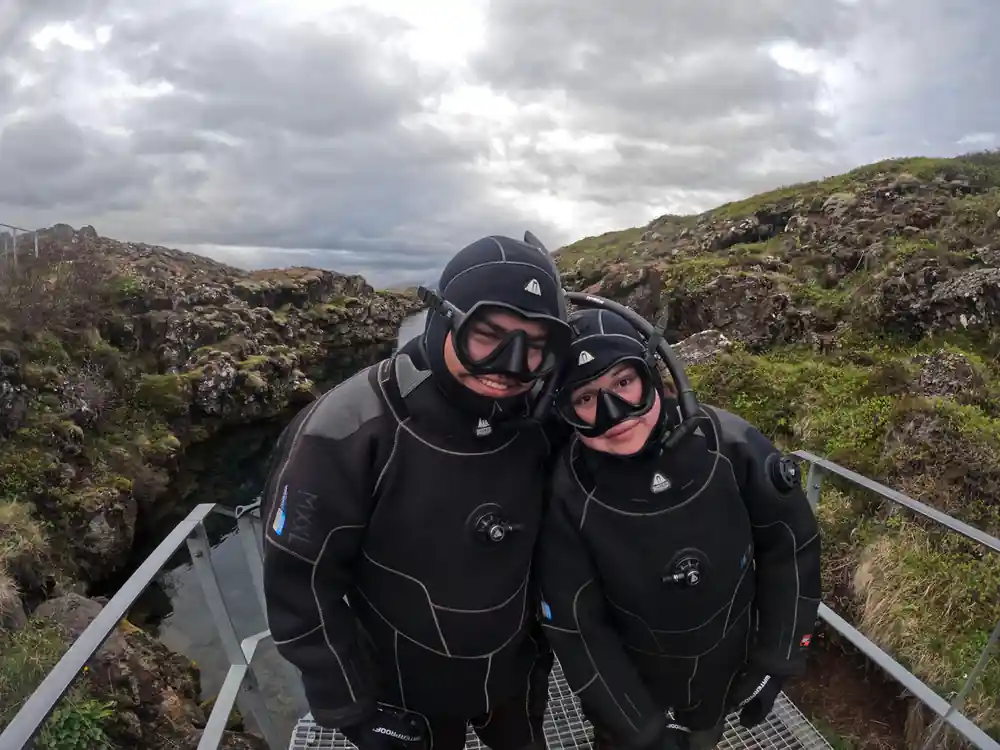
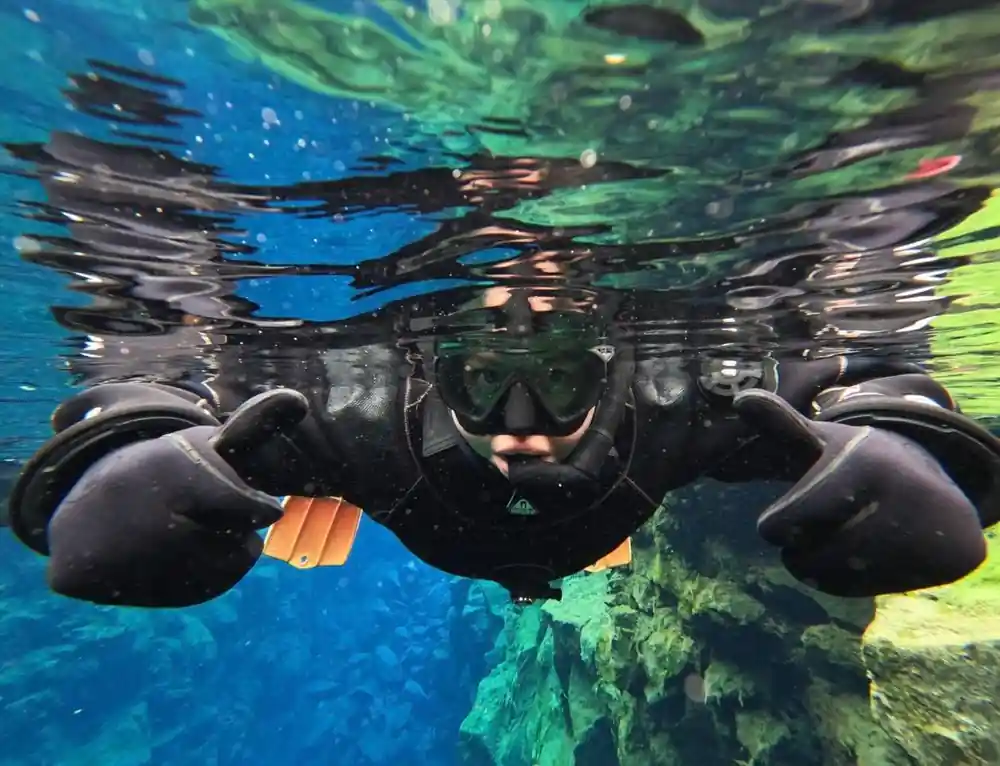
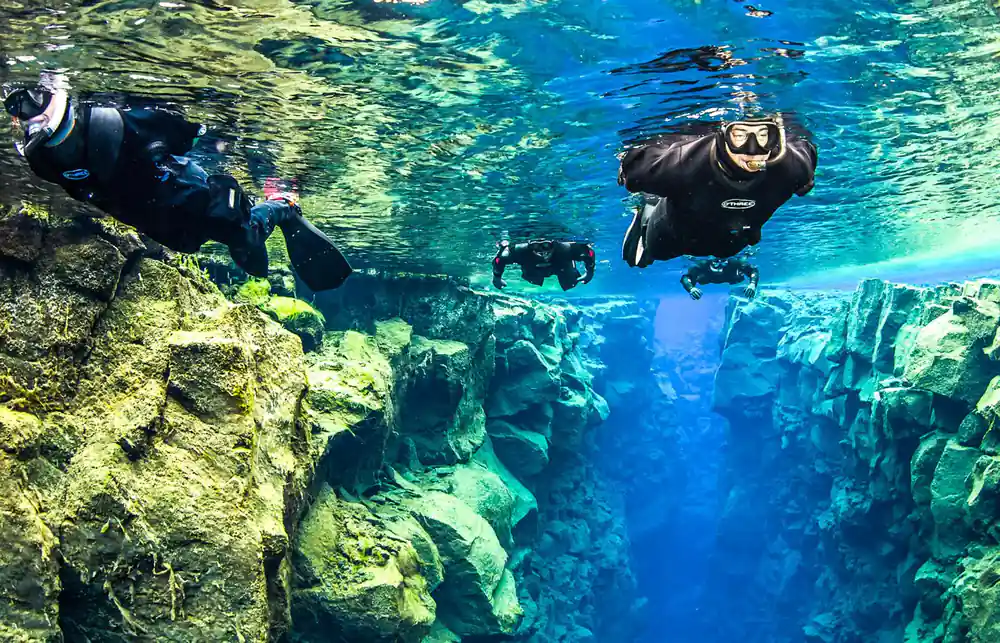
Snorkellers drift through the blue half light of the Silfra fissure in Thingvellir National Park.
Sagas, story pools and the drowning pool
Iceland's sagas grew out of a society that settled its business in public and then talked about it. Stories were told and retold at gatherings, at farm firesides and on the road, and the ones set at Þingvellir carry the arguments, feuds and verdicts of the assembly. The landscape works as a memory aid: once you have stood on the plain, the places in the stories stop being abstract names.
Not all of the history is heroic. Drekkingarhylur, the drowning pool, sits in the river below the assembly ground, a quiet green hollow where women were drowned as punishment under the old law. It is a small, still place and easy to walk past. The panels beside it do not soften what happened, and the contrast between the beauty of the water and the reason it is remembered is a sobering moment in the park.
Walking between these spots takes you off the busiest paths and back towards the water. Take your time, keep your voice down, and let the place be what it is rather than a backdrop for photographs. If you are snorkelling later the same day, this is a good way to spend the hours beforehand.
Earthquakes that reshaped the ground
Þingvellir looks the way it does because the ground here keeps moving. The plain has dropped between the plates over a long span of time, and earthquakes in the rift have shifted the lake shore, opened fresh cracks and tilted the land. What you see is not a settled view. It is a slow, uneven process caught in the middle, with the lava fields, the water and the faults all part of one system.
The mechanics are simple enough once you are standing on the plain. Away from the plate boundaries the activity is fairly constant at about two centimetres a year, but in the rift zones tensional stress accumulates during a long period and is then released in a burst of activity when fracture boundaries are reached.[1] The cracked ground under your feet carries the marks of that pattern repeating.
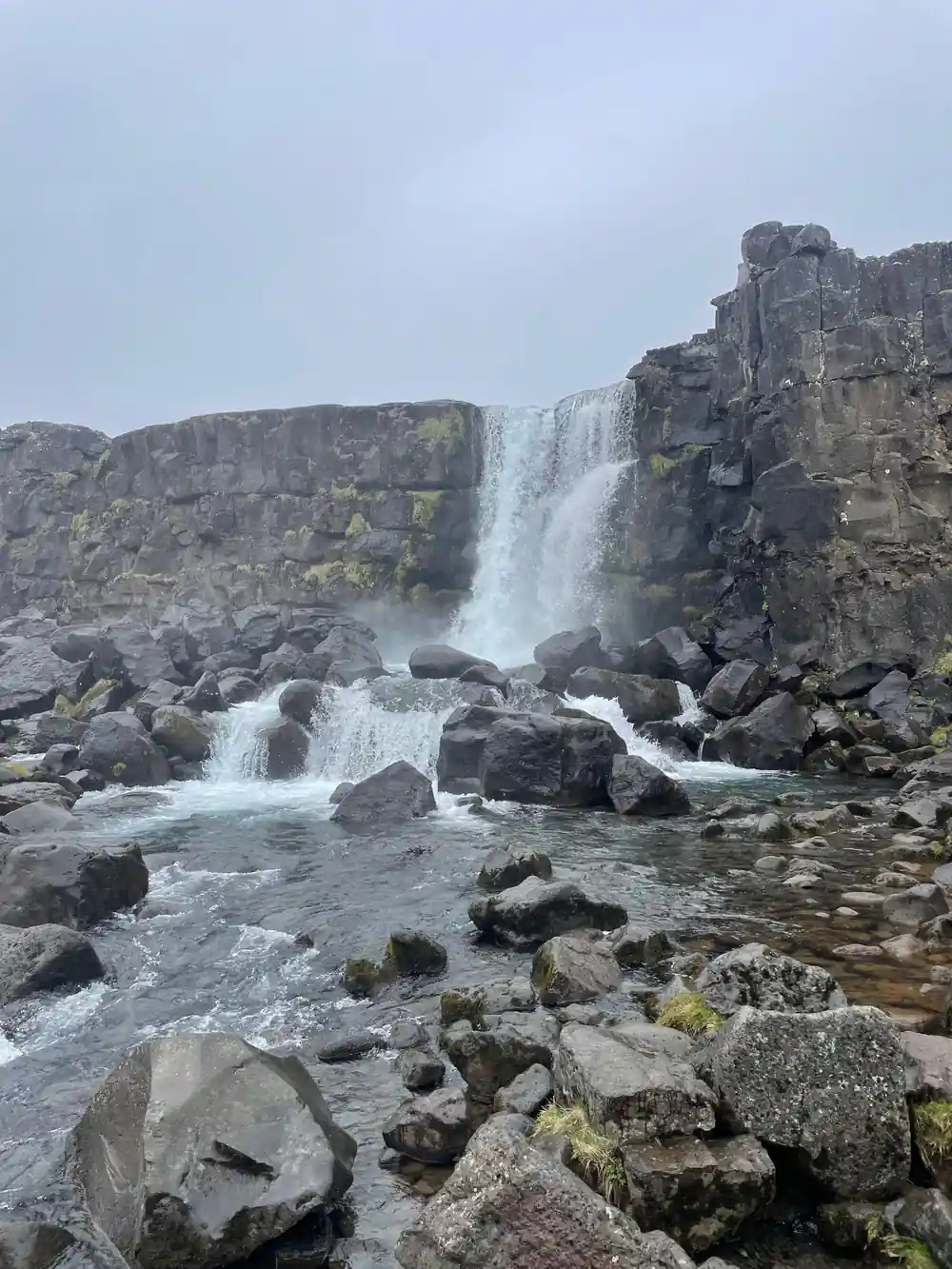
Öxarárfoss, the waterfall that drops into the gorge from the north, is a short walk from the main paths and a good marker for how much water moves through this landscape. On the plain you can trace faults by the lines of green in the lava and by the way the ground steps down towards the lake. Nothing here is decorative. Every crack is a piece of the same long argument between two plates.
from US$137
The Silfra Fissure Snorkeling between Two Continents tour is rated 4.71 from 2,142 reviews and limited to 6 participants.[3]
UNESCO listing and what it protects
Þingvellir National Park was added to UNESCO's World Heritage List in 2004.[9] The listing covers both halves of the story: the natural rift and the human history that unfolded inside it. Few places let you see geology and government occupying exactly the same ground, and that overlap is what makes the park unusual rather than merely pretty.
Protection here is about management as much as celebration. Paths, boardwalks and viewing platforms keep feet off the most fragile moss, and the park's rules exist so that a place this heavily visited does not get loved to pieces. Thingvellir National Park receives approximately 1.5 million visitors each year.[10] In a park of this size, staying on the marked route matters more than any other single habit.
For snorkellers the listing adds context rather than chores. You are swimming in a fissure inside a protected landscape, and the same care applies in the water. Do not stand on the lava, do not touch the algae, and follow your guide's line through the canyon. The park will still be here long after your holiday, which is rather the point of the designation.
Why this landscape reads as another world
Bare lava, black cliffs, bright moss and water so clear it looks shallow when it is not: the parts of Þingvellir that look least like a farm or a town are exactly the parts that film crews come for. The gorge, the fissures and the open plain have stood in for other worlds on screen, and a few minutes of walking shows you why. There is very little softening between you and the rock.
That bareness also makes the park easy to read as a piece of history. There are no grand buildings to admire and no single monument that explains the place at a glance. Instead there is a rock, a pool, a plain and a crack in the ground, and the story lives in the relationship between them. It rewards a slower visit than a coach schedule usually allows.
If you have time, walk the length of the gorge and then out onto the plain towards the lake. The scale shifts constantly: close up the rock is jagged and dry, and from a distance the fissures look like stitching across the green. Bring a camera, but also give yourself a stretch of the walk with it in your pocket.
Walking between continents and drifting through Silfra
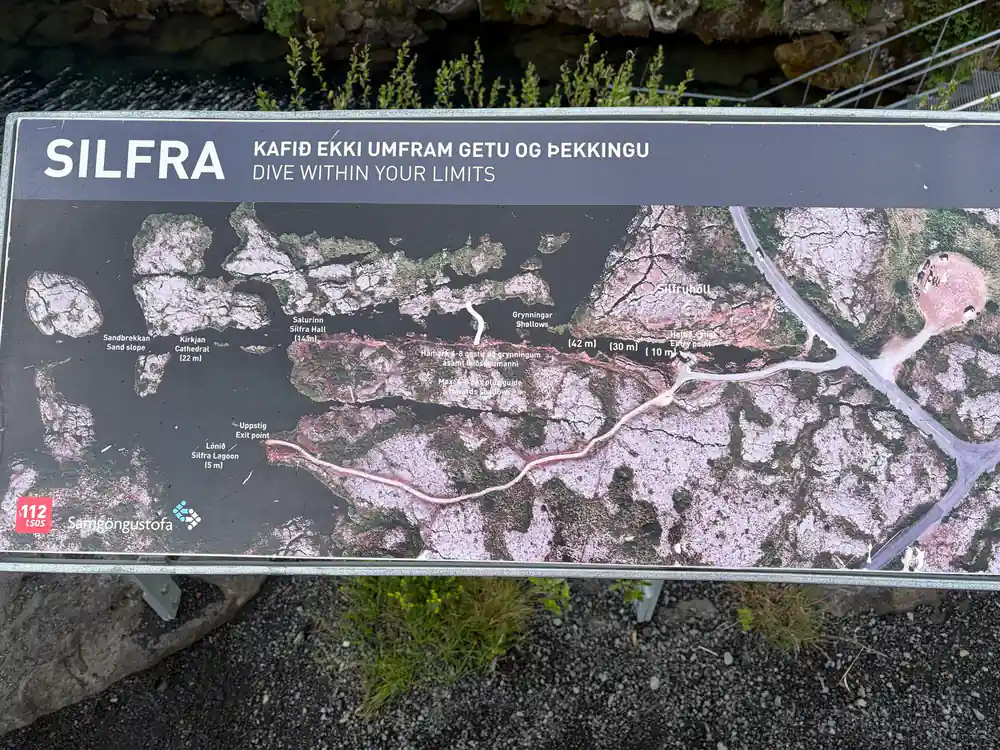
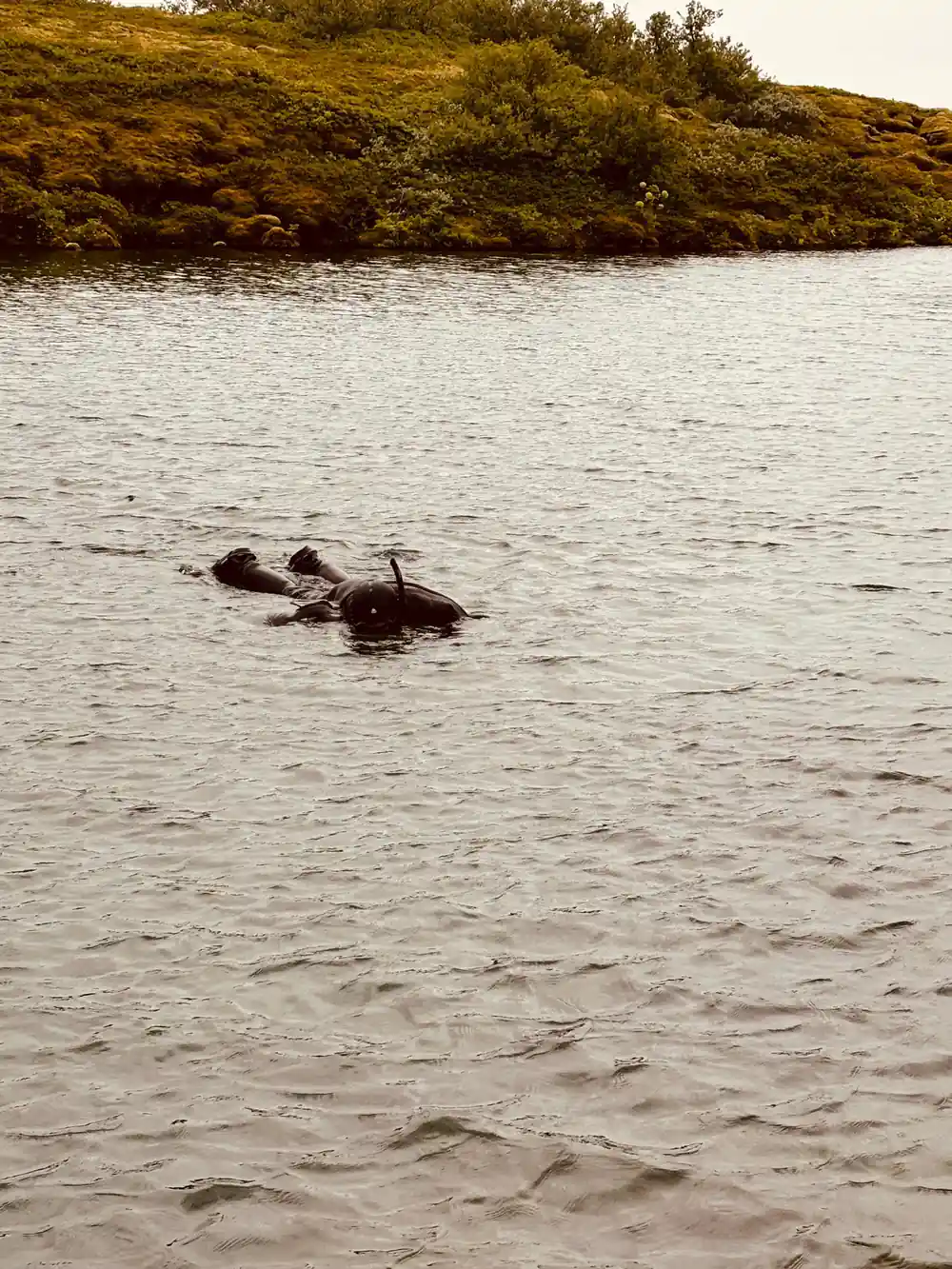
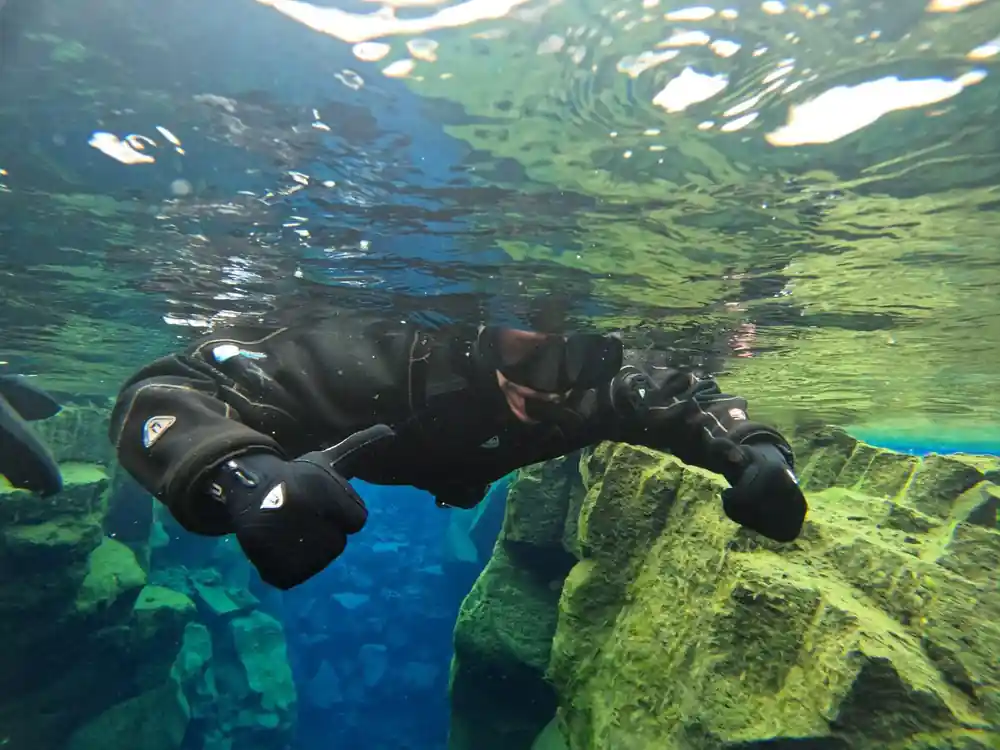
At the northern end of Þingvallavatn the ground opens into Silfra, a fissure filled with glacial meltwater that has been filtered through porous underground lava for 30-100 years before it reaches the spring.[2] The water stays very cold and remains 2°C to 4°C all year round, never freezing.[2] It also allows for underwater visibility of over 100 meters.[2] Floating above the lava in water that clear feels less like swimming than like hovering.
The fissure reaches depths of up to 200 feet (60 meters) in its deepest sections, though most snorkeling takes place near the surface.[11] Marine life in it consists mostly of bright green troll hair and different types of algae.[2] You do not need to be a strong swimmer to enjoy the drift, but you do need to meet the rules: at least 12 years old, at least 150 cm tall, able to swim and comfortable in water, with no life jackets or swimming aids permitted.[4]
The Silfra Fissure Snorkeling between Two Continents tour costs from US$137 and runs 3 - 5.5 hours depending on the option you choose, with starting times confirmed when you check availability.[3] Groups are limited to 6 participants, pickup is available when you check availability for pickup options, and the live guide speaks English.[3] It is rated 4.71 from 2,142 reviews, and cancellation is free up to 24 hours in advance for a full refund.[3]
Traveller ratings for Silfra snorkel tours
Silfra tours priced from Reykjavík
From prices per person in US dollars from the listings:[3][5][6][14]
When to visit and when to book
Plan your Thingvellir day
Book the snorkel first
Reserve now and pay later, and check availability for pickup options from Reykjavík.[3]
Check the requirements
You must be at least 12 years old, at least 150 cm tall, able to swim and comfortable in water.[4]
Get to Þingvellir
Thingvellir National Park is 47 km northeast of Reykjavík on Route 36.[7]
Walk before you swim
Give the Law Rock, the gorge and the drowning pool an hour on foot before your slot.
Layer up and go
The water stays 2°C to 4°C all year.[2] Bring warm layers and dry clothes for afterwards.
Swim between two continents in the Silfra fissure
from US$138Reserve now & pay later