In a nutshell
- Thingvellir National Park sits 47 km northeast of Reykjavík on Route 36, an easy drive out of the city for a half day or a full one.[1]
- The fissure holds glacial meltwater at 2°C to 4°C all year round, and it never freezes because fresh water keeps filling it.[2]
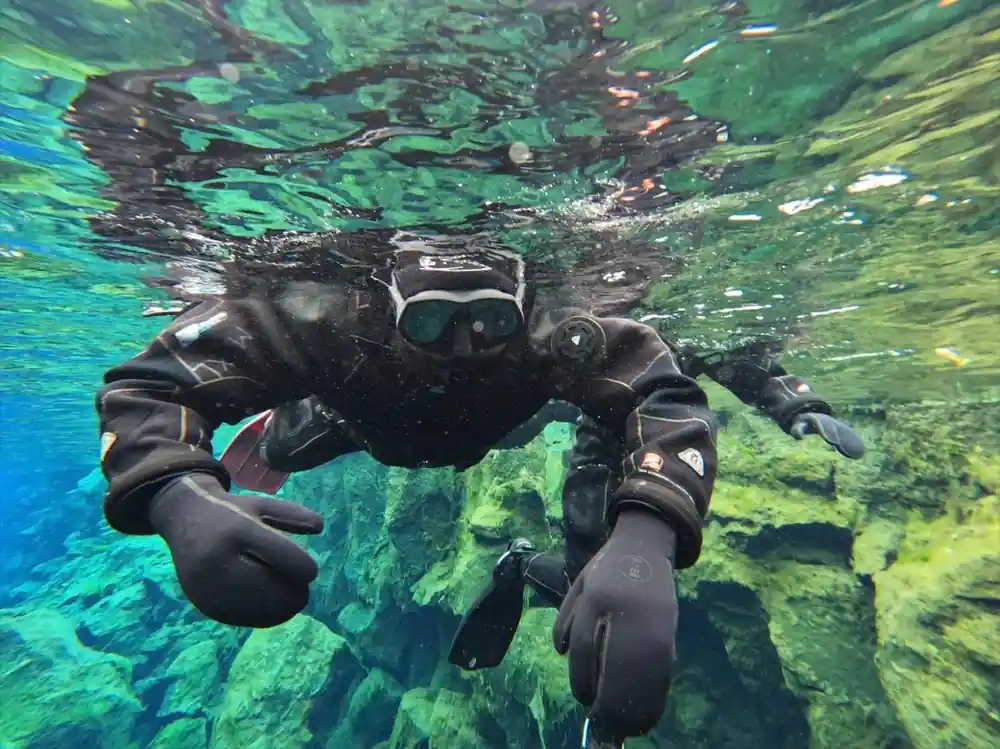
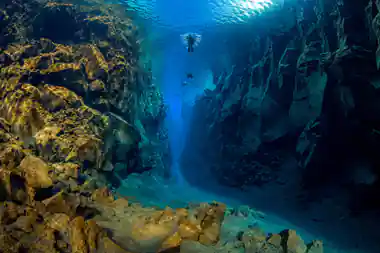
- Underwater visibility in Silfra runs over 100 meters, and bright green troll hair and algae cover the rock.[2]
- Thingvellir National Park receives approximately 1.5 million visitors each year, which is worth knowing when you plan your timing.[3]
- The Reykjavík tour runs 3 to 5.5 hours from US$137, with groups limited to 6 participants and free cancellation up to 24 hours in advance.[4]
- Top choice Between Two Continents from US$137 Duration3 - 5.5 hours[4]Rating4.71 from 2,142 reviews[4]PickupCheck availability for pickup options[4]CancellationFree cancellation up to 24 hours before[4] Check availability
- Snorkeling with Free Photos from US$215 Duration4.5 hours[5]Rating4.83 from 628 reviews[5]PickupPickup included, check availability[5]CancellationFree cancellation up to 24 hours before[5] See this tour
- Golden Circle and Silfra from US$298 Duration10 hours[6]Rating4.82 from 304 reviews[6]PickupPickup included, check availability[6]CancellationFree cancellation up to 24 hours before[6] See this tour
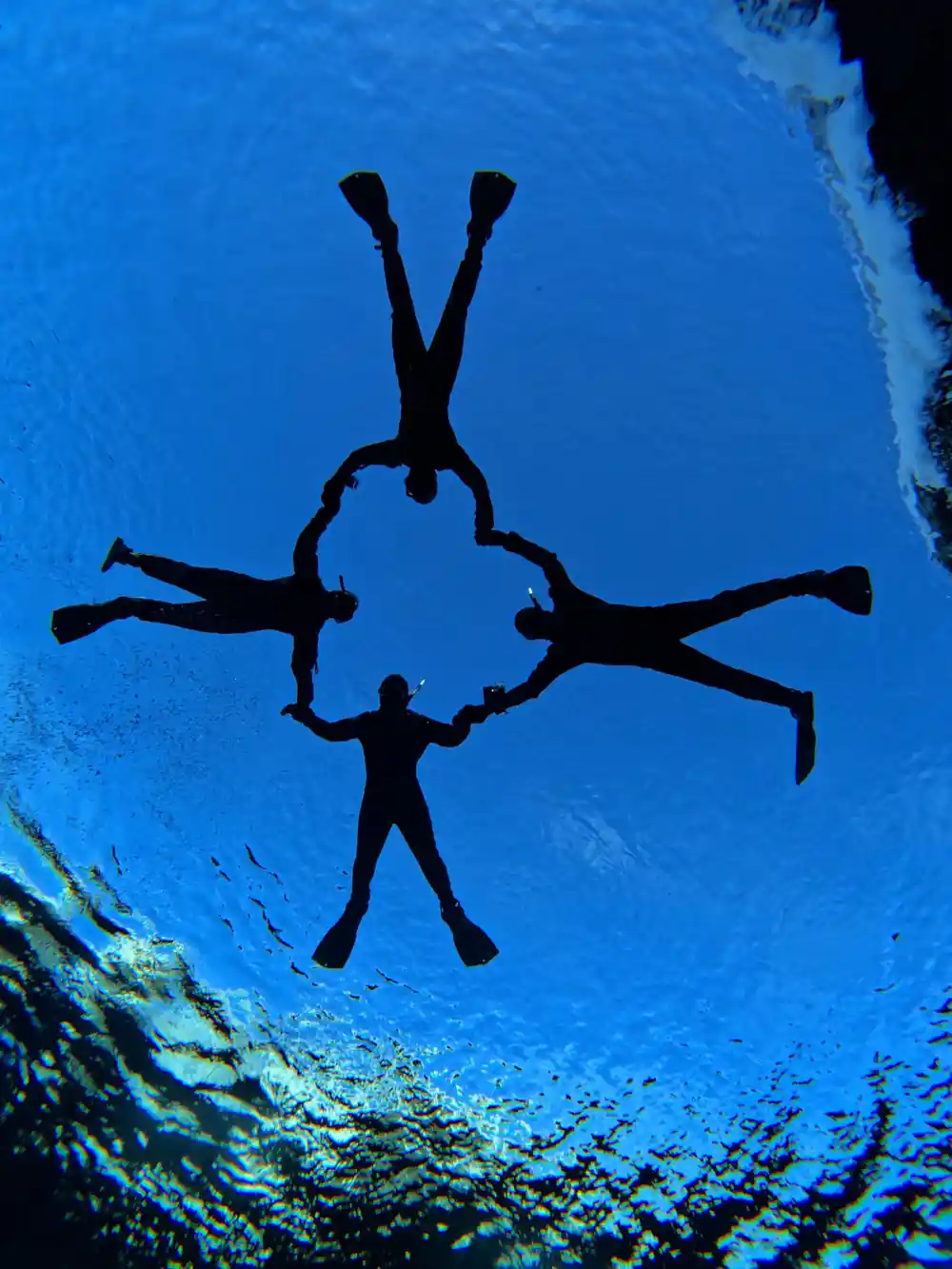
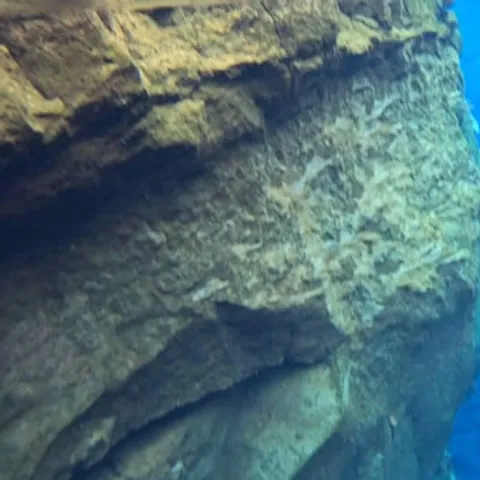
The water is filtered through porous underground lava for 30-100 years before reaching the spring that feeds into Silfra.
Is Thingvellir worth more than the snorkel?
Before reserving
Beyond the Silfra Fissure: A Park Worth a Full Day
Most people come to Thingvellir for one thing: the chance to float through a crack between two continents. That crack, Silfra, is strange and beautiful, but it sits inside a national park that holds a great deal more than a single entry point. The park is 47 km northeast of Reykjavík on Route 36, an easy drive on a good road, and it was added to UNESCO's World Heritage List in 2004.[1][8] Around 1.5 million visitors pass through each year, which is worth knowing when you choose your timing.[3] The car parks, the visitor centre and the main paths all sit within a short walk of one another, and you can see a lot without a long hike.
Start with the water. Glacial meltwater filters through porous underground lava for 30-100 years before it reaches the spring that feeds Silfra, and it arrives clear enough for underwater visibility of over 100 meters.[2] It stays at 2°C to 4°C all year round and never freezes.[2] Above the surface you get the same landscape with dry feet: a long valley of grey rock walls, a river, a lake and a waterfall, all linked by marked paths and boardwalks. Give the park a few extra hours beyond your snorkel slot and it stops feeling like a stopover.
Oxararfoss: The Waterfall Within Reach
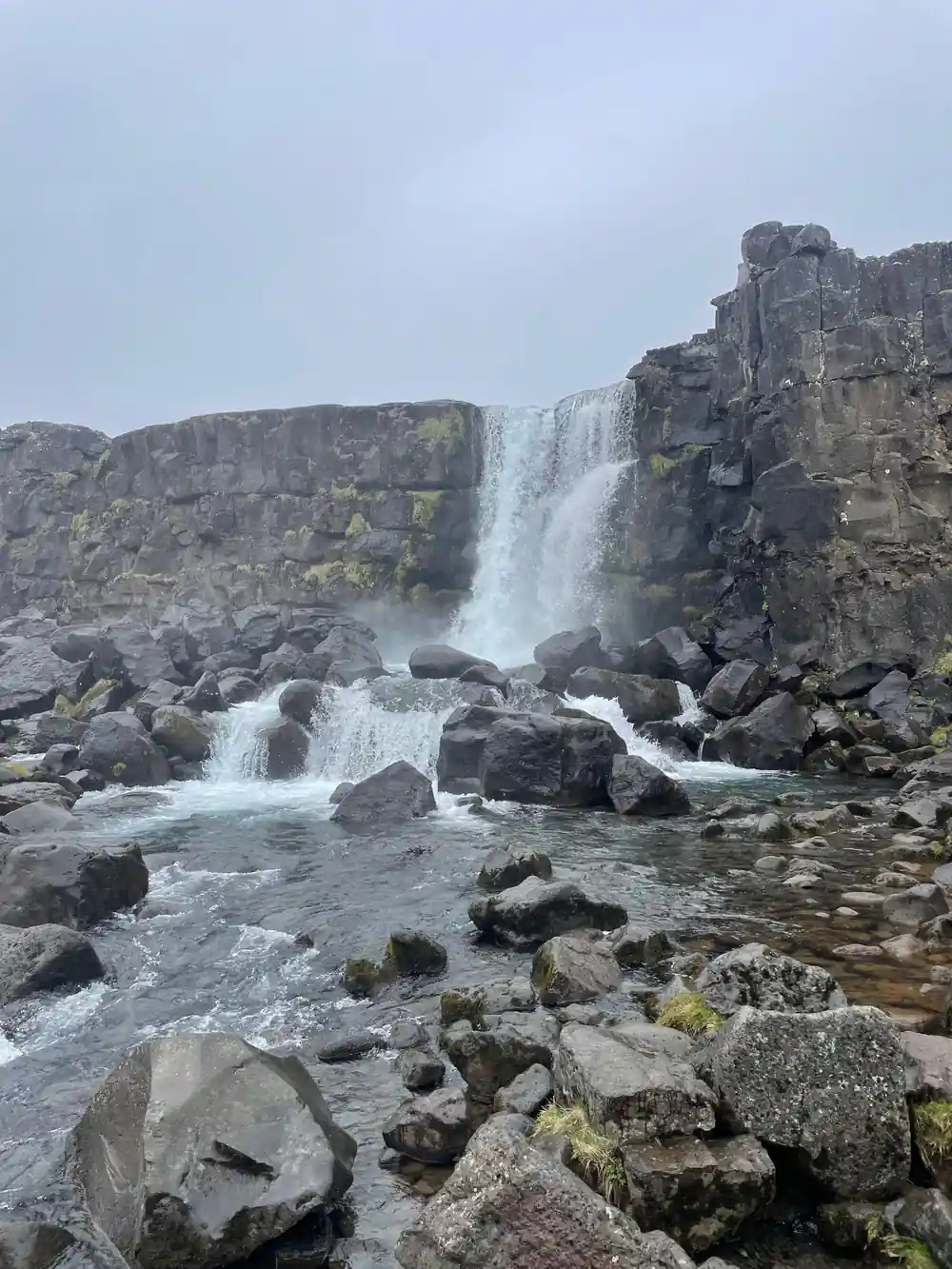
Öxarárfoss is an easy big sight to reach on foot, and the walk there doubles as a good introduction to the shape of the park. The path leaves from the visitor area, drops down into the rift, and follows the river to a fall that pours over a dark cliff into a pool below. It is a short walk on a marked trail, with boardwalk sections and steps in places, and it fits neatly before or after a snorkel booking. The water above the fall runs through a narrow channel cut into the rock, and the drop itself is loud enough to hear before you see it.
Go early or late if you want photographs without a crowd in them. The light in the valley is lovely when the sun is low, and the walls throw long shadows across the water. Wear shoes with grip, because the path down to the fall turns slick when it is wet or icy, and stay behind the ropes near the edge where the rock is worn smooth. From the fall you can walk on along the river and back toward the main paths without retracing every step, which makes a neat loop for the middle of the day.
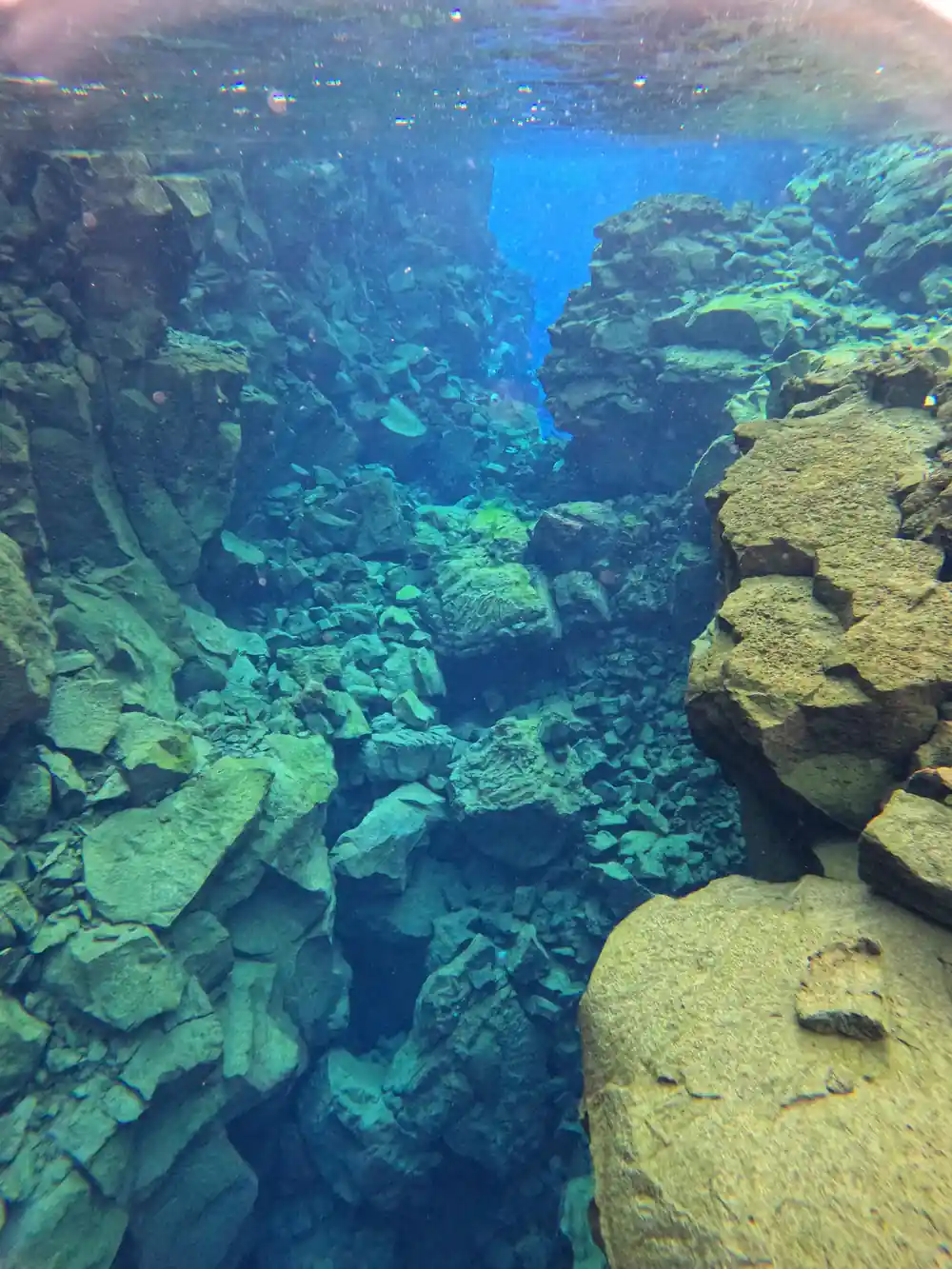
The rift walls above Almannagjá, where the park opens out toward the lake.
Almannagja: Walking the Rift Valley Walls
Almannagjá is the long gorge on the western side of the park, and it is a clear place to see what a rift valley looks like from the inside. At Þingvellir the North American and Eurasian plates break apart and the land between them subsides.[9] Wooden steps lead down from the visitor area to the gorge floor, and the path then runs level between high, cracked walls toward the plain beside the lake. The walls close in at the top, and the light changes as you walk, with the temperature dropping a little in the shade.
The movement here is not a steady creep. Away from the plate boundaries the activity is fairly constant at about two centimetres a year, while in rift zones the tensional stress accumulates and is then released in bursts.[9] None of that is visible in a single afternoon, but the broken rock, the deep cracks and the occasional boulder beside the path all come out of that long process. Look up as you walk: the walls are layered, mossy in the shaded parts, and full of small birch trees growing straight out of the stone. The path also passes the old assembly sites, which are marked but easy to miss if you are watching your feet.
Peningagja: The Coin Fissure and Its Tradition
Peningagjá, the coin fissure, is a narrow, water-filled crack close to the main path, and it has collected coins from visitors for a long time. People lean over the edge and drop small coins in, then watch them turn and catch the light as they sink. Visibility in the water is over 100 meters, and coins thrown in long ago are still down there on the bottom.[2] The crack is deeper than it looks from the path, and the water in it is the same cold, clear meltwater that runs through the rest of the park.
The colour is the other draw. Marine life in the fissures is mostly bright green troll hair and different types of algae, which coat the rock in a soft green layer and shift the water between blue and green as the light moves.[2] Take a photo rather than adding to the pile, and keep your coins in your pocket. A short stop here is enough, and it fits naturally between the walk through Almannagjá and the path out to the lake.
from US$137
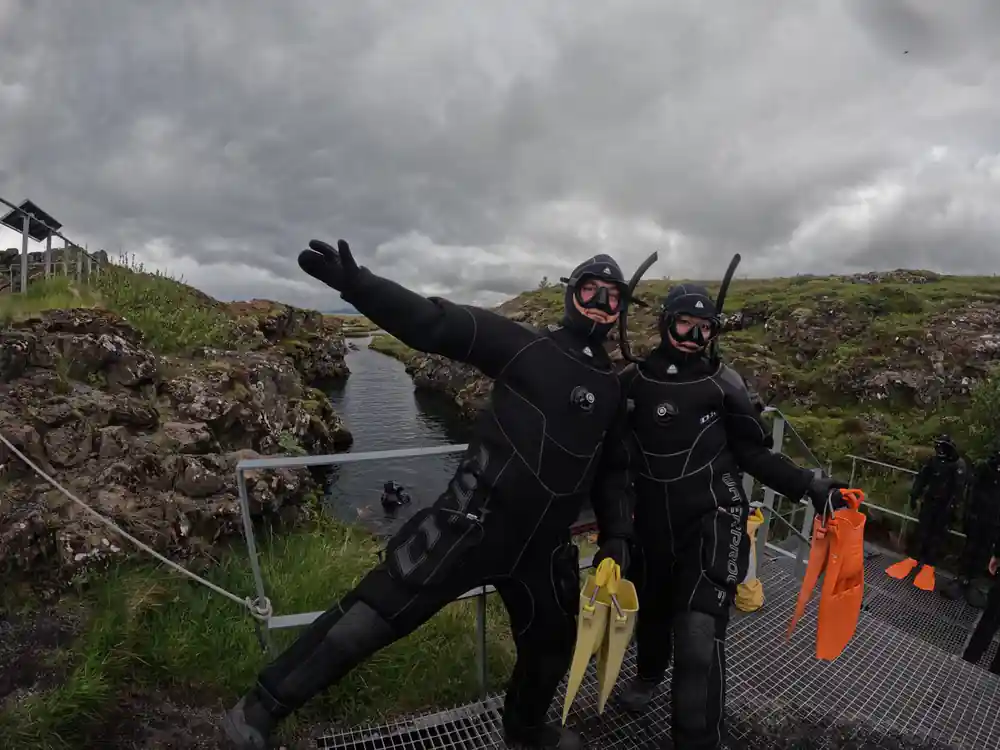
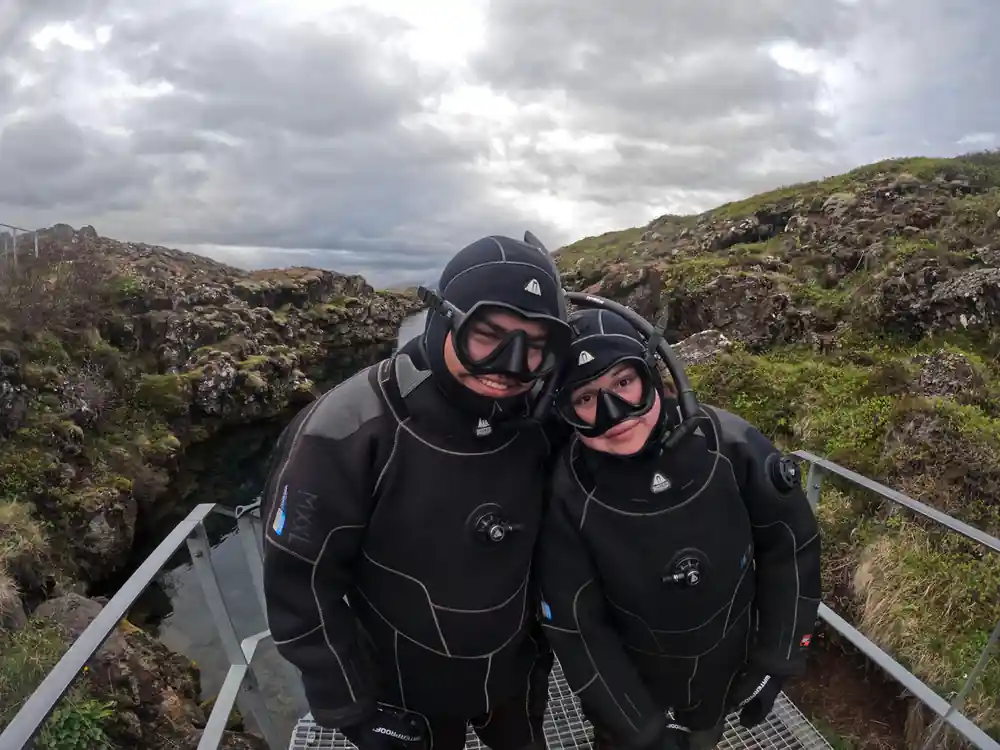
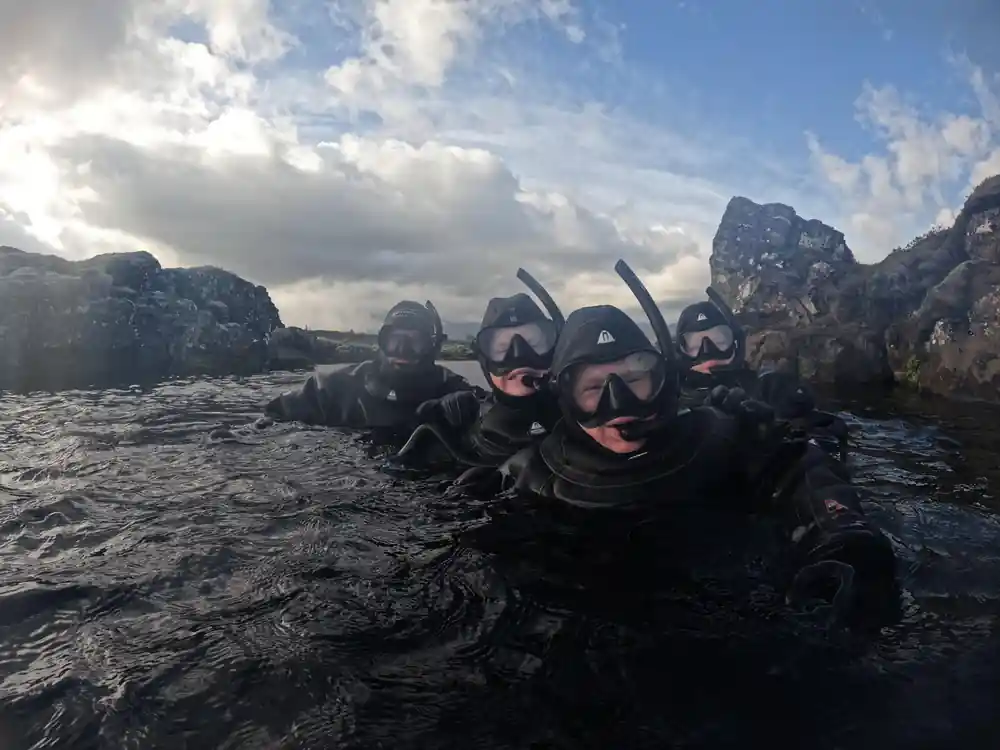
Silfra Fissure Snorkeling between Two Continents runs 3 to 5.5 hours from Reykjavík, with groups limited to 6 participants.[4]
Thingvallavatn: The Glacial Lake's Hidden Depths
Þingvallavatn fills the southern end of the park, a wide sheet of dark water with lava fields and low hills around it. It covers an area of 84 square kilometres and has a greatest depth of 114 metres.[10] On a still day the surface mirrors the sky and the surrounding hills, and on a windy one it turns grey and quick, with whitecaps running across it. The shoreline paths give you long views back toward the rift walls, and the open water makes the scale of the valley easier to read than it is from inside the gorge.
Glacial meltwater filters through porous underground lava for 30-100 years before it reaches the spring that feeds Silfra.[2] Walk part of the shoreline if you have time: the paths are flat, the wind is strong, and layers are worth having even on a bright day. From the water's edge you can look back at the line of cliffs and the gap where the falls come down, which is the best way to see how the whole valley is put together.
The Drowning Pool and Other Stories From the Old Assembly
Near the path down from Almannagjá, at the northern end of the lake, is a small pool called Drekkingarhylur, the drowning pool. It is a quiet, unremarkable patch of water now, and the history attached to it is grim: it was used for executions, and women were drowned there. There is a sign, but the pool itself gives nothing away, and that contrast is part of what makes it worth the detour. It sits close to the main path, so it costs you almost no extra walking.
The wider plain is where the Icelandic assembly, the Althing, met in the open air, and the park is full of low ruins, turf outlines and marked sites that are easy to walk past without noticing. Take time to stop and read the panels. They set out what happened at each spot, and they turn a valley of viewpoints into a place where people argued, judged and made law with no roof over their heads. Two or three of these sites sit within a short walk of the gorge path.
UNESCO Status, Geology and the Rift Valley on Screen
Thingvellir National Park was added to UNESCO's World Heritage List in 2004.[8] The rift is the obvious place to start. Silfra reaches depths of up to 200 feet (60 meters) in its deepest sections, though most snorkelling takes place near the surface.[11] Snorkellers float over the shallower shelves, looking down into blue and green water and along walls that drop away into the dark. From above, you can trace the same crack in the rock and see where the route goes.
Divers who want the deeper sections need either a drysuit diver certification or drysuit dive experience.[12] For everyone else, snorkelling is the way to get into the water, and it is enough to see the shelves, the boulders and the colours that make the fissure famous.
The valley has also stood in for other places on screen, and a walk along the top of Almannagjá shows why a location scout would stop here. The walls, the black water and the open plain read like somewhere older and larger than the map suggests. Go near sunset, when the light comes in low across the rift, and the park does the rest of the work.
How long Silfra tours run
Silfra snorkel and dive tours, from prices
All amounts are US dollar from-prices from GetYourGuide listings:[4],[5],[6],[16],[13].
When to book the Silfra snorkel
Plan your Thingvellir day
Pick your base
Stay in Reykjavík and drive out yourself, or book a tour with pickup. The park is 47 km northeast of Reykjavík on Route 36.[1]
Book the snorkel first
The tour runs 3 to 5.5 hours from US$137, so check availability for the day and starting time you want.[4]
Check the requirements
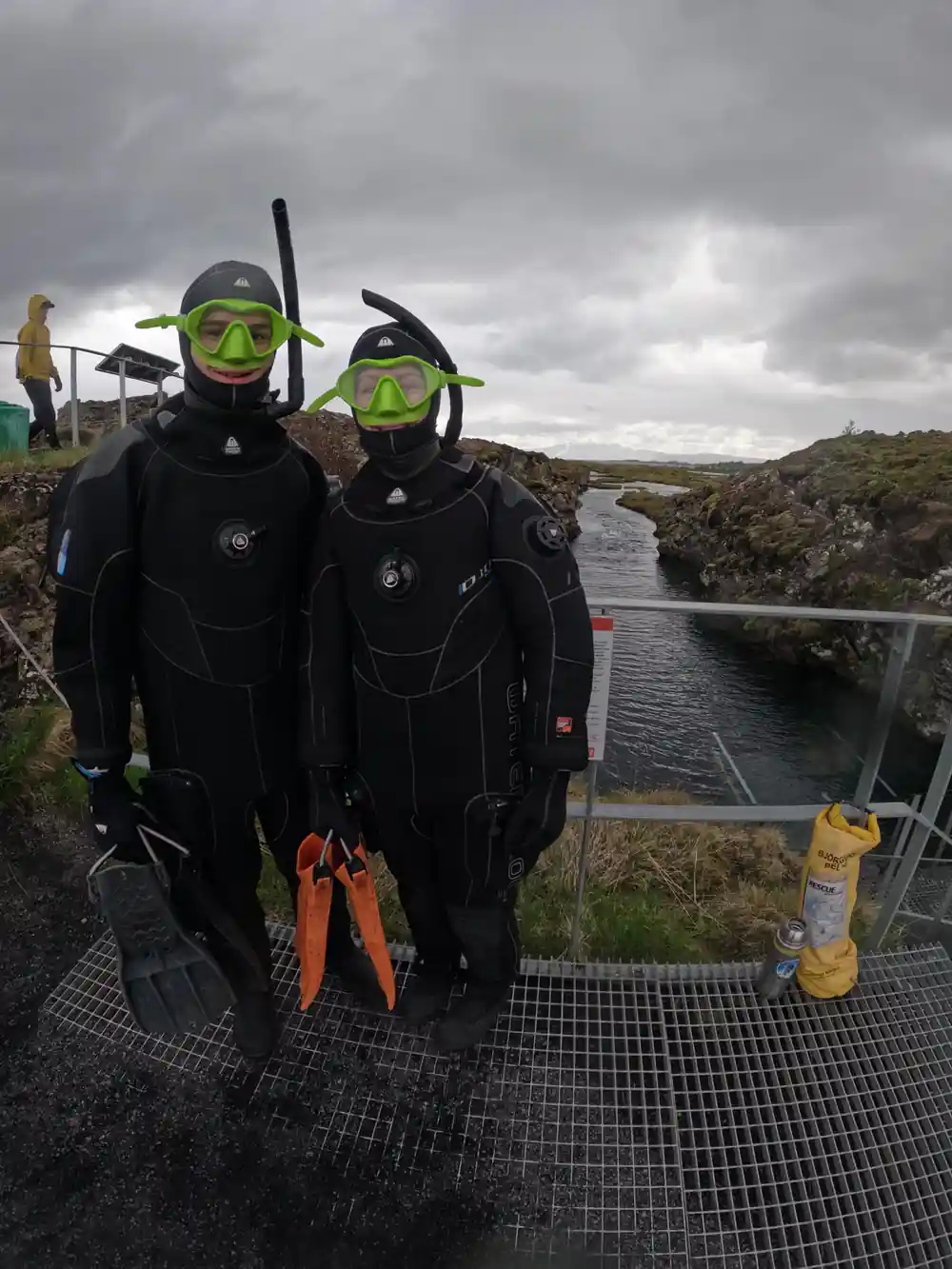
You need to be at least 12 years old, at least 150 cm tall, and comfortable in water. Life jackets and swimming aids are not permitted.[7]
Pack for cold water
The water sits at 2°C to 4°C all year round.[2] Bring a warm base layer and a change of socks for after the snorkel.
Leave time for the park
Öxarárfoss, Almannagjá, Peningagjá and the lake shore all sit near the snorkel meeting area, so plan to walk after you dry off.
Snorkel between two continents, then walk the rift
from US$138Reserve now & pay later