In a nutshell
- Several Silfra listings are sold with pictures taken by the guide, so compare the inclusions before you choose your tour.
- A small camera on a chest or wrist mount keeps your hands free for the swim and keeps working in cold water if the battery stays warm.
- A sealed pouch can work well. Test the closure on land, start recording before you get in, and tether the pouch to your suit.
- Drysuit gloves make touchscreens useless, so set the mount, the mode and the recording up before you dress at the platform.
- Visibility in the fissure is over 100 meters[1] and the meltwater is filtered through lava for 30 to 100 years before it arrives.[1]
- Top choice Between Two Continents from US$137 Duration3 - 5.5 hours[2]Group sizeLimited to 6 participants[2]PickupPickup available[2]Rating4.71 from 2,142 reviews[2] Check availability
- Free Photos Snorkel from US$215 Duration4.5 hours[3]Group sizeLimited to 6 participants[3]PickupPickup included[3]Rating4.83 from 628 reviews[3] See this tour
- Golden Circle + Silfra from US$298 Duration10 hours[4]Group sizeNo group size listedPickupPickup included[4]Rating4.82 from 304 reviews[4] See this tour
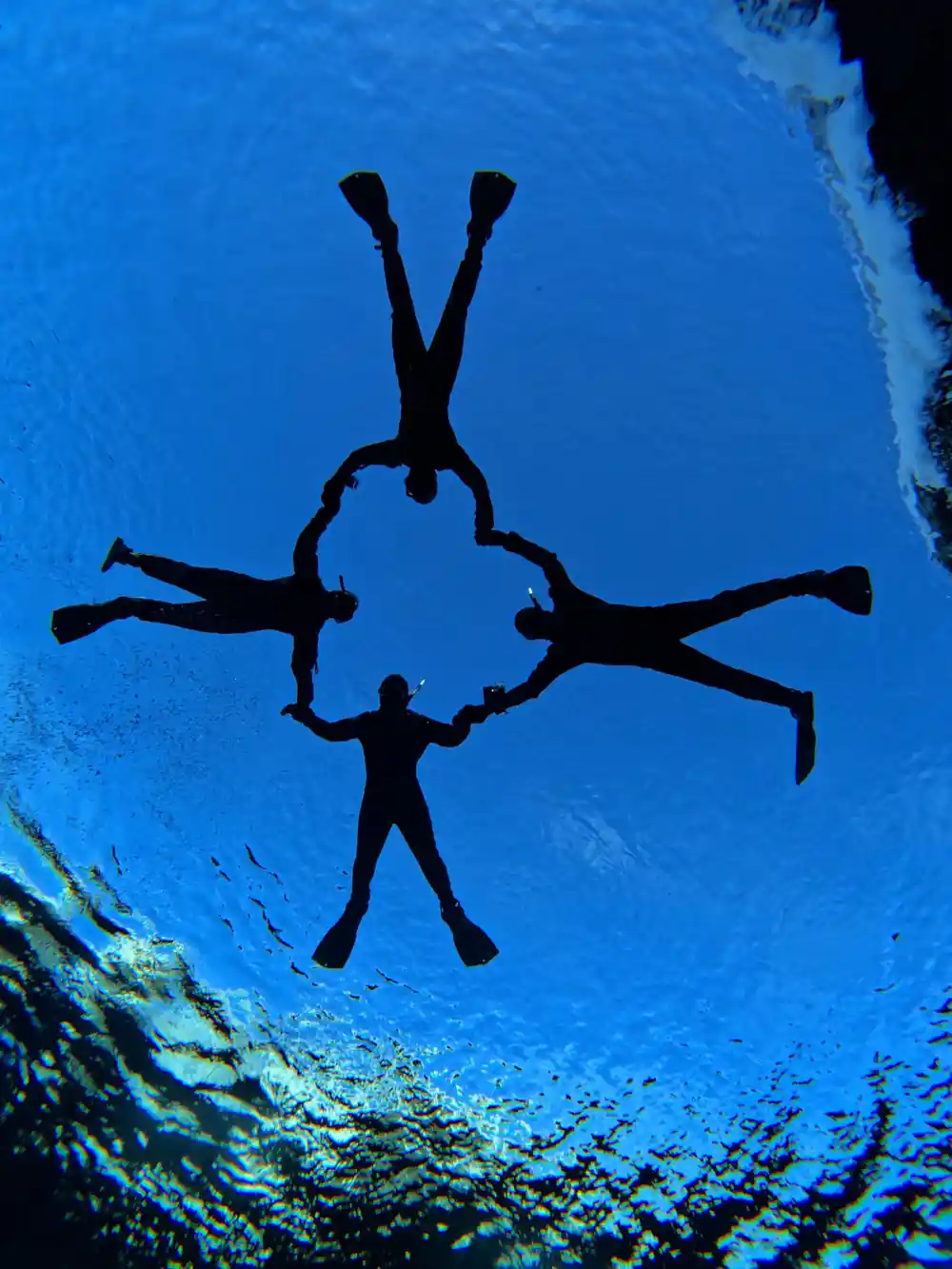
The water is therefore extremely pure by the time it reaches the north end of Thingvellir lake and it allows for underwater visibility of over 100 meters in Silfra.
Should you bring a camera to Silfra?
Before reserving
- Check the listing for whether guide photos are included in the tour you choose
- Some tours are limited to 6 participants, so photo-friendly dates sell out early[2]
- Water stays 2°C to 4°C year round, so plan for cold hands and a warm spare battery[1]
- Compare from prices for the photo and no-photo versions before you commit
In and around the water
- Meet the age, height and swimming requirements for snorkelling at Silfra[5]
- Point the camera toward the open water where the light fills the canyon
- Keep clips short and let the camera run while you swim the line
- Rinse the housing in fresh water and dry it before packing it away
What Photos You Get on a Silfra Snorkel
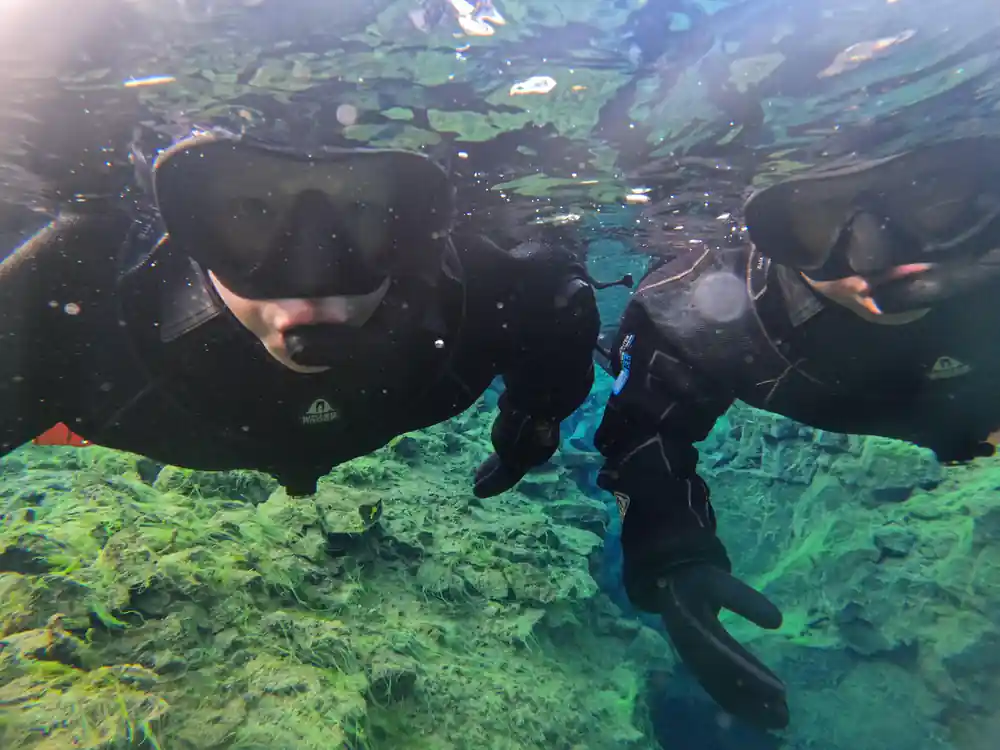
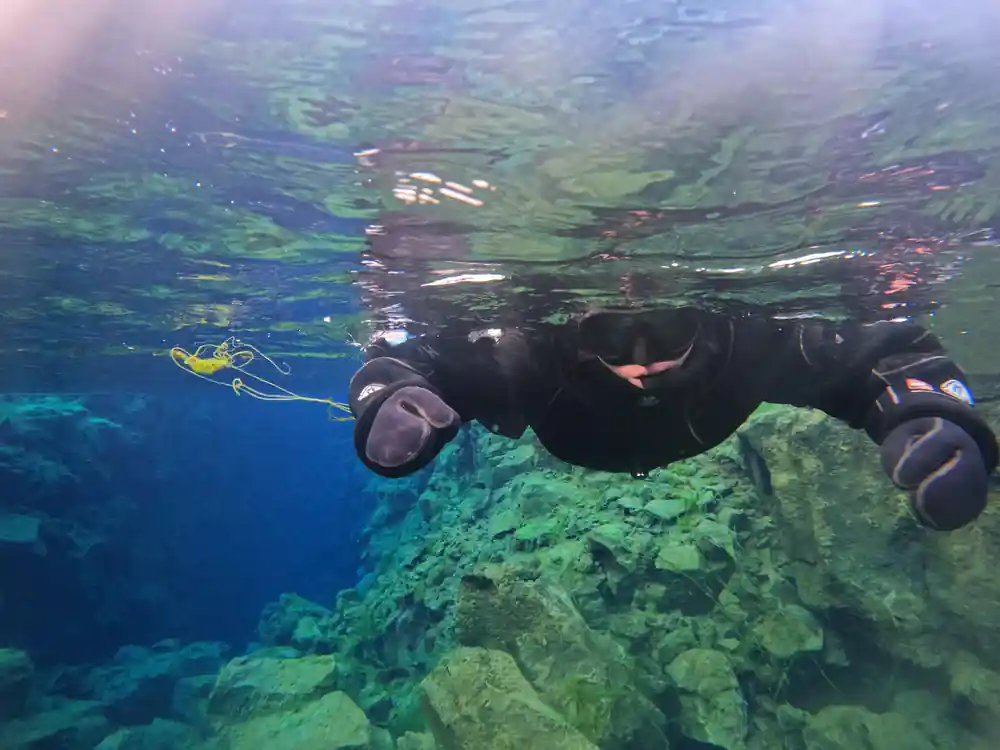
Photographs are the part of a Silfra snorkel that people look at long after the drysuit is back on its hanger, so it is worth choosing your tour with the camera question in mind. Some operators sell the snorkel with pictures taken by the guide in the water. A Reykjavík departure listed with pickup and free photos starts from US$215 and is rated 4.83 from 628 reviews.[3] A half-day snorkel with underwater photos starts from US$137.[6] Another fissure snorkel with underwater photos starts from US$145 and is rated 4.88 from 3,141 reviews.[7]
The tour booked from this site is sold as a small-group snorkel between two continents, so read its own inclusions if photography is your priority. Operators differ. One listing may include a guide who shoots in the water, another may leave the pictures entirely to you, and the route through the fissure can be almost identical in both cases. Check the exact listing you are paying for, look at what recent travellers say about the pictures they received, and settle the question before you book rather than in the car park.
Action Cameras and GoPros in Cold Water
An action camera is the simplest way to bring home moving pictures. The camera sits in a housing, the housing clips to a chest harness or a wrist strap, and your hands stay free for the swim through the gap. Silfra's water stays 2°C to 4°C year round and never freezes because fresh water keeps filling the fissure.[1] Cold like that is hard on small batteries, so start with a full charge, carry a spare, and keep the spare somewhere warm inside your layers until you need it.
Do not count on the camera's own audio. You will be breathing through a snorkel and wearing a hood, and the housing muffles everything into a hiss. Film short clips instead: the canyon walls sliding past, the bright water opening ahead of you, the rest of the group strung out along the line. Add your own words later when you are warm and dry. A lanyard, a locking clip or a tether means a fumbled camera does not end up as litter on the fissure floor.
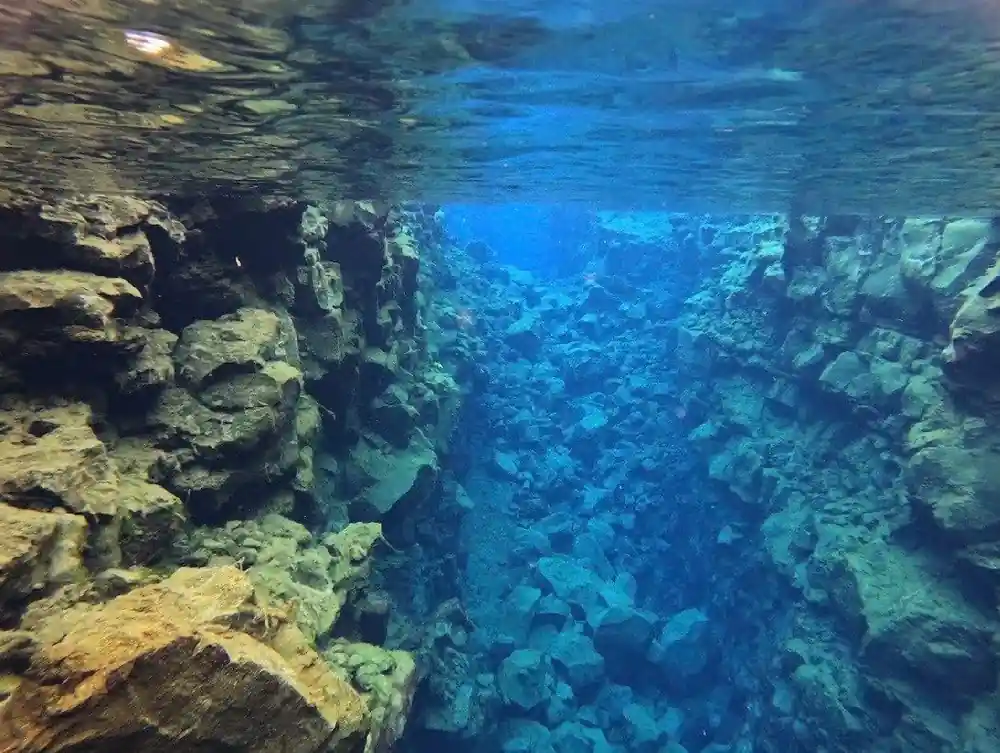
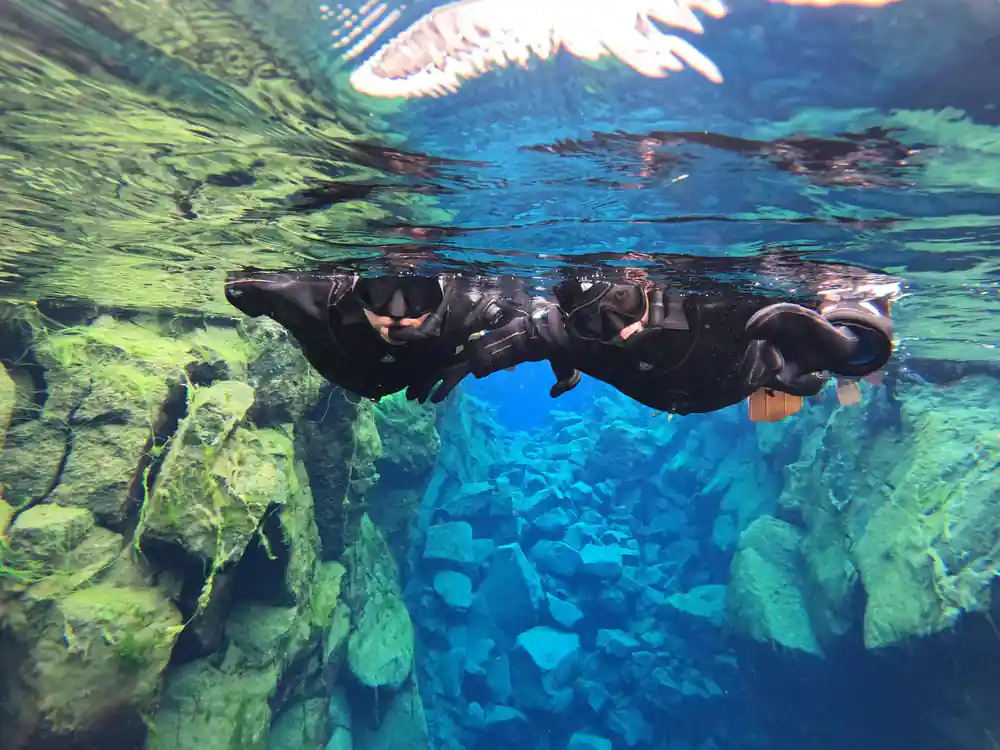
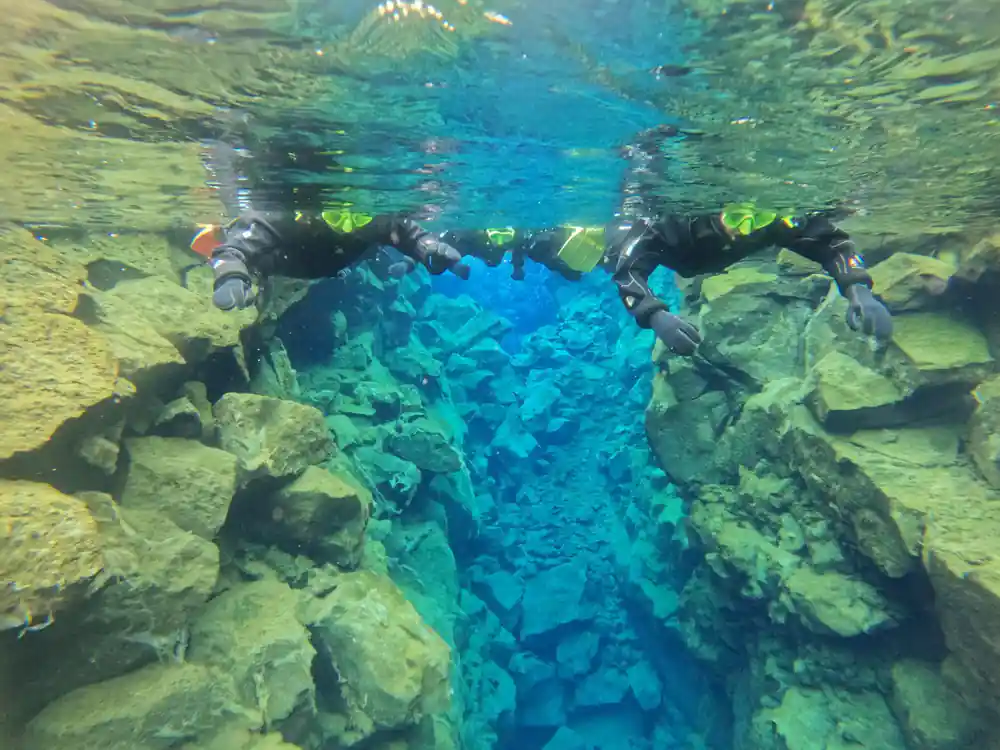
Snorkellers drifting through the blue light of the Silfra canyon
Waterproof Pouches and Phone Cameras
A phone in a sealed pouch can work well at Silfra, and the light does a lot of the work for you. Underwater visibility in the fissure reaches over 100 meters.[1] Even so, a pouch is only as reliable as its seal. Test it in a sink of water before you travel, check the closure for grit or sand, and dry the outside before it goes into a pocket. Add a float or a tether so the pouch cannot sink if you open your hand, and keep the lens window clean with a soft cloth.
Most phones will not respond through a pouch once you are wearing a hood and thick gloves, so start the recording on land and let it run in short bursts. Keep the phone on a neck lanyard under the drysuit, or clipped to a harness, rather than loose in a pocket where it can drift away from you. Buoyancy rules matter here too: life jackets and swimming aids are not permitted at Silfra, so your own body position and the drysuit do the floating while you swim and shoot.[5]
Mounting a Camera in Heavy Gloves
Drysuit gloves are thick, and once they are on you cannot fiddle with small buttons, swap a battery or open a housing. Set everything up on land before the group walks down to the platform. Fit the mount, start the recording, lock the clip and check the view while your fingers still work. Big physical buttons, or a single large shutter, are far easier than a touchscreen you cannot feel through rubber. If your camera has a screen lock, switch it on so a stray press does not end the clip.
Think about where the camera will sit before you commit to a mount. A chest harness keeps the footage steady and roughly matches your eye line as you swim, which suits the narrow sections of the fissure. A wrist mount is easier to point but swings when you paddle, so keep your strokes calm and your arm low. A short pole gives distance from your own bubbles and a wider view of the canyon, but it takes a hand out of the swim and thick gloves make it harder to hold. Practise with whatever you choose in a pool or a bath at home.
from US$137
The tour booked from this site is limited to 6 participants and rated 4.71 from 2,142 reviews.[2]
Why Silfra Photos Come Out So Clear
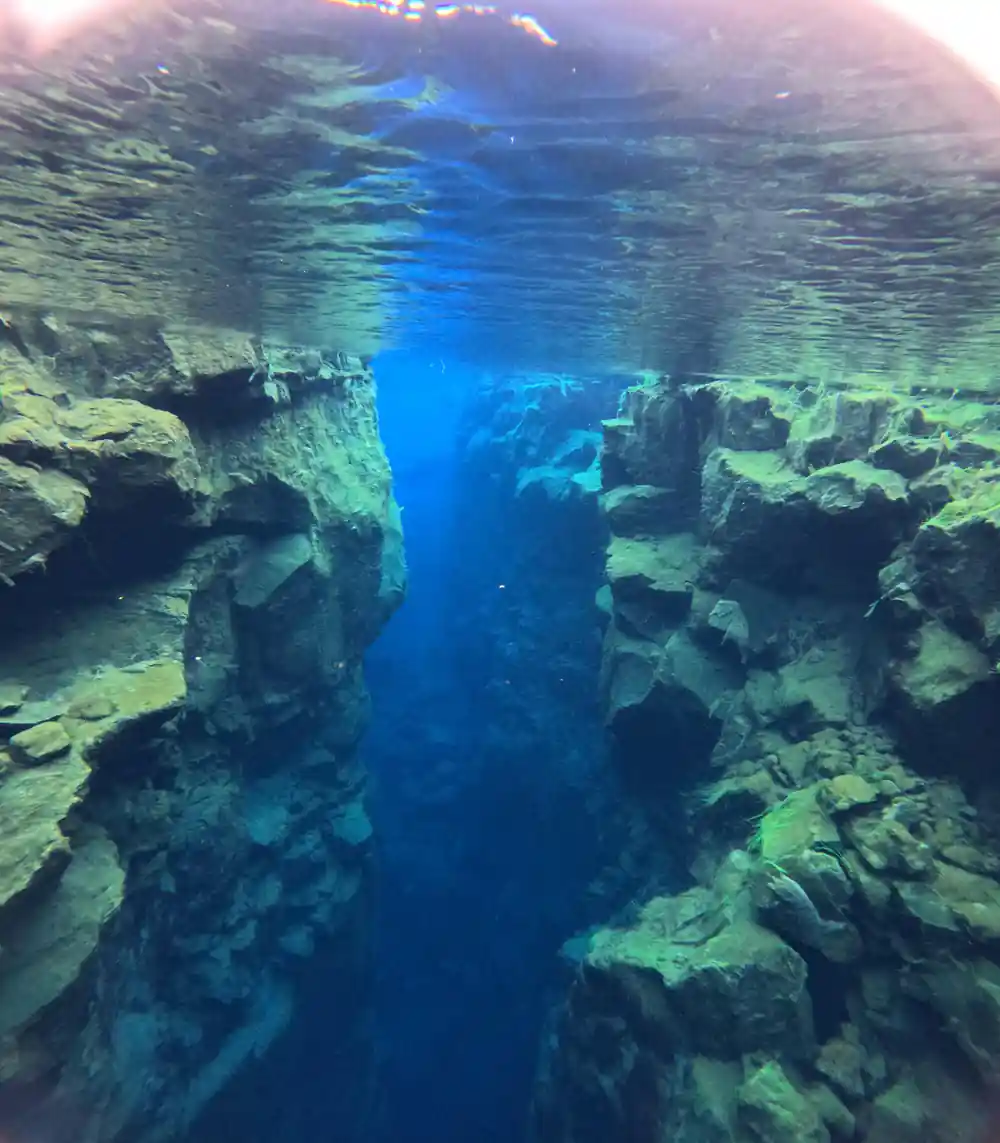
The clarity comes from the geology. Glacial meltwater is filtered through porous underground lava for 30 to 100 years before it reaches the spring that feeds Silfra.[1] By the time it arrives it carries almost nothing that scatters light, so the water reads like glass. Visibility here is over 100 meters.[1] The temperature holds at 2°C to 4°C year round, and the fissure never freezes because fresh water constantly fills it.[1]
You are swimming through a crack in the crust, and the walls beside you are lava that cooled and fractured. The fissure reaches depths of up to 200 feet (60 meters) in its deepest sections, though most snorkelling takes place near the surface.[8] Marine life is mostly bright green troll hair and different types of algae.[1] That green against the blue-grey rock gives photographs their colour even when nothing has been edited.
Above you, the story is still moving. At Þingvellir the North American and Eurasian plates break apart and the land between them subsides, while away from the plate boundaries the activity is fairly constant at about two centimetres a year.[9] Photographing the cracks in the path and the lake edge on the walk back helps tell the part of the story that the underwater shots cannot.
Above-Water Photography at Þingvellir
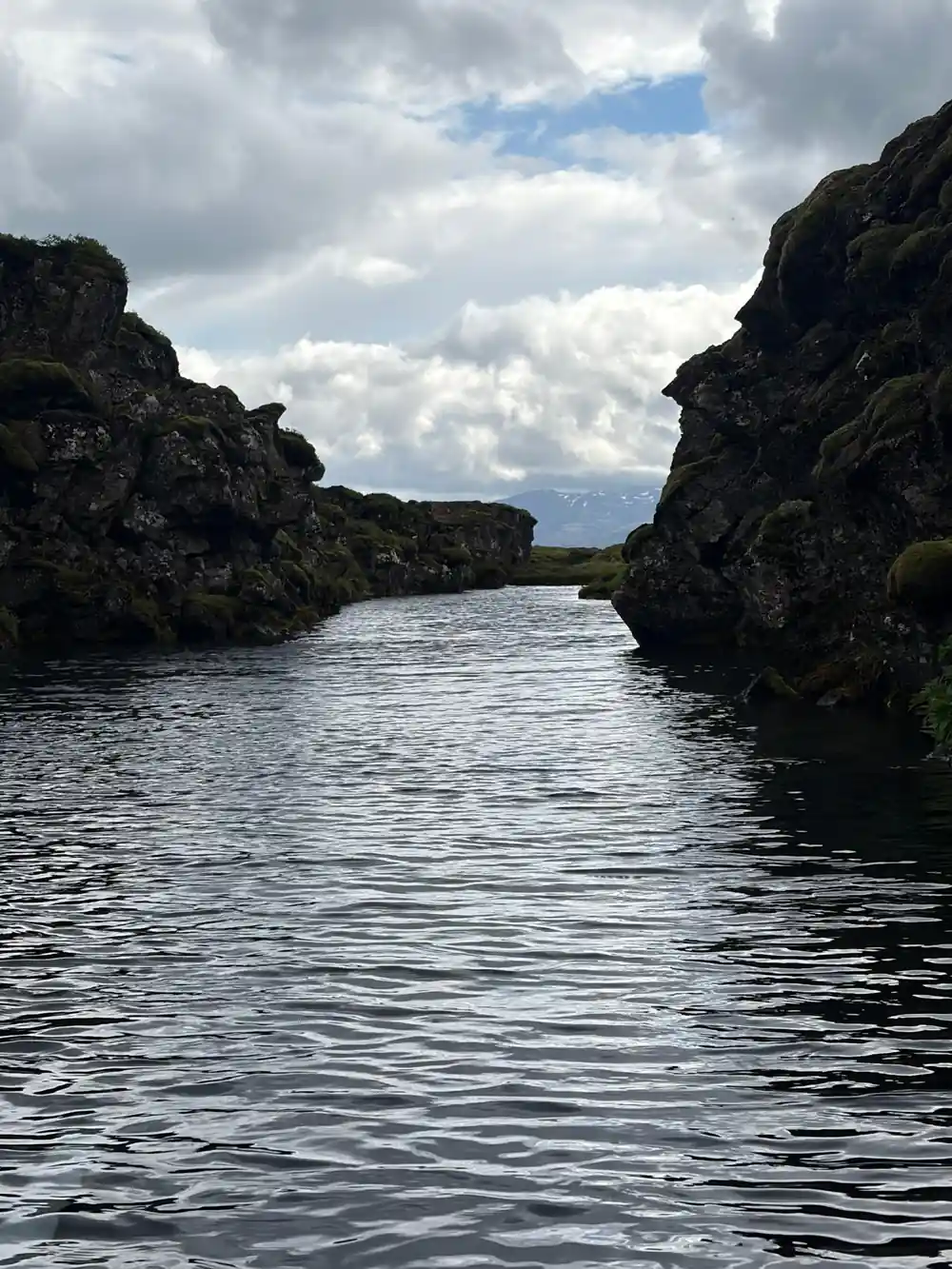
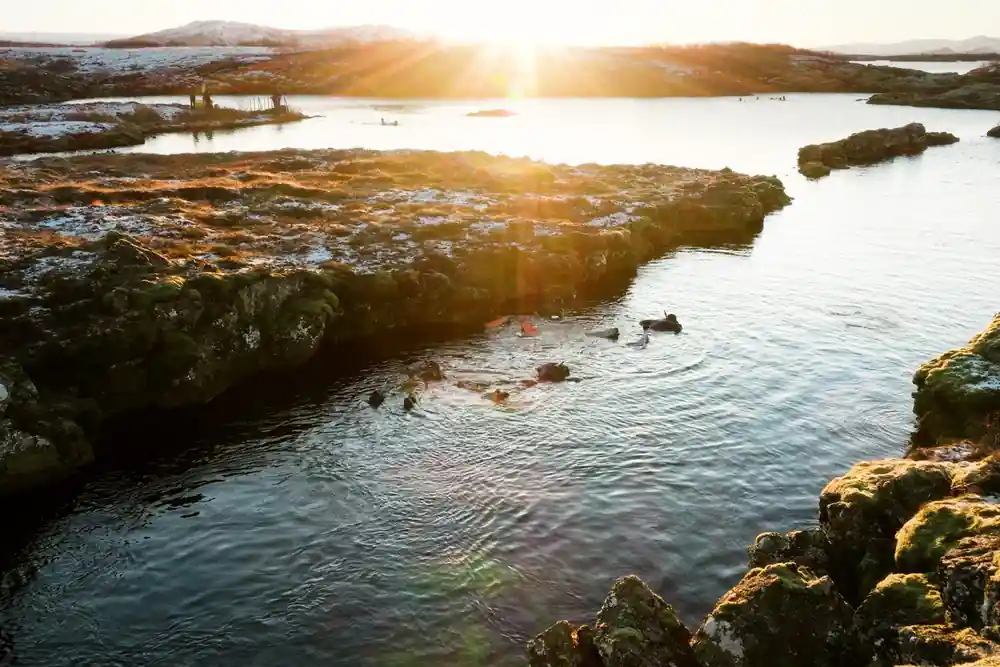
The snorkel sits inside Þingvellir National Park, which was added to UNESCO's World Heritage List in 2004.[10] The surface photographs beautifully: dark lava, the long lake, the walls of the rift valley and the paths that thread between them. Þingvallavatn covers an area of 84 square kilometres and has a greatest depth of 114 metres.[11] The park is 47 km northeast of Reykjavík on Route 36, which makes it an easy add-on to a day in the city if you have your own transport.[12]
Bring the camera out of the dry bag before you leave the car park, and expect company in the frame: the park receives approximately 1.5 million visitors each year.[13] Stay on the marked paths rather than stepping onto the moss, and keep a microfibre cloth handy for rain and spray. Early and late hours give softer light, longer shadows across the rift and a quieter car park behind you.
Sorting, Storing and Sharing the Pictures
Back up the same day. Cards, phones and cameras come out of cold water into cold air, and condensation is unkind to electronics, so let everything reach room temperature inside a sealed bag before you open a housing or a port. Copy the files to a laptop or a cloud folder while you are still in Iceland, and leave the original card untouched until you are home. Two copies in two places is the cheapest insurance you can give your pictures.
Sorting is easier if you shoot with a plan. Keep the wide frames of the canyon, the shots of your own fins in the blue, the picture of you at the platform, and one or two clips of the group strung out along the line. Delete the dark frames and the accidental pocket footage before you start editing, then build a short sequence: the walk down, the first breath, the light, the exit. If your booking listed guide photos, check the delivery details on that listing. The tour booked from this site comes with free cancellation up to 24 hours in advance for a full refund, so a change of plan does not cost you the day.[2]
Silfra tour lengths for photo-friendly tours
Compare from prices for Silfra snorkels
US dollar from-prices per person for the tours listed.[2][3][4][6][14]
When to plan your Silfra snorkel
Shooting Silfra
Plan before you book
Decide whether you want guide photos or your own camera, then read the inclusions on the listing you are paying for.
Set up on land
Fit the mount, start the recording and lock the settings while your fingers are still bare and warm.
Gloves on, hands off
Once the drysuit gloves are on, stop fiddling. One big button, or a clip that runs on its own, saves the shot.
Shoot the light
Aim along the canyon where the water brightens, and let the group and the walls fill the frame behind you.
Look after the files
Dry the housing, keep the card, and copy everything to a second place before you go to sleep that night.
Book a small-group Silfra snorkel and bring the pictures home
from US$138Reserve now & pay later